
Wellness Architecture is the New Operational Standard for Luxury Hospitality
17.09.2026
For decades, the luxury hospitality sector operated under a reliable formula: premium locations, striking visual aesthetics, and reactive, anticipatory service. If a guest wanted to pursue well-being during their travels, they were directed to a basement gym or a dedicated spa wing. Well-being was treated as a transactional menu item, a localized profit center managed by a siloed department.
That framework has collapsed. Driven by macroeconomic shifts in consumer health priorities, hospitality assets face a profound evolution. High-net-worth individuals no longer view health optimization as a seasonal retreat or an optional checkbox. Instead, they evaluate luxury through the lens of biological preservation, systemic recovery, and cognitive enhancement.
This structural shift requires a complete re-engineering of the guest experience. The environment itself must function as a quiet, active engine of human optimization. To sustain high average daily rates (ADR) and protect property valuation over the next decade, leadership must treat health-centric design not as a marketing tagline, but as the foundational infrastructure of the property ecosystem.
The Built Environment as a Human Optimizer
When well-being shifts from a service to a physical asset, the design brief changes fundamentally. The emphasis moves from superficial ornamentation to invisible luxury, engineering choices that directly regulate a guest's autonomic nervous system.
- Circadian and Neuro-Aesthetic Engineering
The human body relies heavily on external cues to synchronize its internal clock. Traditional hotel lighting, often selected purely for visual dramatic effect, routinely disrupts guest circadian rhythms, exacerbating jet lag and lowering cognitive performance.
Forward-thinking brands are standardizing dynamic, programmable circadian lighting systems. These systems mirror the natural spectrum of daylight, transitioning smoothly from high-intensity blue light in the morning to warm, amber wavelengths in the evening. Coupled with neuro-aesthetic design principles, such as acoustic dampening walls, soft structural curves, and mathematically precise layouts, the physical room works actively to lower cortisol levels before the guest even interacts with staff.
Forward-thinking brands are standardizing dynamic, programmable circadian lighting systems. These systems mirror the natural spectrum of daylight, transitioning smoothly from high-intensity blue light in the morning to warm, amber wavelengths in the evening. Coupled with neuro-aesthetic design principles, such as acoustic dampening walls, soft structural curves, and mathematically precise layouts, the physical room works actively to lower cortisol levels before the guest even interacts with staff.
- Medical-Grade Environmental Controls
Air and water quality have emerged as primary competitive differentiators in the premium lodging sector. High-end properties are installing localized, medical-grade HEPA air filtration systems capable of multi-stage particulate capture.
Simultaneously, centralized water filtration systems are being upgraded to provide structured, contaminant-free water directly to in-room showers and taps. By removing environmental micro-stressors, the guest room transforms from a passive shelter into a biological recovery chamber.
Simultaneously, centralized water filtration systems are being upgraded to provide structured, contaminant-free water directly to in-room showers and taps. By removing environmental micro-stressors, the guest room transforms from a passive shelter into a biological recovery chamber.
The Rise of "Hushpitality" and Behavioral Software
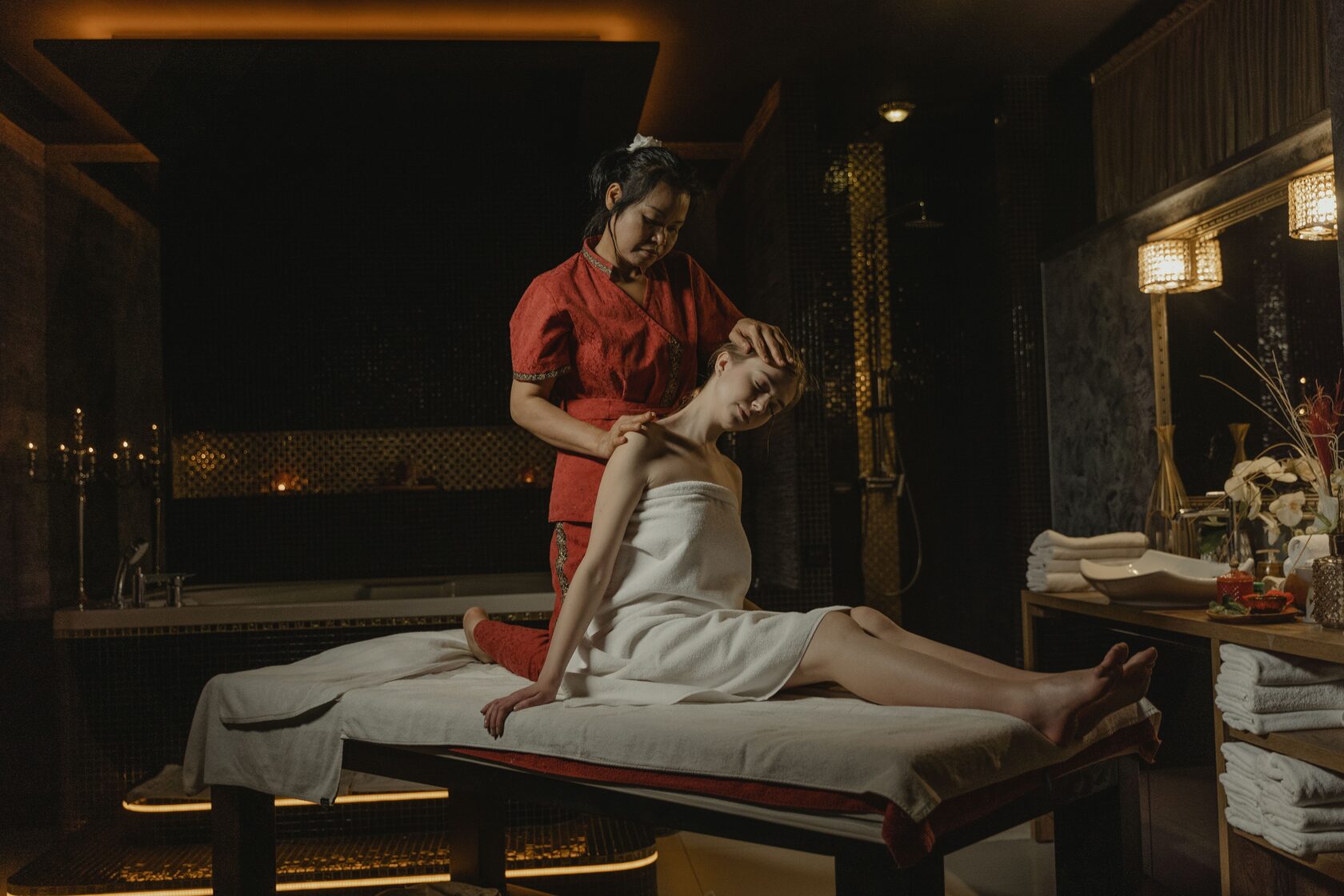
Building a high-performance environment is only the hardware phase. The operational software, how the property orchestrates the daily guest timeline, must seamlessly support biological restoration. The industry has termed this shift "hushpitality", a philosophy prioritizing radical rest, environmental control, and low-stimulation spaces.
- Designing for Sleep Outcomes
Hospitality has historically sold square footage and bed nights. Today’s market demands a shift toward selling measurable health outcomes, with restorative sleep serving as the primary product.
To capture this demand, premium guest rooms are engineered with electromagnetic field (EMF) shielding, complete acoustic isolation from plumbing and mechanical noise, and intelligent, multi-zone temperature-regulated mattresses. When a room actively manages thermal dissipation throughout the night, REM and deep sleep cycles are extended, delivering a tangible sense of vitality that guests directly link to the property brand.
To capture this demand, premium guest rooms are engineered with electromagnetic field (EMF) shielding, complete acoustic isolation from plumbing and mechanical noise, and intelligent, multi-zone temperature-regulated mattresses. When a room actively manages thermal dissipation throughout the night, REM and deep sleep cycles are extended, delivering a tangible sense of vitality that guests directly link to the property brand.
- Ubiquitous Nutritional Tuning
The conventional approach of separating standard dining menus from a niche healthy choices section is increasingly obsolete. Executive chefs and food and beverage directors are redesigning menus to integrate anti-inflammatory, functional ingredients into primary culinary concepts.
From arrival tonics to mini-bar curated selections and all-day dining options, nutritional profiles are tailored to mitigate travel fatigue, manage glucose spikes, and support metabolic health. The goal is effortless well-being: guests receive optimal nutritional support without being forced to modify their orders or compromise on taste.
From arrival tonics to mini-bar curated selections and all-day dining options, nutritional profiles are tailored to mitigate travel fatigue, manage glucose spikes, and support metabolic health. The goal is effortless well-being: guests receive optimal nutritional support without being forced to modify their orders or compromise on taste.
Regional Blueprints: Case Studies in Structural Well-Being
To understand how integrated health infrastructure drives asset value, let’s take a look at pioneering properties across the Asia-Pacific region that have successfully moved well-being out of the spa and into their core architecture.
Indonesia: Nirjhara (Bali)
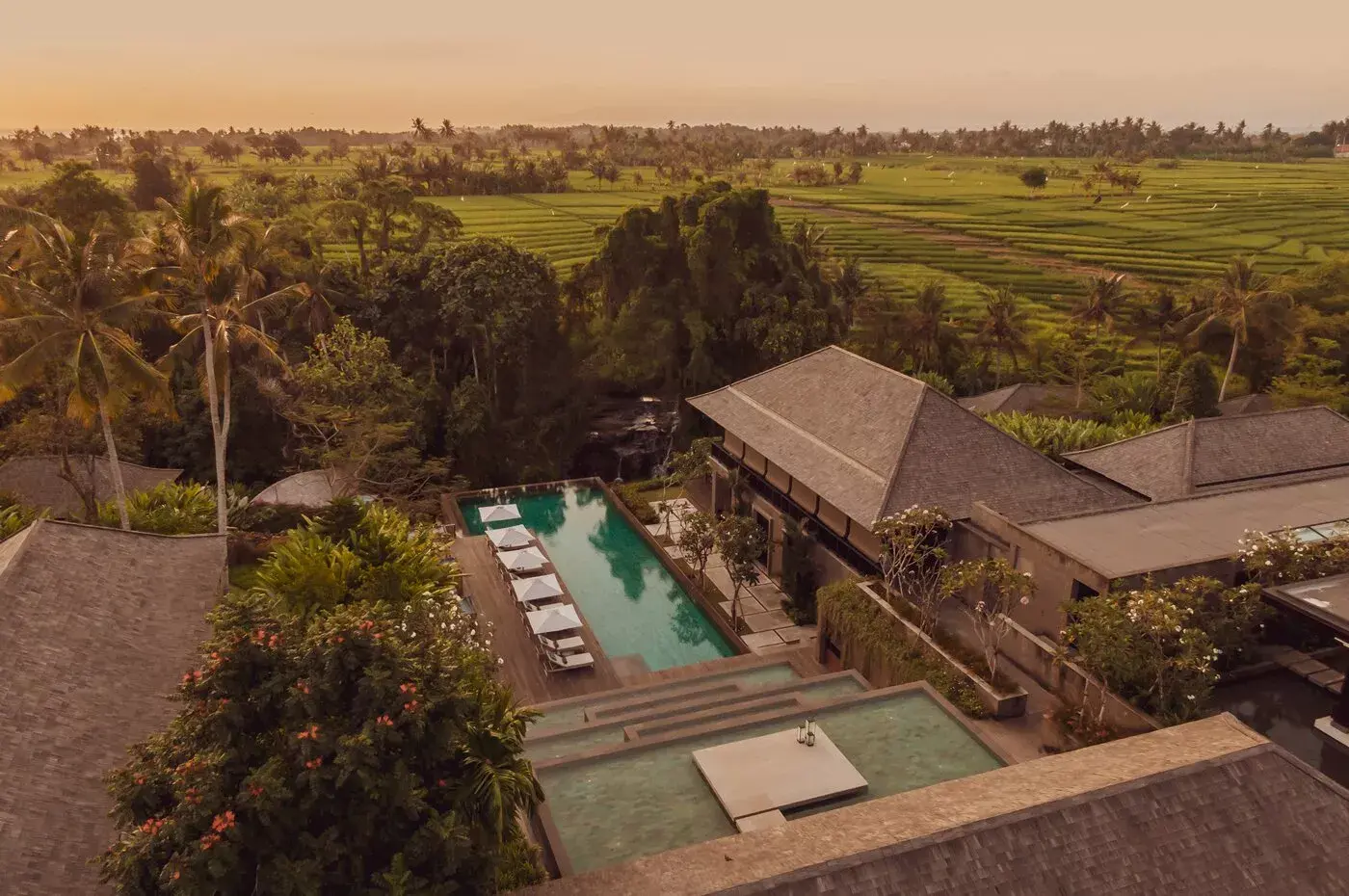
Located in Tabanan, Nirjhara serves as a masterclass in embedding restorative architecture directly into the surrounding landscape. The property was constructed around a natural waterfall, with villas specifically positioned to utilize natural acoustic masking, the sound of moving water naturally lowers guest heart rate variability and masks ambient noise. The architectural design relies heavily on sustainably sourced local rubberwood, natural stone, and traditional thatched roofing, which provide natural thermal insulation and minimize the volatile organic compounds (VOCs) commonly found in industrial building materials. By relying on macro-climate layouts and natural cross-ventilation blueprints, the resort reduces mechanical energy dependency while optimizing clean air exchange for guests.
Located in Tabanan, Nirjhara serves as a masterclass in embedding restorative architecture directly into the surrounding landscape. The property was constructed around a natural waterfall, with villas specifically positioned to utilize natural acoustic masking, the sound of moving water naturally lowers guest heart rate variability and masks ambient noise. The architectural design relies heavily on sustainably sourced local rubberwood, natural stone, and traditional thatched roofing, which provide natural thermal insulation and minimize the volatile organic compounds (VOCs) commonly found in industrial building materials. By relying on macro-climate layouts and natural cross-ventilation blueprints, the resort reduces mechanical energy dependency while optimizing clean air exchange for guests.
Thailand: Amanpuri (Phuket)
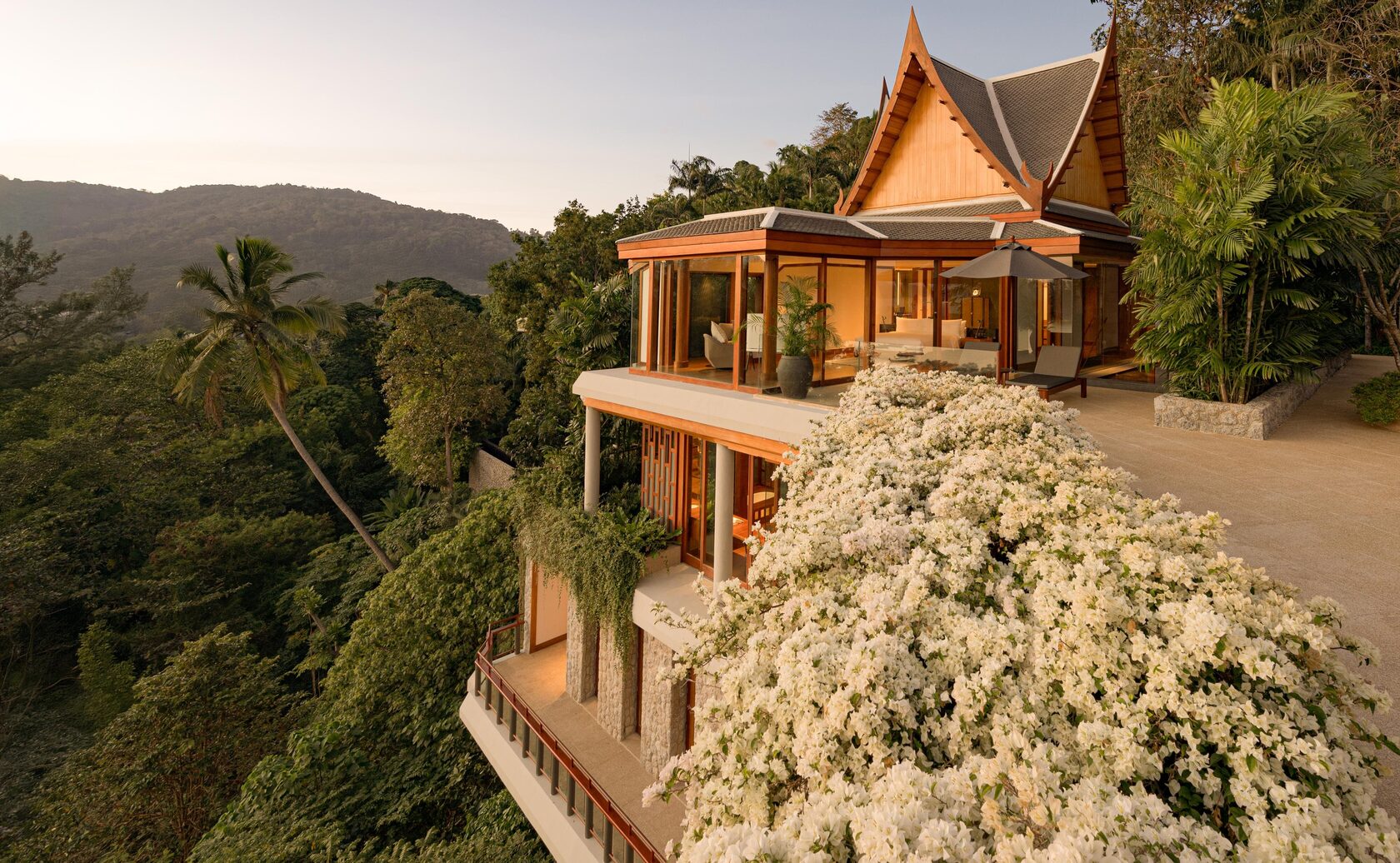
As the flagship property of the Aman brand, Amanpuri represents the gold standard of integrating medical-grade longevity science into a luxury resort asset. The property moved away from the traditional spa-pavilion setup by building a full-scale Wellness Medical Clinic directly into its physical master plan. The infrastructure supports everything from intravenous (IV) nutrient therapies to hyperbaric oxygen chambers and professional-grade diagnostics. Amanpuri's structural integration ensures that medical evaluation, personalized exercise architecture, and custom metabolic nutrition seamlessly intersect with traditional guest villa living, allowing the property to command highly profitable multi-week booking cycles.
As the flagship property of the Aman brand, Amanpuri represents the gold standard of integrating medical-grade longevity science into a luxury resort asset. The property moved away from the traditional spa-pavilion setup by building a full-scale Wellness Medical Clinic directly into its physical master plan. The infrastructure supports everything from intravenous (IV) nutrient therapies to hyperbaric oxygen chambers and professional-grade diagnostics. Amanpuri's structural integration ensures that medical evaluation, personalized exercise architecture, and custom metabolic nutrition seamlessly intersect with traditional guest villa living, allowing the property to command highly profitable multi-week booking cycles.
Japan: Hoshinoya Tokyo (Tokyo)
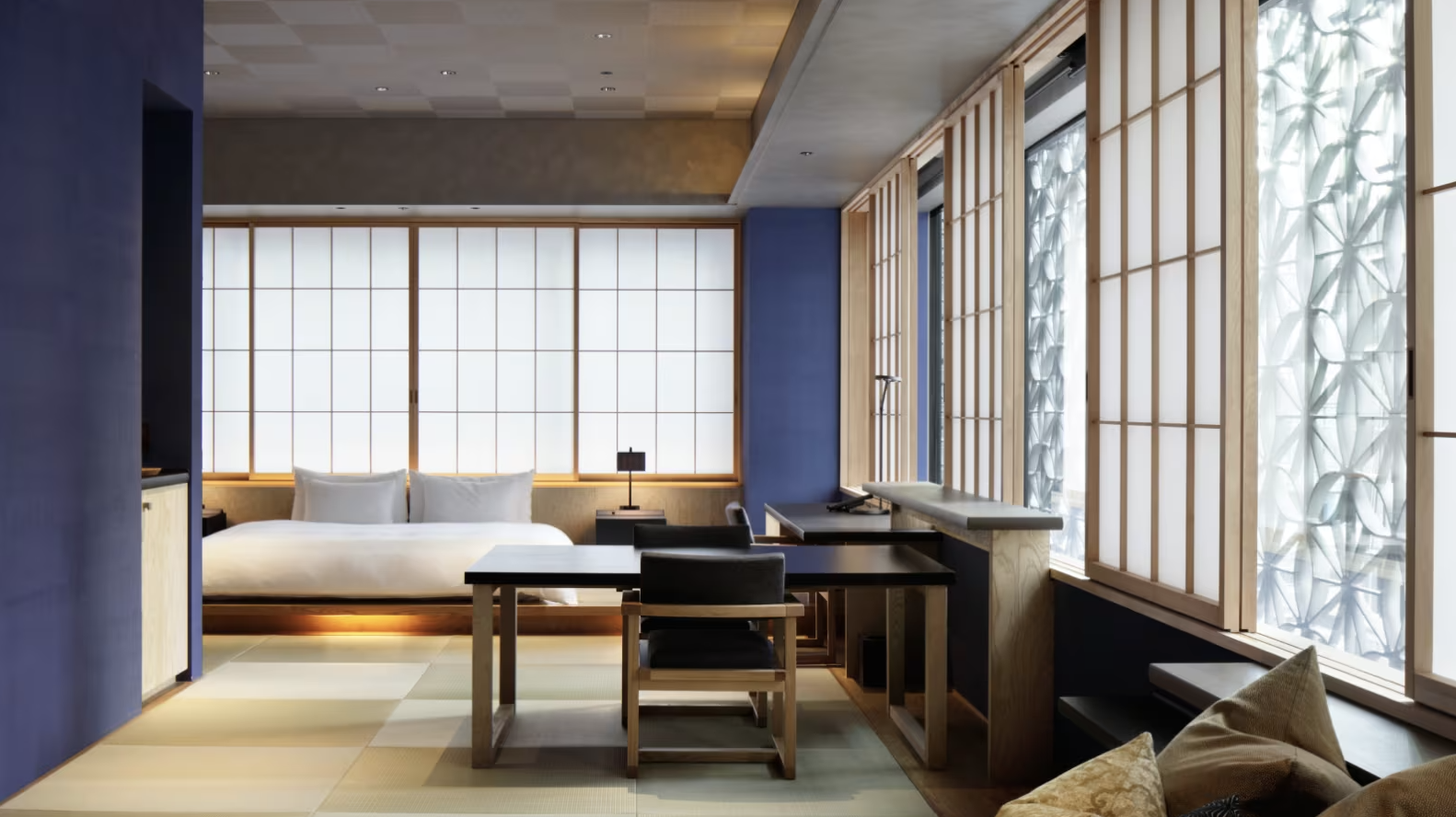
Hoshinoya Tokyo demonstrates how health architecture can be deployed in a high-density, vertical urban market. Operating as a vertical ryokan, the building features an exterior envelope wrapped in a traditional lattice framework that acts as a natural sun and privacy shield, regulating heat entry and indoor light quality. The core structural triumph is its plumbing and engineering system, which pumps natural, mineral-rich hot spring water from 1,500 meters beneath the city directly to the building's top floor. By integrating an open-air hot spring bath into the physical crown of a modern skyscraper, the property transforms prime urban real estate into a passive hydrotherapy engine that drives massive occupancy premiums among corporate executives.
Hoshinoya Tokyo demonstrates how health architecture can be deployed in a high-density, vertical urban market. Operating as a vertical ryokan, the building features an exterior envelope wrapped in a traditional lattice framework that acts as a natural sun and privacy shield, regulating heat entry and indoor light quality. The core structural triumph is its plumbing and engineering system, which pumps natural, mineral-rich hot spring water from 1,500 meters beneath the city directly to the building's top floor. By integrating an open-air hot spring bath into the physical crown of a modern skyscraper, the property transforms prime urban real estate into a passive hydrotherapy engine that drives massive occupancy premiums among corporate executives.
The Financial Realities and Capital Allocation Strategy
Transitioning to a built-in health infrastructure requires significant upfront capital expenditure. However, recent hospitality performance data demonstrates that strategic, integrated well-being investments yield highly efficient returns on investment.
Properties featuring focused, deeply integrated well-being touchpoints, historically referred to as minor wellness infrastructure, routinely outperform sprawling, service-heavy spa complexes across key efficiency metrics. These properties record stronger growth in Average Daily Rate (ADR), Revenue Per Available Room (RevPAR), and Gross Operating Profit Per Available Room (GOPPAR).
While major standalone wellness concepts drive high overall top-line revenue, their intricate labor and overhead requirements often dilute net margins. By contrast, embedding health features straight into the guest room design allows operators to command premium room rates while keeping labor-intensive spa overhead remarkably low.
With global hospitality markets facing persistent labor shortages, building wellness directly into the property infrastructure offers a highly scalable operational hedge. A property reliant on a massive team of therapists, specialists, and gym staff is vulnerable to wage inflation and talent scarcity. Conversely, an asset engineered with automated circadian lighting, advanced air purification, and biophilic architectural features delivers continuous, passive rejuvenation with zero additional strain on the property's daily payroll.
The future of premium hospitality does not belong to properties that offer wellness as a temporary escape from the environment. It belongs to properties where the built environment itself is the primary engine of recovery. By embedding biological optimization straight into the building's blueprint, executive leadership can insulate portfolios from changing consumer trends, maximize asset values, and capture the ultimate luxury currency: long-term human vitality.