
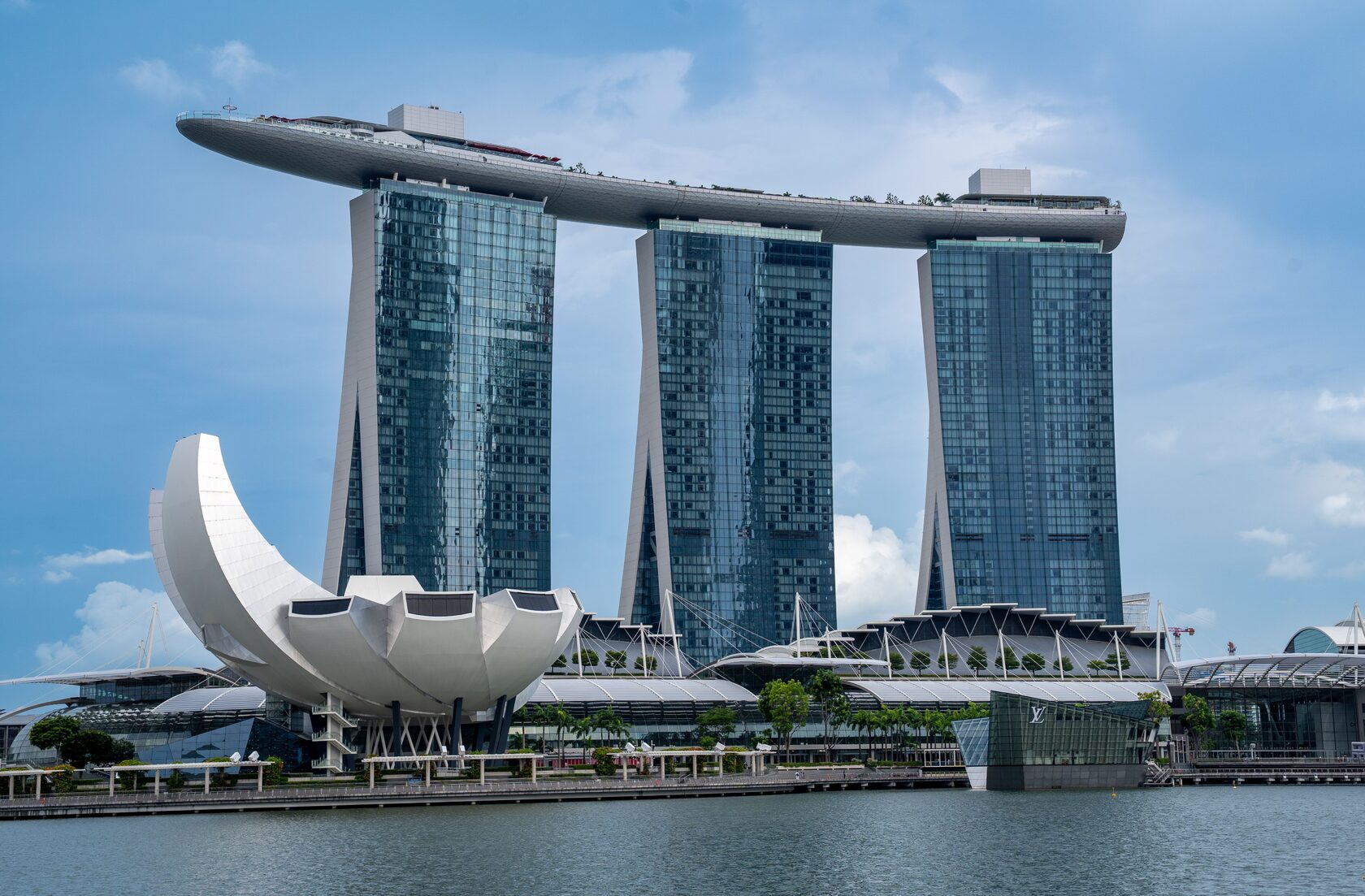
Over the past two decades, the integrated resort (IR) concept in Asia has evolved from traditional casino venues into massive, multi-use economic powerhouses. Combining ultra-luxury lodging, high-end retail districts, Michelin-starred culinary venues, convention center (MICE) facilities, and world-class entertainment arenas alongside a central gaming footprint, integrated resorts have become the premier real estate asset class in Asia-Pacific hospitality.
Driven by a surge in premium mass travelers and multi-billion-dollar property expansions, the global resort market size is estimated at $472.8 billion, with the Asia-Pacific region commanding the largest share at over 45.1%. Far from relying solely on gaming tables, modern resort operators capture consumer spend across diverse, high-margin revenue streams. High-margin casino operations often directly cross-subsidize world-class entertainment, Michelin-rated chefs, and architectural marvels that attract non-gaming tourists who would otherwise never visit a gaming-focused property.
Driven by a surge in premium mass travelers and multi-billion-dollar property expansions, the global resort market size is estimated at $472.8 billion, with the Asia-Pacific region commanding the largest share at over 45.1%. Far from relying solely on gaming tables, modern resort operators capture consumer spend across diverse, high-margin revenue streams. High-margin casino operations often directly cross-subsidize world-class entertainment, Michelin-rated chefs, and architectural marvels that attract non-gaming tourists who would otherwise never visit a gaming-focused property.
The Strategic Shift to Non-Gaming Diversification
Historically, integrated resorts across Asia relied heavily on high-roller VIP baccarat operations to drive bottom-line performance. Today, changing regulatory frameworks, stricter regional capital controls, and evolving consumer preferences have shifted the industry's economic center of gravity toward the premium mass demographic, affluent middle-class and high-yield travelers who spend heavily on luxury lodging, experiential dining, retail, and entertainment.
A key structural advantage of the integrated resort model is its MICE economic flywheel. Large-scale corporate conventions and international expos draw thousands of business travelers during weekday lulls, keeping hotel occupancy high when leisure travel naturally bottoms out. Additionally, luxury hotel rooms within an integrated resort function as customer acquisition currency; operators strategically offer complimentary high-end suites to top-tier patrons whose auxiliary spending across retail, dining, and gaming yields exponentially higher profit margins for the overall property.
A key structural advantage of the integrated resort model is its MICE economic flywheel. Large-scale corporate conventions and international expos draw thousands of business travelers during weekday lulls, keeping hotel occupancy high when leisure travel naturally bottoms out. Additionally, luxury hotel rooms within an integrated resort function as customer acquisition currency; operators strategically offer complimentary high-end suites to top-tier patrons whose auxiliary spending across retail, dining, and gaming yields exponentially higher profit margins for the overall property.
Regional Footprints Across Major Hubs and Pipelines
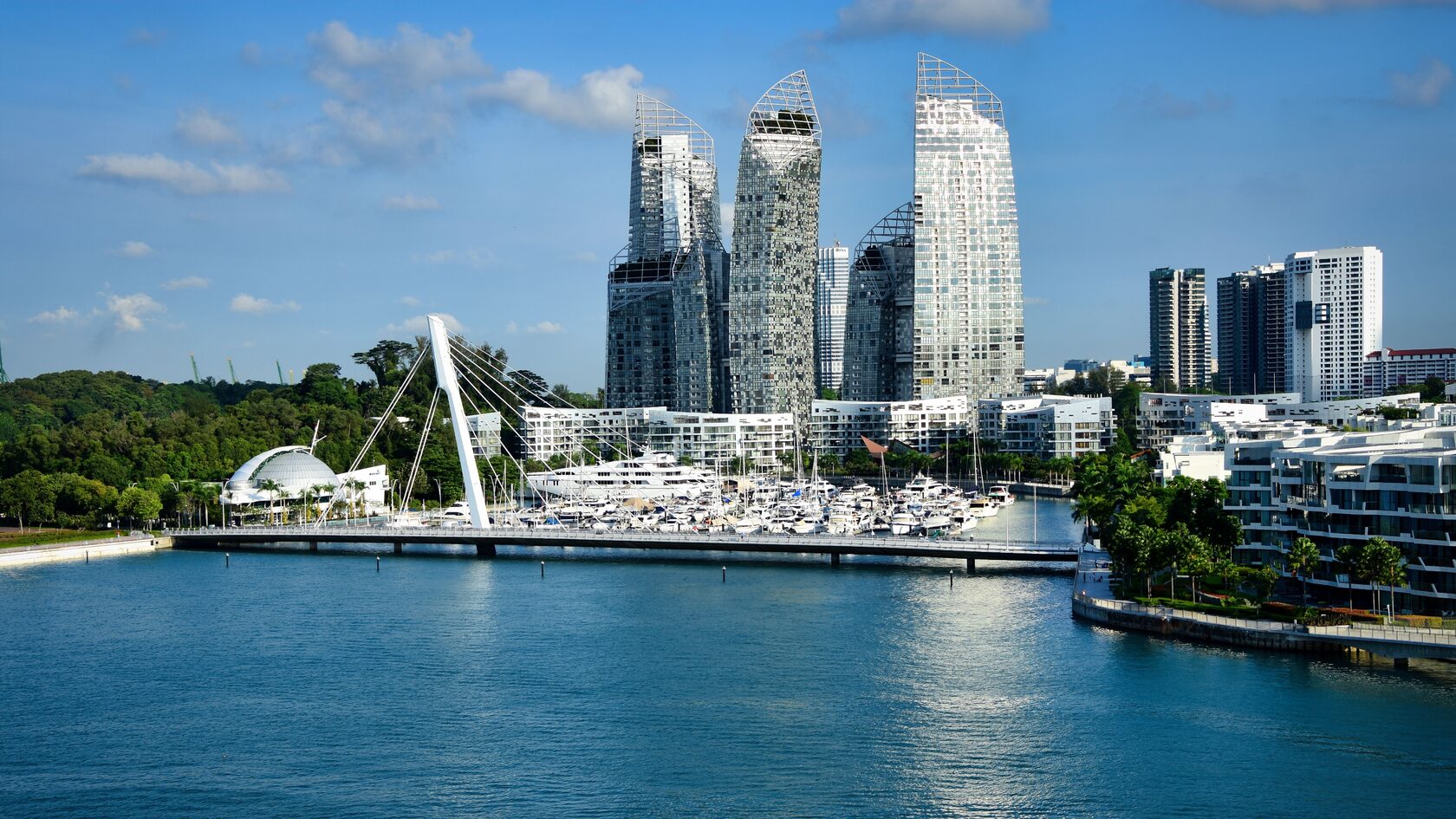
Across the Asia-Pacific region, integrated resort development features a clear divide between mature duopoly hubs executing historic capital overhauls and emerging markets launching mega-projects to capture new market share.
Singapore and the Gold Standard of Duopoly Reinvestment
Singapore represents the benchmark for highly regulated, high-yield integrated hospitality. Rather than resting on market share, both licensed operators are executing multi-billion-dollar property overhauls.
Marina Bay Sands is advancing a massive $8 billion expansion pipeline that includes constructing a fourth 55-story luxury hotel tower, a live entertainment arena, and fully revamped luxury suite offerings. Marina Bay Sands commands remarkable financial performance, posting casino revenue exceeding $2.1 billion in the first half of the year, alongside a peak occupancy of 95.7%, an upscale Average Daily Rate (ADR) of $1,006, and an industry-leading Revenue per Available Room (RevPAR) of $963. Concurrently, Resorts World Sentosa is executing its $6.8 billion "RWS 2.0" transformation strategy through 2030, introducing all-suite hotel concepts, adding 700 keys, expanding its oceanarium, and building Super Nintendo World.
Japan and the Mega-Pipeline
Japan is establishing its official debut in the brick-and-mortar casino landscape with MGM Osaka, located on Yumeshima Island in Osaka Bay. Backed by an $8.5 billion (JPY 1.27 trillion) target opening budget, the project allocated $200 million to $225 million in pre-funded construction capital this year. The design features a signature 27-story arc-shaped hotel tower, a 23,293-square-meter casino, and expansive world-class MICE facilities ahead of its targeted autumn 2030 launch.
Emerging Regional Markets in Asia
Beyond the primary hubs, regional development is accelerating rapidly across Southeast Asia:
Singapore and the Gold Standard of Duopoly Reinvestment
Singapore represents the benchmark for highly regulated, high-yield integrated hospitality. Rather than resting on market share, both licensed operators are executing multi-billion-dollar property overhauls.
Marina Bay Sands is advancing a massive $8 billion expansion pipeline that includes constructing a fourth 55-story luxury hotel tower, a live entertainment arena, and fully revamped luxury suite offerings. Marina Bay Sands commands remarkable financial performance, posting casino revenue exceeding $2.1 billion in the first half of the year, alongside a peak occupancy of 95.7%, an upscale Average Daily Rate (ADR) of $1,006, and an industry-leading Revenue per Available Room (RevPAR) of $963. Concurrently, Resorts World Sentosa is executing its $6.8 billion "RWS 2.0" transformation strategy through 2030, introducing all-suite hotel concepts, adding 700 keys, expanding its oceanarium, and building Super Nintendo World.
Japan and the Mega-Pipeline
Japan is establishing its official debut in the brick-and-mortar casino landscape with MGM Osaka, located on Yumeshima Island in Osaka Bay. Backed by an $8.5 billion (JPY 1.27 trillion) target opening budget, the project allocated $200 million to $225 million in pre-funded construction capital this year. The design features a signature 27-story arc-shaped hotel tower, a 23,293-square-meter casino, and expansive world-class MICE facilities ahead of its targeted autumn 2030 launch.
Emerging Regional Markets in Asia
Beyond the primary hubs, regional development is accelerating rapidly across Southeast Asia:
- The Philippines: The market features an urban-regional split. While nationwide occupancy holds near 60% due to an infusion of 12,249 new keys across 50 active projects, Metro Manila’s prime IR districts sustain a high 81.8% occupancy with luxury ADRs hovering between PHP 11,000 and PHP 12,000 (190–207). Pipelines include Suntrust's $1.25 billion Westside City IR in Manila (70% to 75% complete, targeting Q3 2026), alongside Travellers and Megaworld breaking ground on the $400 million Mactan World Resorts in Cebu and a $300 million project in Boracay.
- Vietnam: Vietnam is testing strategic policy adjustments by expanding pilot programs that allow eligible local citizens into select properties like The Grand Ho Tram under a tightly monitored 5-year framework. Meanwhile, Sun Group is pricing the $2 billion Van Don Casino Resort spanning 244 hectares in the northern Van Don Economic Zone, aiming for a 2028 casino launch and final completion by 2034.
- Thailand: Thailand remains the most closely watched legislative pipeline in Southeast Asia. The proposed Entertainment Complex Act outlines a 17% GGR tax rate for massive 480,000-square-meter complexes where gaming space is limited to just 3% to 5% of total land footprint, targeting a projected rollout by 2029.
- Malaysia and South Korea: In Malaysia, Resorts World Genting is optimizing non-gaming infrastructure via the launch of Eufloria, the country's largest floral glasshouse complex. In South Korea, Incheon’s $1.6 billion Inspire Entertainment Resort is leveraging its 15,000-seat Inspire Arena to establish a strict 50-50 gaming to non-gaming revenue split following financial restructuring.
How Luxury Hotels Power Integrated Resorts
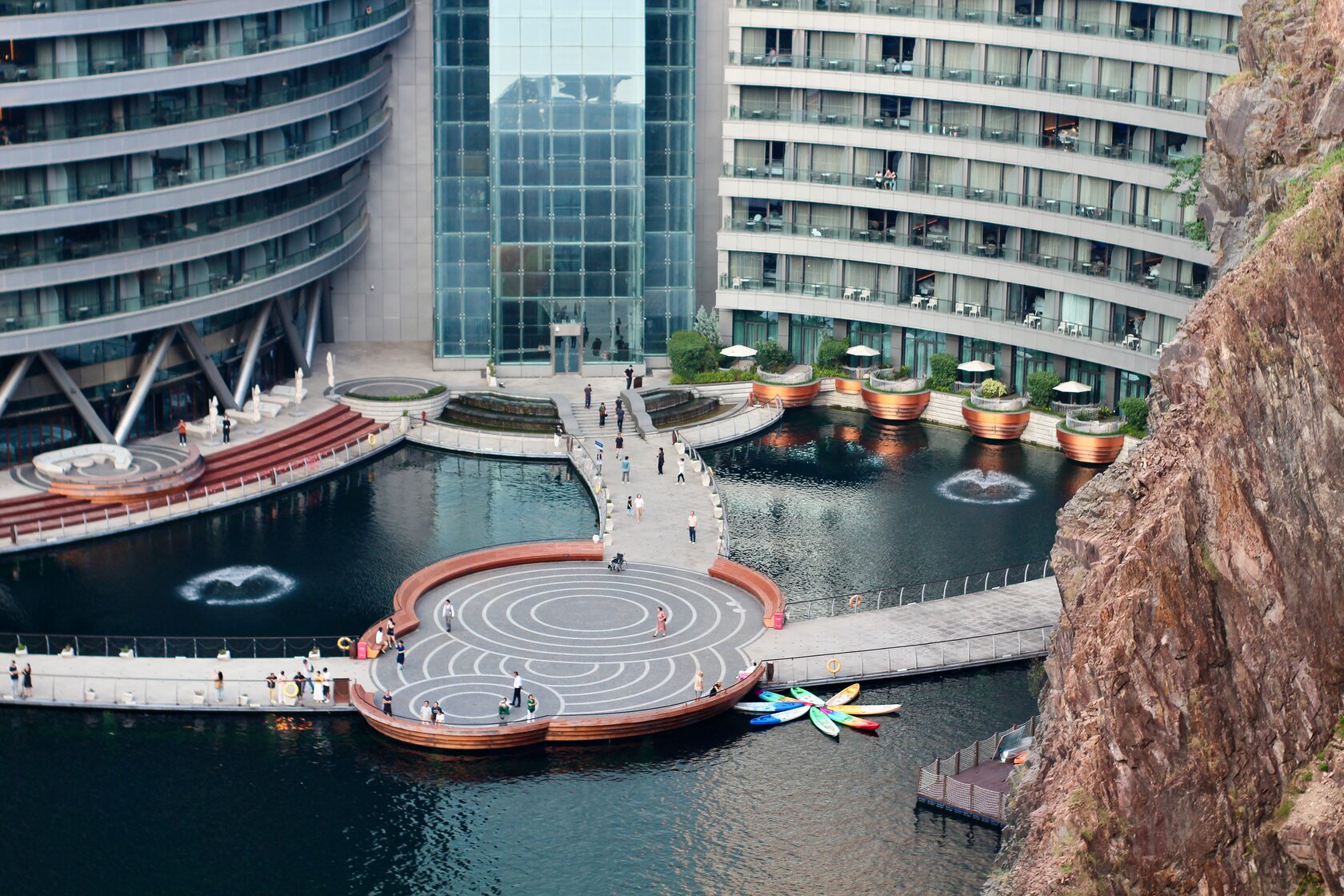
In an integrated resort, luxury hotel operations serve as the central customer acquisition and retention engine for the entire development. Rather than operating as standalone lodging, the hotel component is built directly into the resort's physical layout, requiring guests to pass through luxury shopping arcades, dining districts, and entertainment arenas to maximize impulse spend across the property.
To capitalize on the growing pool of high-spending travelers, integrated resort hotels across Singapore, Macau, and Manila are aggressively remodeling standard rooms into larger, ultra-luxury suites. Combined with non-gaming brand partnerships and direct connectivity to international entertainment events, integrated resort hotel properties command premium room pricing and maintain high occupancies throughout the year.
The integrated resort market in Asia has evolved into a sophisticated, institutional-grade sector of global hospitality real estate. By moving away from single-source gaming reliance and creating multi-dimensional destinations that incorporate luxury suite lodging, global conventions, branded entertainment, and fine dining, resort operators are securing durable, high-margin revenue streams. As major new mega-developments move through construction and established flagships execute unprecedented expansions, integrated resorts remain at the forefront of Asia's tourism economy.
To capitalize on the growing pool of high-spending travelers, integrated resort hotels across Singapore, Macau, and Manila are aggressively remodeling standard rooms into larger, ultra-luxury suites. Combined with non-gaming brand partnerships and direct connectivity to international entertainment events, integrated resort hotel properties command premium room pricing and maintain high occupancies throughout the year.
The integrated resort market in Asia has evolved into a sophisticated, institutional-grade sector of global hospitality real estate. By moving away from single-source gaming reliance and creating multi-dimensional destinations that incorporate luxury suite lodging, global conventions, branded entertainment, and fine dining, resort operators are securing durable, high-margin revenue streams. As major new mega-developments move through construction and established flagships execute unprecedented expansions, integrated resorts remain at the forefront of Asia's tourism economy.