
How Soaring International Tourism Is Turning Busan into an Elite Hotel Investment Market
26.10.2026
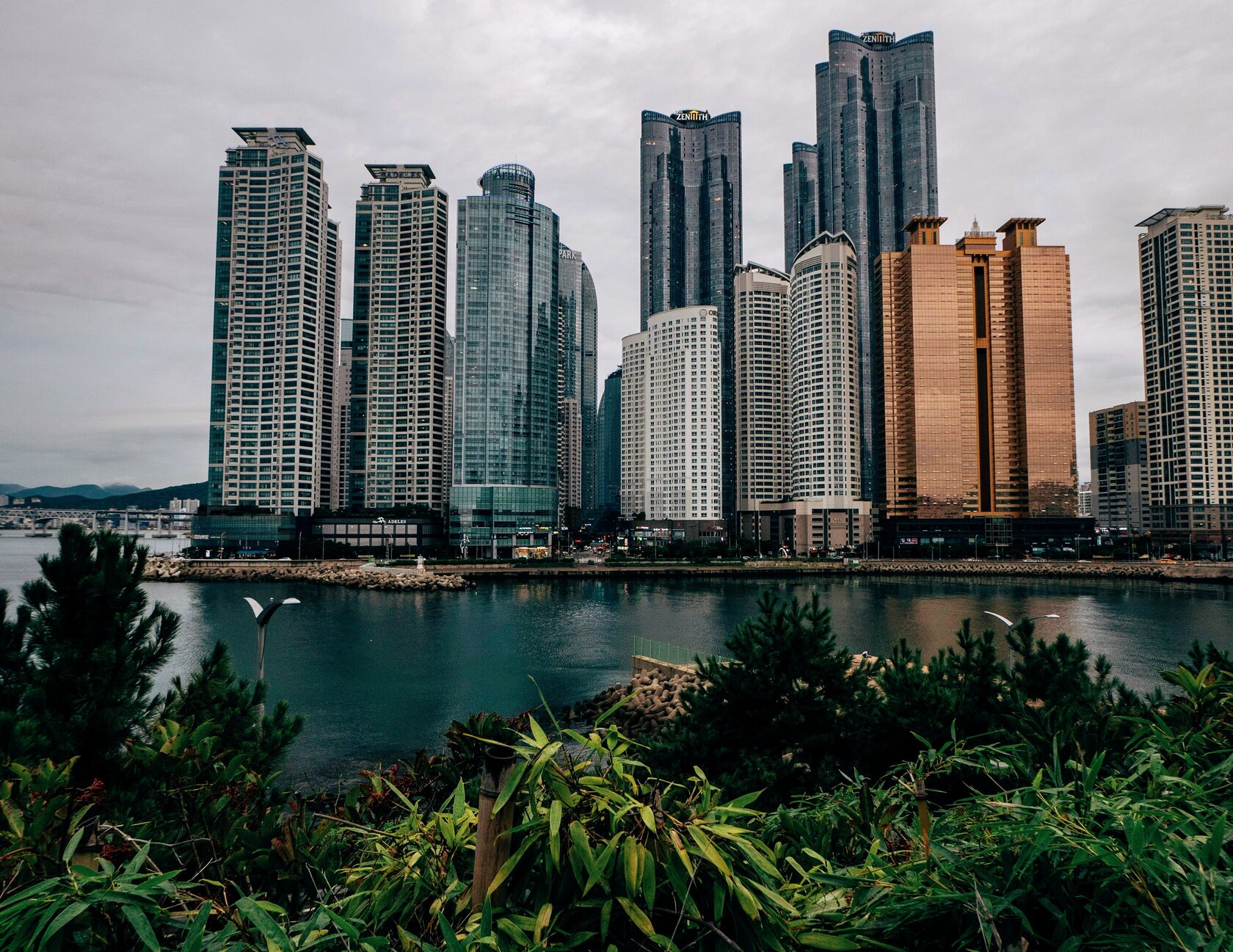
South Korea’s second-largest metropolis has emerged as one of the world's most dynamic breakout travel destinations throughout 2026. Often contrasted as South Korea's vibrant coastal counterpart to Seoul's dense administrative core, Busan combines an idyllic beach lifestyle, celebrated culinary traditions, and an audacious urban architectural reinvention. Historically recognized as an industrial logistics capital, the city has evolved into a global travel powerhouse, underpinned by unprecedented international visitor volumes, double-digit lodging yields, and an influx of overseas institutional capital reshaping its coastal skyline.
Unprecedented Inbound Surge and Shifting Tourist Demographics
A historic turning point occurred early in the year when Busan crossed the threshold of one million foreign visitors in the first quarter alone, logging 1,023,946 arrivals. This marked the milestone a full month earlier than in 2025 and established the fastest pace of overseas arrivals since official tracking began in 2014. Growth accelerated through the spring, with foreign arrivals reaching 1.94 million across the first five months of the year, representing a 40 percent year-on-year surge that comfortably outstripped South Korea’s national average. By August, inbound international travel reached 3.43 million visitors, up 45.9 percent over the prior year.
The geography of Busan's inbound demographic has also expanded significantly. First-quarter arrival metrics demonstrated substantial diversification across key source markets: Taiwan represented the largest inbound contingent with 208,984 travelers, closely followed by mainland China at 197,958, Japan at 130,217, the United States at 81,437, and Vietnam at 44,352. On a broader Asia-Pacific level, flight and travel bookings directly into Busan climbed 62.7 percent year-on-year. This upward momentum was mirrored in consumer digital engagement, with accommodation searches jumping 43 percent on Agoda, 30 percent on Airbnb, and 50 percent on Expedia, which ranked Busan fifth globally for search growth in its Unpack '27 report.
The geography of Busan's inbound demographic has also expanded significantly. First-quarter arrival metrics demonstrated substantial diversification across key source markets: Taiwan represented the largest inbound contingent with 208,984 travelers, closely followed by mainland China at 197,958, Japan at 130,217, the United States at 81,437, and Vietnam at 44,352. On a broader Asia-Pacific level, flight and travel bookings directly into Busan climbed 62.7 percent year-on-year. This upward momentum was mirrored in consumer digital engagement, with accommodation searches jumping 43 percent on Agoda, 30 percent on Airbnb, and 50 percent on Expedia, which ranked Busan fifth globally for search growth in its Unpack '27 report.
Economic Multipliers, Retail Recovery, and the Cruise Boom
This physical influx translated into substantial economic activity. International tourist spending reached 454.4 billion won (approximately $307 million) across the first five months of 2026, marking a 56 percent surge compared to the same period in 2025 and firmly securing Busan’s position as the second-largest tourist revenue center in South Korea behind Seoul. Retail corridors experienced a swift recovery, lowering commercial vacancy rates across central shopping districts and spurring heavy transactional volumes at major luxury retail centers such as Shinsegae Duty Free.
A key contributor to this economic surge has been maritime tourism. Following the establishment of round-the-clock terminal operations and seamless fly-rail-cruise homeport programs, Chinese cruise passenger arrivals alone climbed to 180,388 in the first quarter, compared to 57,964 during the same period in 2025, with annual projections approaching 800,000 maritime travelers.
A key contributor to this economic surge has been maritime tourism. Following the establishment of round-the-clock terminal operations and seamless fly-rail-cruise homeport programs, Chinese cruise passenger arrivals alone climbed to 180,388 in the first quarter, compared to 57,964 during the same period in 2025, with annual projections approaching 800,000 maritime travelers.
Surging Hotel Performance and Operating Yields
The sudden influx of high-spending leisure and corporate travelers has catalyzed the local lodging sector into record territory. Driven by an international visitor profile prioritizing oceanfront luxury and lifestyle accommodations, Busan recorded a 27 percent year-on-year climb in actualized average daily rates (ADR) across the first half of 2026, positioning the coastal city among the top 20 urban destinations globally for rate growth.
While five-star luxury flagships enjoyed elevated pricing power, the mid-tier segment captured exceptional operational lift. Regional three-star properties registered a 10.5 percent climb in ADR paired with a 14 percent surge in occupancy, culminating in a 25.9 percent spike in revenue per available room (RevPAR). Customer satisfaction metrics remained consistently elevated despite the high volume; Yanolja Research placed Busan at an average rating of 4.723 out of 5 across regional metropolitan destinations, while the civic Visit Busan Pass maintained a 97 percent positive user sentiment score.
While five-star luxury flagships enjoyed elevated pricing power, the mid-tier segment captured exceptional operational lift. Regional three-star properties registered a 10.5 percent climb in ADR paired with a 14 percent surge in occupancy, culminating in a 25.9 percent spike in revenue per available room (RevPAR). Customer satisfaction metrics remained consistently elevated despite the high volume; Yanolja Research placed Busan at an average rating of 4.723 out of 5 across regional metropolitan destinations, while the civic Visit Busan Pass maintained a 97 percent positive user sentiment score.
Supply Additions and the Race for Luxury Inventory
To satisfy this demand, global hospitality chains and domestic development conglomerates have engaged in an aggressive race for inventory, targeting the upscale, luxury, and extended-stay segments. The development pipeline is split between oceanfront luxury resorts and transit-oriented lifestyle business hotels designed to accommodate the burgeoning Meetings, Incentives, Conferences, and Exhibitions (MICE) sector. This institutional momentum has been accelerated by preparation for forthcoming diplomatic summits, including the upcoming APEC 2027 Summit in Busan.
Significant supply additions have already begun delivering into the market:
Significant supply additions have already begun delivering into the market:
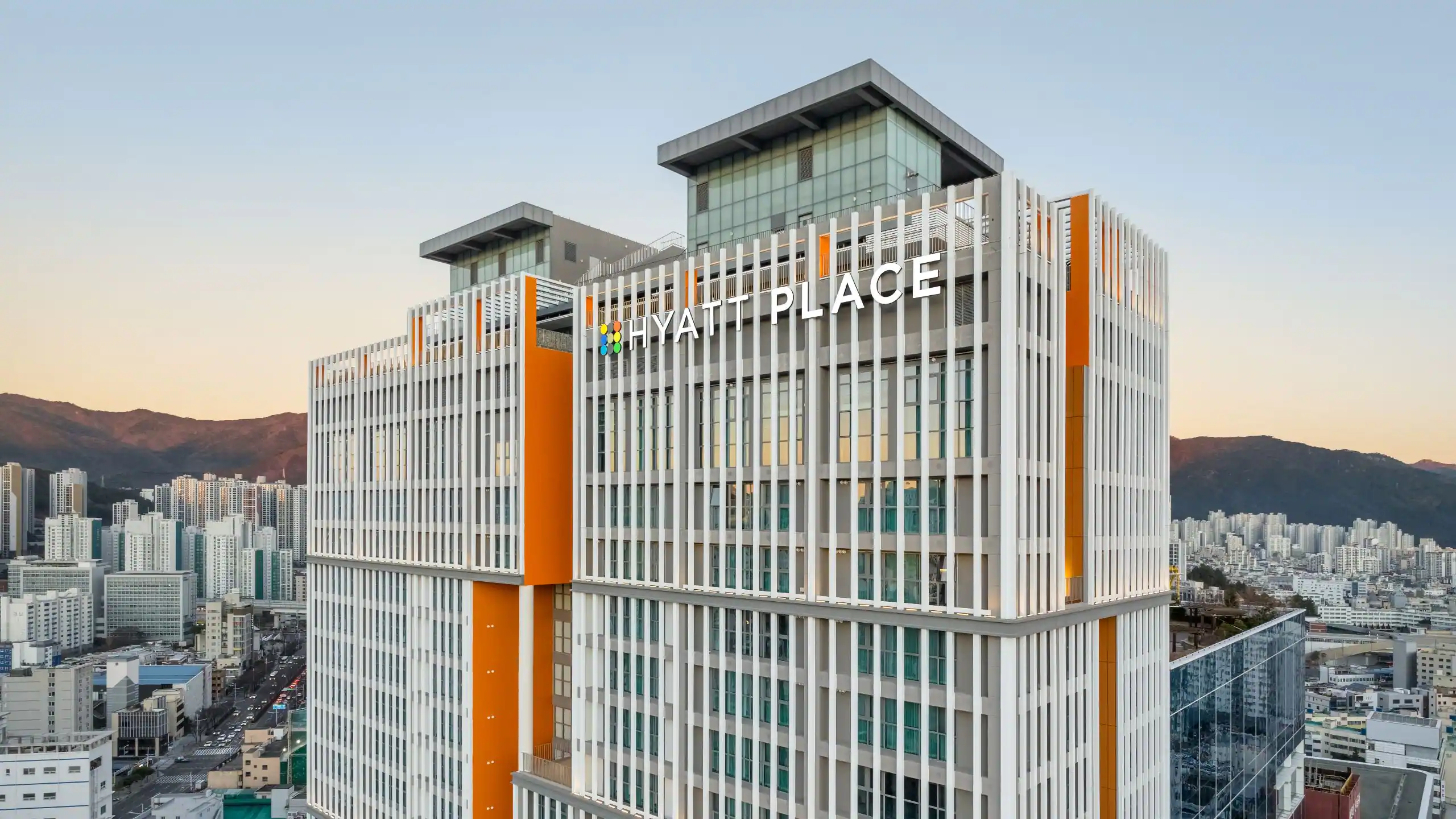
- Hyatt Place Busan Yeonsan: Opened in January 2026 at a major rapid transit junction, offering 160 select-service keys framed in a modern Korean design aesthetic for dual corporate and leisure segments.
- Matie Busan Harbor City: Launched in April 2026, this 193-key apartment-style hotel concept positioned adjacent to Busan Port and Chinatown specifically captures long-term business stays and extended family travel.
- Banyan Tree Busan Haeundae: Construction resumed in early 2026 on this ultra-luxury 195-key coastal sanctuary located in the Osiria Tourism Complex, targeting high-net-worth travelers seeking private ocean views and integrated wellness programming.
- Shilla Monogram Osiria: Advancing through development nearby, comprising 238 luxury hotel rooms and 240 premium resort condominiums designed to capture both international vacationers and affluent domestic second-home demand.
- Hilton Garden Inn Busan Gijang: Signed under a franchise agreement in mid-2026, this 111-key upscale focused-service property is slated to open in 2028 within a coastal mixed-use development adjacent to anchor entertainment attractions like Lotte World Adventure Busan.
- Wyndham Busan: Formalized in early 2026 to introduce an upper-upscale footprint by 2030, marking an aggressive regional expansion strategy aimed at high-growth Northeast Asian transit corridors.
Institutional Capital Inflow and Smart Hotel Operations
Underpinning these balance sheets is a profound shift in capital structure. Strong operational fundamentals, robust cash flows, and double-digit RevPAR growth have attracted deep pools of foreign institutional capital. Cross-border private equity vehicles and global property funds have emerged as dominant buyers of operational hotel assets across Haeundae, Marine City, and the emerging North Port district.
To navigate rising local labor regulations, operating costs, and staffing constraints, institutional operators are broadly integrating smart hotel architectures. Properties across the coastal belt are implementing end-to-end artificial intelligence reservations, contactless biometric check-in suites, automated housekeeping logistics, and real-time big data engines that calibrate dynamic room pricing against incoming flight and ferry traffic.
To navigate rising local labor regulations, operating costs, and staffing constraints, institutional operators are broadly integrating smart hotel architectures. Properties across the coastal belt are implementing end-to-end artificial intelligence reservations, contactless biometric check-in suites, automated housekeeping logistics, and real-time big data engines that calibrate dynamic room pricing against incoming flight and ferry traffic.
Urban Reinvention: The North Port Master Plan and Connectivity
The commercial viability of this lodging boom is reinforced by modern urban infrastructure and cultural cachet. The historic North Port redevelopment represents one of the largest civic waterfront transformations in Asia, physically uniting Busan Station with the maritime harbor via grand pedestrian corridors, coastal parks, and landmark architectural civic assets. Key anchors include the Snøhetta-designed Busan Opera House and the multi-use Busan Lotte Tower, reshaping the city's coastal skyline.
Transit connectivity remains a structural advantage; the high-speed KTX train links central Seoul to Busan Station in under three hours, while international passenger expansions at Gimhae International Airport continue to surpass multi-year capacity records.
Transit connectivity remains a structural advantage; the high-speed KTX train links central Seoul to Busan Station in under three hours, while international passenger expansions at Gimhae International Airport continue to surpass multi-year capacity records.
Cultural Anchors and Gastronomic Appeal
Furthermore, Busan’s identity as an international lifestyle hub has been amplified by creative arts and gastronomy. Known worldwide as the home of the prestigious Busan International Film Festival (BIFF) and a favored filming backdrop for globally distributed K-dramas, the city continues to attract international culture enthusiasts.
Signature experiences—from the colorful hillside alleys of Gamcheon Culture Village and the dramatic clifftop vantage of Haedong Yonggungsa Temple to the retro-styled Haeundae Sky Capsule train and evening drone light spectacles over Gwangalli Bridge, provide endless viral appeal. This vibrant street-level energy is matched by South Korea’s largest seafood hub at Jagalchi Fish Market, the historic food stalls of Bupyeong Kwangtong Night Market, and the prestigious 2026 Michelin Guide Seoul & Busan, which highlighted 55 local culinary destinations.
From urban transit hubs to scenic coastal beaches, Busan’s hospitality landscape has transitioned from a seasonal seaside getaway into a year-round, institutional-grade commercial powerhouse. Supported by record inbound arrivals, rising corporate and leisure yields, and world-class waterfront master plans, the city has solidified its standing among the most resilient and compelling hotel investment markets in the Asia-Pacific region.