
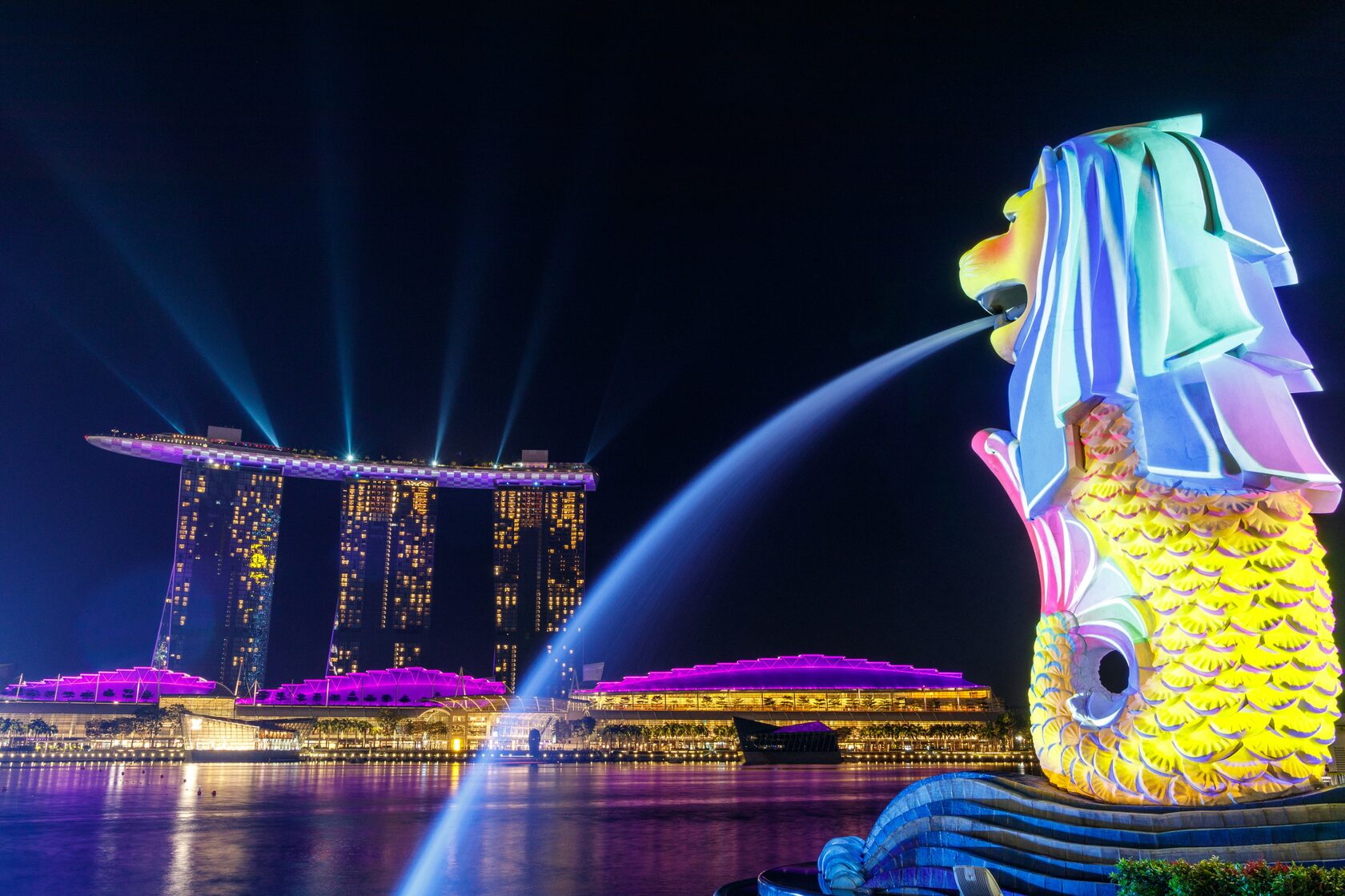
Singapore’s tourism and hospitality sector is entering a new phase of evolution, one defined less by sheer visitor numbers and more by the quality and value of experiences. According to a recent report by HVS Asia Pacific, the city-state is not only recovering from the pandemic years but actively reshaping its identity as a premium global hub for travel, investment, and wellness.
With a population of just over six million and a land area of 734 square kilometres, Singapore continues to punch far above its weight. Its strategic location, world-class infrastructure, and cultural diversity have long made it a magnet for both business and leisure travelers. In 2025, the city-state welcomed approximately 16.9 million international visitors, marking a steady 2.3 percent increase from the previous year and reaching nearly 89 percent of pre-pandemic levels.
Yet the more telling story lies not in arrivals, but in spending. Data highlighted by HVS Asia Pacific shows tourism receipts surged significantly, reaching nearly SGD24 billion within the first nine months of 2025 alone. This reflects a broader shift in visitor behavior, where travelers are spending more on experiences, services, and curated offerings rather than traditional shopping or basic accommodation. The trend aligns with Singapore’s deliberate move toward a “value-over-volume” tourism strategy, prioritizing high-spending visitors and premium segments.
This repositioning is supported by a steady pipeline of attractions and global events. New developments such as the Mandai Wildlife Reserve and the Singapore Oceanarium have expanded the city’s appeal, while large-scale events—including international sporting competitions, major exhibitions, and entertainment showcases—continue to draw global audiences. Recurring highlights like the Formula 1 Singapore Grand Prix further reinforce the destination’s international profile.
Behind the scenes, the economic backdrop remains relatively stable. Insights from HVS Asia Pacific indicate that inflation moderated to around 0.9 percent in 2025, aided by government measures to manage living costs, while interest rates remain relatively low. Singapore’s GDP growth, which stood at 5 percent in 2025, is expected to ease to 3.2 percent in 2026 amid global uncertainties, particularly in trade and geopolitical tensions. Even so, the country’s diversified economy and strong services sector continue to provide a resilient foundation for growth.
In the hospitality sector, performance showed signs of normalization after a strong post-pandemic rebound. HVS Asia Pacific notes that revenue per available room (RevPAR) dipped slightly by 0.7 percent in 2025, reflecting short-term adjustments rather than structural weakness. Hotel occupancy trends varied across segments, with luxury properties demonstrating resilience while budget accommodations faced downward pressure due to shifting demand toward higher-end experiences.
Investment activity, however, paints a more optimistic picture. The report from HVS Asia Pacific highlights that hotel transactions in 2025 reached approximately SGD1.2 billion across ten deals, signaling renewed investor confidence. Larger, branded assets dominated the market, suggesting a preference for quality and long-term value. Although still below pre-pandemic peaks, the recovery in investment activity indicates a strengthening appetite for Singapore’s hospitality assets, particularly in a low-interest-rate environment.
Looking ahead, the supply pipeline remains measured. As tracked by HVS Asia Pacific, Singapore has nearly 80,000 hotel rooms, with an additional 6,700 rooms expected by 2030. Limited land availability, especially in prime areas, continues to constrain new developments. As a result, operators are increasingly focusing on refurbishment and rebranding strategies rather than ground-up construction.
Parallel to these developments is the rapid rise of wellness tourism, a segment that HVS Asia Pacific identifies as central to Singapore’s long-term strategy. Positioned as a “City in Nature,” Singapore integrates green spaces, urban design, and lifestyle offerings to create a holistic wellness ecosystem. From therapeutic gardens and park connectors to luxury spas and medical wellness centers, the city is embedding well-being into its urban fabric.
The wellness economy itself is expanding quickly, valued at over USD23 billion and accounting for more than 4 percent of GDP. New concepts are emerging across the spectrum, including medical spas, recovery-focused fitness studios, and integrative health centers offering advanced therapies such as cryotherapy, red light therapy, and hyperbaric oxygen treatment. Hotels are also evolving, incorporating wellness programs, diagnostic services, and longevity-focused experiences into their offerings.
Future developments are set to elevate this positioning even further. A major wellness attraction by Austria-based Therme Group is slated to open by 2030, featuring thermal pools, wellness facilities, and a dedicated hotel along Singapore’s southern waterfront. Designed to attract both local and international visitors, the project underscores the city’s ambition to become a leading global wellness destination.
Beyond tourism and hospitality, infrastructure investments continue to enhance Singapore’s connectivity and appeal. New MRT lines, expanded airport capacity, and large-scale urban projects such as the Greater Southern Waterfront are reshaping the city’s landscape. Upcoming entertainment venues and integrated developments are also expected to strengthen Singapore’s position as a hub for events, business, and lifestyle experiences.
At the same time, emerging niche segments are adding depth to the tourism ecosystem. Wellness-focused real estate, assisted living developments, and even confinement hotels offering specialized prenatal and postnatal care highlight the diversification of hospitality offerings. Cruise tourism is also evolving, with wellness-themed voyages and luxury ships incorporating fitness, mindfulness, and spa experiences into their itineraries.
Despite global uncertainties, the outlook for 2026 remains cautiously optimistic. Projections cited by HVS Asia Pacific suggest visitor arrivals could reach between 17 and 18 million, while tourism receipts may climb to as much as SGD32.5 billion. Growth is expected to remain steady rather than explosive, shaped by external economic conditions but supported by strong fundamentals.
Singapore’s long-term vision, outlined in its Tourism 2040 roadmap, reinforces this trajectory. By focusing on high-value segments, enhancing destination appeal, and building a future-ready industry, the city aims to achieve tourism receipts of up to SGD50 billion by 2040. Technology will play a key role, with increasing adoption of AI, robotics, and digital platforms across the hospitality sector to improve efficiency and guest experience.
The transformation underway reflects a broader shift in global travel trends, where personalization, sustainability, and well-being are becoming central to the visitor experience. Singapore’s ability to adapt to these changes—while leveraging its strengths in infrastructure, safety, and innovation—positions it strongly for the years ahead.
With a population of just over six million and a land area of 734 square kilometres, Singapore continues to punch far above its weight. Its strategic location, world-class infrastructure, and cultural diversity have long made it a magnet for both business and leisure travelers. In 2025, the city-state welcomed approximately 16.9 million international visitors, marking a steady 2.3 percent increase from the previous year and reaching nearly 89 percent of pre-pandemic levels.
Yet the more telling story lies not in arrivals, but in spending. Data highlighted by HVS Asia Pacific shows tourism receipts surged significantly, reaching nearly SGD24 billion within the first nine months of 2025 alone. This reflects a broader shift in visitor behavior, where travelers are spending more on experiences, services, and curated offerings rather than traditional shopping or basic accommodation. The trend aligns with Singapore’s deliberate move toward a “value-over-volume” tourism strategy, prioritizing high-spending visitors and premium segments.
This repositioning is supported by a steady pipeline of attractions and global events. New developments such as the Mandai Wildlife Reserve and the Singapore Oceanarium have expanded the city’s appeal, while large-scale events—including international sporting competitions, major exhibitions, and entertainment showcases—continue to draw global audiences. Recurring highlights like the Formula 1 Singapore Grand Prix further reinforce the destination’s international profile.
Behind the scenes, the economic backdrop remains relatively stable. Insights from HVS Asia Pacific indicate that inflation moderated to around 0.9 percent in 2025, aided by government measures to manage living costs, while interest rates remain relatively low. Singapore’s GDP growth, which stood at 5 percent in 2025, is expected to ease to 3.2 percent in 2026 amid global uncertainties, particularly in trade and geopolitical tensions. Even so, the country’s diversified economy and strong services sector continue to provide a resilient foundation for growth.
In the hospitality sector, performance showed signs of normalization after a strong post-pandemic rebound. HVS Asia Pacific notes that revenue per available room (RevPAR) dipped slightly by 0.7 percent in 2025, reflecting short-term adjustments rather than structural weakness. Hotel occupancy trends varied across segments, with luxury properties demonstrating resilience while budget accommodations faced downward pressure due to shifting demand toward higher-end experiences.
Investment activity, however, paints a more optimistic picture. The report from HVS Asia Pacific highlights that hotel transactions in 2025 reached approximately SGD1.2 billion across ten deals, signaling renewed investor confidence. Larger, branded assets dominated the market, suggesting a preference for quality and long-term value. Although still below pre-pandemic peaks, the recovery in investment activity indicates a strengthening appetite for Singapore’s hospitality assets, particularly in a low-interest-rate environment.
Looking ahead, the supply pipeline remains measured. As tracked by HVS Asia Pacific, Singapore has nearly 80,000 hotel rooms, with an additional 6,700 rooms expected by 2030. Limited land availability, especially in prime areas, continues to constrain new developments. As a result, operators are increasingly focusing on refurbishment and rebranding strategies rather than ground-up construction.
Parallel to these developments is the rapid rise of wellness tourism, a segment that HVS Asia Pacific identifies as central to Singapore’s long-term strategy. Positioned as a “City in Nature,” Singapore integrates green spaces, urban design, and lifestyle offerings to create a holistic wellness ecosystem. From therapeutic gardens and park connectors to luxury spas and medical wellness centers, the city is embedding well-being into its urban fabric.
The wellness economy itself is expanding quickly, valued at over USD23 billion and accounting for more than 4 percent of GDP. New concepts are emerging across the spectrum, including medical spas, recovery-focused fitness studios, and integrative health centers offering advanced therapies such as cryotherapy, red light therapy, and hyperbaric oxygen treatment. Hotels are also evolving, incorporating wellness programs, diagnostic services, and longevity-focused experiences into their offerings.
Future developments are set to elevate this positioning even further. A major wellness attraction by Austria-based Therme Group is slated to open by 2030, featuring thermal pools, wellness facilities, and a dedicated hotel along Singapore’s southern waterfront. Designed to attract both local and international visitors, the project underscores the city’s ambition to become a leading global wellness destination.
Beyond tourism and hospitality, infrastructure investments continue to enhance Singapore’s connectivity and appeal. New MRT lines, expanded airport capacity, and large-scale urban projects such as the Greater Southern Waterfront are reshaping the city’s landscape. Upcoming entertainment venues and integrated developments are also expected to strengthen Singapore’s position as a hub for events, business, and lifestyle experiences.
At the same time, emerging niche segments are adding depth to the tourism ecosystem. Wellness-focused real estate, assisted living developments, and even confinement hotels offering specialized prenatal and postnatal care highlight the diversification of hospitality offerings. Cruise tourism is also evolving, with wellness-themed voyages and luxury ships incorporating fitness, mindfulness, and spa experiences into their itineraries.
Despite global uncertainties, the outlook for 2026 remains cautiously optimistic. Projections cited by HVS Asia Pacific suggest visitor arrivals could reach between 17 and 18 million, while tourism receipts may climb to as much as SGD32.5 billion. Growth is expected to remain steady rather than explosive, shaped by external economic conditions but supported by strong fundamentals.
Singapore’s long-term vision, outlined in its Tourism 2040 roadmap, reinforces this trajectory. By focusing on high-value segments, enhancing destination appeal, and building a future-ready industry, the city aims to achieve tourism receipts of up to SGD50 billion by 2040. Technology will play a key role, with increasing adoption of AI, robotics, and digital platforms across the hospitality sector to improve efficiency and guest experience.
The transformation underway reflects a broader shift in global travel trends, where personalization, sustainability, and well-being are becoming central to the visitor experience. Singapore’s ability to adapt to these changes—while leveraging its strengths in infrastructure, safety, and innovation—positions it strongly for the years ahead.