
Q3 2026 Financial Results IHG, Accor, and Wyndham: A Two-Speed Narrative for Hospitality Leaders in Asia-Pacific
23.10.2026
The third-quarter financial updates and trading releases for 2026 highlight a clear divide in the global hotel industry, particularly within the Asia-Pacific (APAC) market. Top hospitality groups, Wyndham Hotels & Resorts, InterContinental Hotels Group (IHG), and Accor, reported steady revenue growth and stable operational metrics globally. However, performance across the Asia-Pacific region reflects two distinct trends.
While leisure, business, and event demand drove momentum across South-East Asia, Australasia, Japan, and South Korea, Greater China faced ongoing economic headwinds, cautious domestic spending, and high comparisons from prior travel spikes. This environment resulted in a two-speed growth pattern across the region.
While leisure, business, and event demand drove momentum across South-East Asia, Australasia, Japan, and South Korea, Greater China faced ongoing economic headwinds, cautious domestic spending, and high comparisons from prior travel spikes. This environment resulted in a two-speed growth pattern across the region.
Global Macro Trends and Financial Highlights
Globally, the third quarter of 2026 demonstrated the resilience of asset-light, fee-generating business models. International travel demand remained stable, supported by group events and steady corporate bookings. This strength gave all three companies the confidence to maintain or upgrade their full-year earnings expectations.
Wyndham Hotels & Resorts
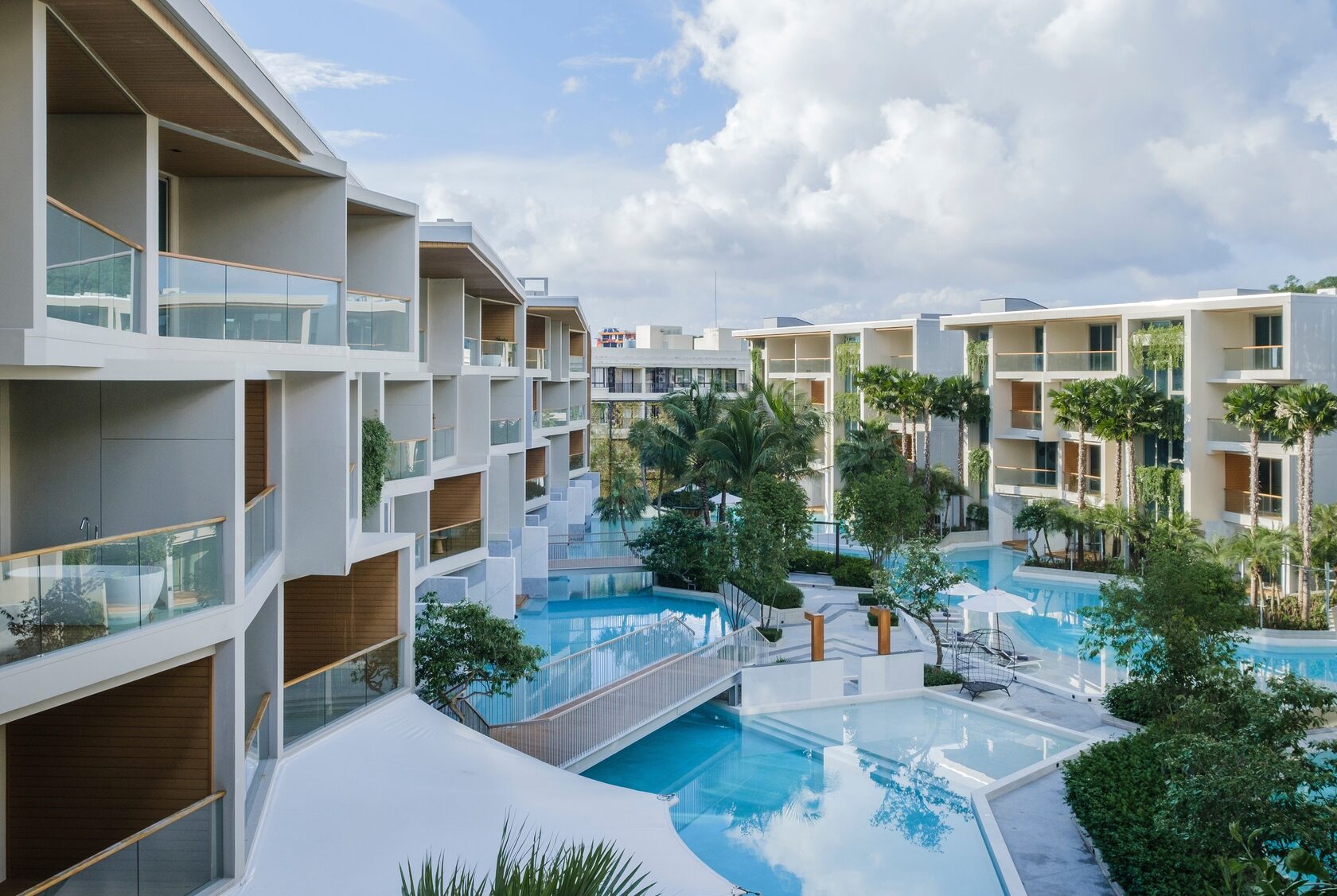
Wyndham reported Q3 2026 net revenue of $410 million, representing a 7% year-over-year increase from $383 million in Q3 2025. Comparable adjusted EBITDA reached $207 million, up 5% from the prior-year period, while adjusted diluted earnings per share (EPS) grew 9% to $1.43. Global Revenue Per Available Room (RevPAR) rose 2% year-over-year on a constant-currency basis.
Performance was led by the U.S. market, where RevPAR grew 6%, driven by a 300-basis-point increase in occupancy and a 280-basis-point gain in Average Daily Rate (ADR). The company generated $100 million in quarterly free cash flow, bringing its year-to-date total to $269 million. During the quarter, Wyndham returned $123 million to shareholders via $91 million in share repurchases and $32 million in dividends. Based on these results, management raised its full-year 2026 guidance, tightening revenue expectations to between $1.48 billion and $1.50 billion and adjusted EBITDA to between $740 million and $745 million.
Performance was led by the U.S. market, where RevPAR grew 6%, driven by a 300-basis-point increase in occupancy and a 280-basis-point gain in Average Daily Rate (ADR). The company generated $100 million in quarterly free cash flow, bringing its year-to-date total to $269 million. During the quarter, Wyndham returned $123 million to shareholders via $91 million in share repurchases and $32 million in dividends. Based on these results, management raised its full-year 2026 guidance, tightening revenue expectations to between $1.48 billion and $1.50 billion and adjusted EBITDA to between $740 million and $745 million.
IHG Hotel & Resorts

IHG reported an acceleration in global RevPAR growth, which rose 5.3% year-over-year in Q3 2026, building on a year-to-date gain of 4.6%. Overall pricing power remained firm, with ADR rising 3.9% and global occupancy improving by 0.9 percentage points. System-wide room revenue on a comparable basis was anchored by a 10% increase in Group travel, while Leisure grew 5% and Business travel grew 4%.
The group expanded its global footprint, achieving gross system growth of 6.3% and net system growth of 4.9% year-over-year. During the quarter, IHG opened 12.9 thousand rooms across 92 hotels, bringing year-to-date openings to 44.4 thousand rooms across 289 properties. This brought IHG's total global operating system to 1.06 million rooms across 7,186 hotels. Signing momentum remained steady, with 21.1 thousand rooms added across 164 hotels in Q3, bringing the total development pipeline to 353 thousand rooms across 2,426 properties (up 3.2% year-over-year). IHG reiterated its commitment to return over $1.2 billion to shareholders in 2026 through buybacks and dividends, while confirming confidence in reaching full-year market consensus targets.
The group expanded its global footprint, achieving gross system growth of 6.3% and net system growth of 4.9% year-over-year. During the quarter, IHG opened 12.9 thousand rooms across 92 hotels, bringing year-to-date openings to 44.4 thousand rooms across 289 properties. This brought IHG's total global operating system to 1.06 million rooms across 7,186 hotels. Signing momentum remained steady, with 21.1 thousand rooms added across 164 hotels in Q3, bringing the total development pipeline to 353 thousand rooms across 2,426 properties (up 3.2% year-over-year). IHG reiterated its commitment to return over $1.2 billion to shareholders in 2026 through buybacks and dividends, while confirming confidence in reaching full-year market consensus targets.
Accor

Accor posted consolidated revenue of €1.503 billion ($1.63 billion) for Q3 2026, marking a 9.8% increase on a reported basis and an 8.6% increase on a like-for-like (LFL) constant currency and scope basis compared to Q3 2025 (€1.369 billion). Group-wide RevPAR grew 4.9% year-over-year. The Premium, Midscale, and Economy (PME) division generated €767 million in revenue (up 4.8% LFL), while the Luxury & Lifestyle division delivered €404 million in revenue, a 12.9% LFL increase driven by steady pricing power in high-end travel segments.
Supported by cost management and solid international leisure travel, Accor raised its full-year 2026 recurring EBITDA guidance to between €1.270 billion and €1.285 billion (up from the previous outlook of €1.260 billion to €1.285 billion). The company expects full-year RevPAR growth to finish at the upper end of its targeted 2.0% to 2.5% range.
Supported by cost management and solid international leisure travel, Accor raised its full-year 2026 recurring EBITDA guidance to between €1.270 billion and €1.285 billion (up from the previous outlook of €1.260 billion to €1.285 billion). The company expects full-year RevPAR growth to finish at the upper end of its targeted 2.0% to 2.5% range.
The Asia-Pacific Performance Breakdown
Across the Asia-Pacific region, hotel operators managed contrasting performance drivers. While South-East Asia, the Pacific, Japan, and South Korea supported regional fee structures, Greater China faced softer demand trends.
1. Greater China: Demand and Rate Pressures
Greater China posed operational challenges for all three hotel groups in Q3 2026. Following strong comparisons from post-pandemic recovery periods, the market saw softer domestic consumption, corporate spending limits, and reduced room pricing power.
- IHG Hotels & Resorts: IHG’s Q3 RevPAR in Greater China declined 3.3% year-over-year. Average Daily Rate fell 0.8%, while occupancy dropped 1.6 percentage points to 62.3%. Despite the Q3 contraction, year-to-date RevPAR for Greater China remained positive at +1.0%, supported by stronger trading in the first half of the year. Development in the region continued, with IHG adding properties under its localized HUALUXE brand alongside core chains like Holiday Inn Express.
- Accor: Accor recorded negative RevPAR growth in Greater China during the quarter. Weak domestic travel demand weighed on its economy and midscale networks. Consequently, management adjusted its global net unit growth guidance slightly down to 3.0%–3.5%, citing hotel conversions, restructuring, and selected network rationalizations across mainland China.
- Wyndham Hotels & Resorts: Wyndham felt domestic leisure rate pressures in China, but mitigated the impact through direct-franchise network expansions. By expanding its footprint into secondary and tertiary cities, Wyndham maintained pipeline volume across the country, offsetting lower RevPAR yield with net unit room additions.
2. South-East Asia, Pacific, and East Asia: Steady Growth Engines
Outside mainland China, the rest of the Asia-Pacific region experienced positive momentum. Travel across the ASEAN corridor, strong domestic event calendars in Australia and New Zealand, and steady inbound tourism to Japan supported RevPAR and hotel occupancy.
- Accor: Accor’s Premium, Midscale, and Economy division in the Pacific region generated low single-digit RevPAR growth, supported by major sports and cultural events across Melbourne, Sydney, and Auckland during late winter and early spring. Meanwhile, Accor’s Luxury & Lifestyle brands (including Fairmont, Sofitel, Ennismore, and Raffles) delivered high-single-digit RevPAR gains in resort destinations such as Bali, Phuket, and Tokyo.
- IHG Hotels & Resorts: IHG operates South-East Asia, Australasia, and Japan within its EMEAA (Europe, Middle East, Africa, and Asia) reporting unit. The EMEAA segment posted a 5.0% year-over-year increase in Q3 RevPAR. Growth was driven by corporate travel and resort stays in Vietnam, Thailand, and Japan, bringing YTD EMEAA RevPAR growth to 3.7%.
- Wyndham Hotels & Resorts: Wyndham expanded its direct-franchise presence across South-East Asia, South Korea, and India. The company's global pipeline reached a record 264,000 rooms across nearly 70 countries (up 4% year-over-year). A significant portion of these new room additions was located in regional APAC development hubs.
Key Strategic Takeaways for APAC Hospitality
As the market approaches the fourth quarter, three main operational trends shape the Asia-Pacific strategy for Wyndham, IHG, and Accor:
1. Conversion Deals Outpace New Builds
Given high interest rates and tight construction financing across markets like Australia and East Asia, hotel operators relied heavily on asset conversions over ground-up builds. IHG noted that conversion deals accounted for roughly 60% of all signing activity in the quarter. Independent hotel owners chose to affiliate with established distribution networks, loyalty programs, and enterprise platforms to stabilize room yield.
2. Strategic Diversification Beyond China
The Q3 results highlighted the importance of geographical diversification within Asia-Pacific. Hotel groups with balanced exposure across South-East Asia, India, and the Pacific successfully insulated their overall regional fee streams from demand fluctuations in mainland China.
3. High-End Travel Resilience
Across all three operators, luxury, lifestyle, and premium chain scales outperformed economy and midscale segments in RevPAR growth. Higher-income traveler demographics demonstrated less price sensitivity to inflation and ADR gains, supporting room revenues across top Asian destinations.
1. Conversion Deals Outpace New Builds
Given high interest rates and tight construction financing across markets like Australia and East Asia, hotel operators relied heavily on asset conversions over ground-up builds. IHG noted that conversion deals accounted for roughly 60% of all signing activity in the quarter. Independent hotel owners chose to affiliate with established distribution networks, loyalty programs, and enterprise platforms to stabilize room yield.
2. Strategic Diversification Beyond China
The Q3 results highlighted the importance of geographical diversification within Asia-Pacific. Hotel groups with balanced exposure across South-East Asia, India, and the Pacific successfully insulated their overall regional fee streams from demand fluctuations in mainland China.
3. High-End Travel Resilience
Across all three operators, luxury, lifestyle, and premium chain scales outperformed economy and midscale segments in RevPAR growth. Higher-income traveler demographics demonstrated less price sensitivity to inflation and ADR gains, supporting room revenues across top Asian destinations.
Regional Outlook for Q4 2026 and Beyond
Heading into the final quarter of 2026, Wyndham, IHG, and Accor remain positioned to capitalize on Asia-Pacific's long-term travel demand.
Wyndham’s raised guidance reflects confidence in sustained room occupancy and technological enhancements that streamline operational costs for franchisees. IHG enters the fourth quarter backed by strong year-to-date group bookings and steady net system expansion, targeting full-year EPS growth near the top of its historical 12%–15% algorithm. Accor’s upgraded full-year EBITDA range reflects confidence in the high-margin Luxury & Lifestyle market and ongoing event demand in the Pacific.
While macroeconomic conditions in Greater China remain a factor to watch, the continued strength of South-East Asia, Japan, and Australasia provides a stable growth foundation for major hotel operators across the Asia-Pacific region.
Wyndham’s raised guidance reflects confidence in sustained room occupancy and technological enhancements that streamline operational costs for franchisees. IHG enters the fourth quarter backed by strong year-to-date group bookings and steady net system expansion, targeting full-year EPS growth near the top of its historical 12%–15% algorithm. Accor’s upgraded full-year EBITDA range reflects confidence in the high-margin Luxury & Lifestyle market and ongoing event demand in the Pacific.
While macroeconomic conditions in Greater China remain a factor to watch, the continued strength of South-East Asia, Japan, and Australasia provides a stable growth foundation for major hotel operators across the Asia-Pacific region.