
Philip Barnes: Navigating Hospitality’s Next Horizon: Innovation, Culture, and the Human Connection
29.10.2026
Key Takeaways
- Asset-Light & Multi-Brand Strategy: Ascott’s strategic acquisition of regional brands (such as Harris, Yello, and Fox!) has enabled rapid nationwide expansion and provided a multi-typology portfolio that is now scaling internationally.
- Resilient Hybrid Lodging Model: By bridging long-stay serviced residences with short-stay leisure and event-driven demand, Ascott maximizes room yields and non-room revenue while maintaining a stable occupancy baseline.
- Tech-Enabled, People-First Philosophy: While AI and automation enhance backend operational efficiency and analytics, genuine human empathy and frontline personal touches remain irreplaceable at the heart of guest experience.
The global hospitality industry is undergoing a seismic shift driven by evolving consumer behaviors, rapid technological integration, and a reimagining of physical environments. Today’s global traveler no longer views accommodation as merely a place to sleep; instead, they demand hyper-personalized experiences, seamless digital integrations, sustainable operations, and authentic local immersion, all without losing the warmth of human connection.
At the forefront of navigating this dynamic transformation in Southeast Asia is The Ascott Limited (Ascott), a world-leading lodging owner-operator. With a diverse portfolio spanning serviced residences, hotels, coliving spaces, and luxury resorts across the globe, Ascott has established itself as an industry pioneer. In Indonesia, one of the region’s largest and most vibrant economies, Ascott’s strategic vision is led by Philip Barnes, Country General Manager for Ascott Indonesia.
Navigating the Indonesian Hospitality Landscape
Q: How do you evaluate the current state of Indonesia’s hotel and serviced residence sector compared to other major hospitality markets in Southeast Asia?
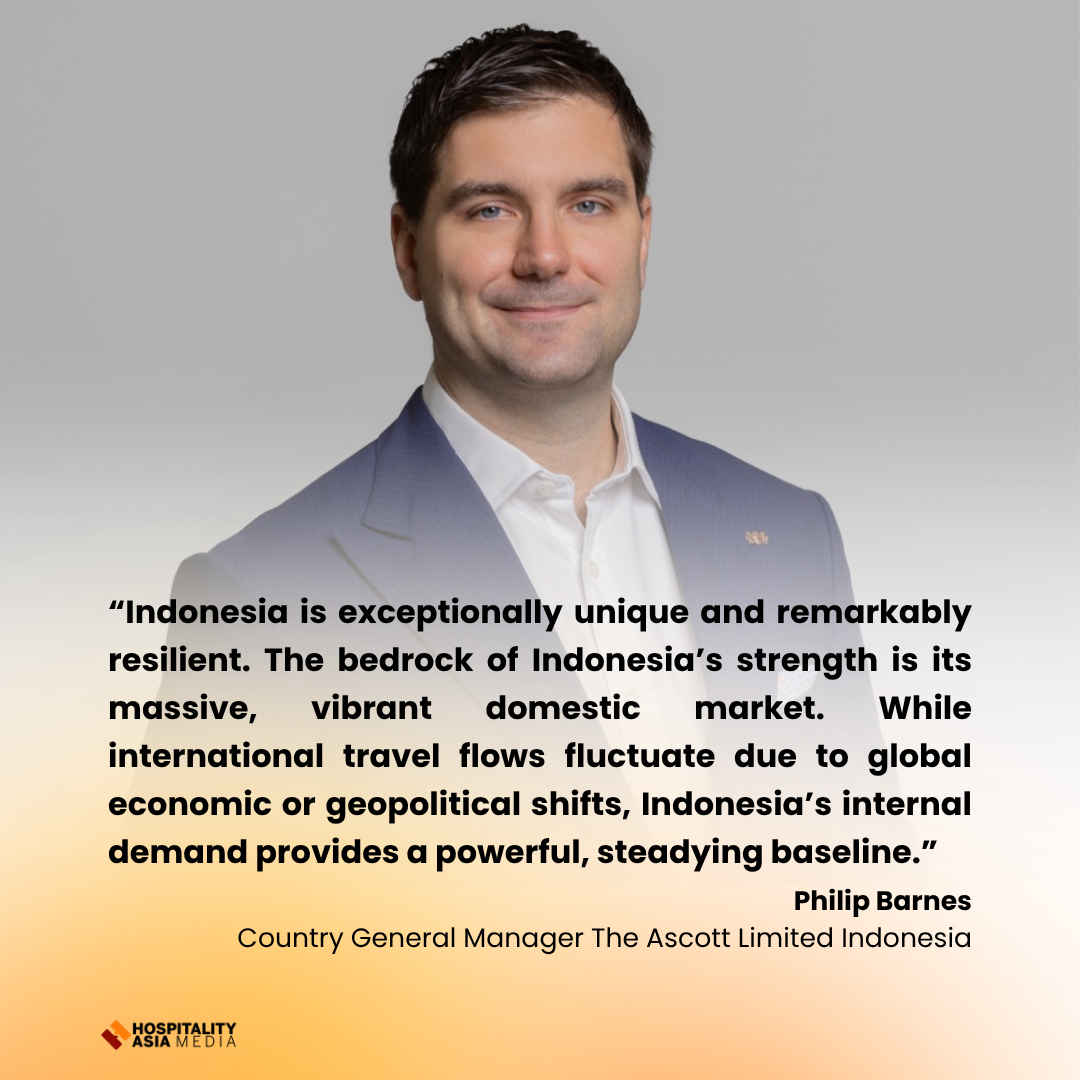
Philip Barnes: Having worked across various international markets, including Hong Kong, the Philippines, and Malaysia, I can say that Indonesia is exceptionally unique and remarkably resilient. The bedrock of Indonesia’s strength is its massive, vibrant domestic market. While international travel flows fluctuate due to global economic or geopolitical shifts, Indonesia’s internal demand provides a powerful, steadying baseline.
When evaluating Indonesia, you cannot look at it as a single homogenous market. Major destinations here function as collections of micro-markets. In Greater Jakarta, the city is so expansive that distinct districts behave like independent cities, each requiring tailored product positioning and pricing strategies. In Bali, a product that succeeds in vibrant Canggu will look very different from what guests expect in tranquil Ubud. Beyond these primary hubs, secondary and tertiary nodes like Semarang, Yogyakarta, Surabaya, Makassar, and regional Java corridors such as Magelang are experiencing massive growth driven by industrial development, infrastructure connectivity, and domestic MICE.
Furthermore, Indonesia possesses incredible untapped potential for destination resorts, eco-tourism, and glamping across Sumatra, Central Java, and Eastern Indonesia. The opportunity here isn't just about building standard city hotels; it's about capturing diverse travel intentions across an incredibly varied geographic footprint.
Q: Beyond primary hubs like Jakarta and Bali, where do you see the most compelling secondary and emerging locations for hotel and serviced residence investment in Indonesia?
Philip Barnes: When you look at Indonesia's investment potential, the growth extends far beyond the traditional leisure centers. We are seeing significant momentum in suburban micro-hubs and secondary cities:
For investors, the opportunity lies in recognizing that each district functions as its own distinct market with unique demand drivers.
Q: Indonesia’s vast geography encompasses hundreds of distinct cultural identities. How does Ascott weave local heritage into its properties while maintaining the consistency expected of a global brand?
Philip Barnes: Hospitality only works when you authentically connect with why people are traveling. Modern travelers, whether traveling for business, leisure, or "bleisure", want to feel a sense of place. They do not want a cookie-cutter experience that feels detached from its surroundings.
At Ascott, our customer experience framework requires every property to integrate local community essence into its operational DNA. First, regarding design and architecture, whether we are developing a luxury The Crest Collection property, an increasingly upscale Harris Hotels portfolio, or a midscale Fox Hotels or an economy POP! Hotel, we consciously incorporate regional artistic patterns, materials, and historical motifs into the physical spaces. Second, in terms of community and employment, we prioritize hiring locally, supporting regional educational initiatives, and partnering with local artisans and producers. Third, through cultural programming, we curate guest activities that educate and connect visitors with the destination's unique heritage.
We are not entering a city to act as an isolated outsider; we are entering to become an active, supportive fixture of that local community. That balance between global brand reliability and regional authenticity is what creates lasting guest loyalty.
Philip Barnes: Having worked across various international markets, including Hong Kong, the Philippines, and Malaysia, I can say that Indonesia is exceptionally unique and remarkably resilient. The bedrock of Indonesia’s strength is its massive, vibrant domestic market. While international travel flows fluctuate due to global economic or geopolitical shifts, Indonesia’s internal demand provides a powerful, steadying baseline.
When evaluating Indonesia, you cannot look at it as a single homogenous market. Major destinations here function as collections of micro-markets. In Greater Jakarta, the city is so expansive that distinct districts behave like independent cities, each requiring tailored product positioning and pricing strategies. In Bali, a product that succeeds in vibrant Canggu will look very different from what guests expect in tranquil Ubud. Beyond these primary hubs, secondary and tertiary nodes like Semarang, Yogyakarta, Surabaya, Makassar, and regional Java corridors such as Magelang are experiencing massive growth driven by industrial development, infrastructure connectivity, and domestic MICE.
Furthermore, Indonesia possesses incredible untapped potential for destination resorts, eco-tourism, and glamping across Sumatra, Central Java, and Eastern Indonesia. The opportunity here isn't just about building standard city hotels; it's about capturing diverse travel intentions across an incredibly varied geographic footprint.
Q: Beyond primary hubs like Jakarta and Bali, where do you see the most compelling secondary and emerging locations for hotel and serviced residence investment in Indonesia?
Philip Barnes: When you look at Indonesia's investment potential, the growth extends far beyond the traditional leisure centers. We are seeing significant momentum in suburban micro-hubs and secondary cities:
- Urban Expansion Corridors (Serpong / BSD): Areas like Serpong & BSD are rapidly expanding corporate and residential nodes where serviced apartment demand is surging. Similarly, urban sub-markets in West Jakarta, such as Slipi, are proving to be key growth spots for long-stay and business properties.
- The Trans-Java Infrastructure Connection: As infrastructure across Java Island continues to connect the West to the East via new highways and rail networks, secondary cities like Semarang, Yogyakarta, Surabaya, and Magelang are becoming far more accessible. This infrastructure opens up strong local demand markets for both business travel and regional leisure.
- Northern & Western Sub-Markets (Puri, Kelapa Gading, PIK): Major event venues, such as the Jakarta International Stadium (JIS) in North Jakarta, highlight the need for targeted accommodation in surrounding clusters like Kelapa Gading, Puri Mansion, and Pantai Indah Kapuk (PIK).
For investors, the opportunity lies in recognizing that each district functions as its own distinct market with unique demand drivers.
Q: Indonesia’s vast geography encompasses hundreds of distinct cultural identities. How does Ascott weave local heritage into its properties while maintaining the consistency expected of a global brand?
Philip Barnes: Hospitality only works when you authentically connect with why people are traveling. Modern travelers, whether traveling for business, leisure, or "bleisure", want to feel a sense of place. They do not want a cookie-cutter experience that feels detached from its surroundings.
At Ascott, our customer experience framework requires every property to integrate local community essence into its operational DNA. First, regarding design and architecture, whether we are developing a luxury The Crest Collection property, an increasingly upscale Harris Hotels portfolio, or a midscale Fox Hotels or an economy POP! Hotel, we consciously incorporate regional artistic patterns, materials, and historical motifs into the physical spaces. Second, in terms of community and employment, we prioritize hiring locally, supporting regional educational initiatives, and partnering with local artisans and producers. Third, through cultural programming, we curate guest activities that educate and connect visitors with the destination's unique heritage.
We are not entering a city to act as an isolated outsider; we are entering to become an active, supportive fixture of that local community. That balance between global brand reliability and regional authenticity is what creates lasting guest loyalty.
Bridging Extended Stay and Short Stay Dynamics
Q: The traditional boundaries between long-stay serviced apartments and short-stay hotels have blurred significantly. How is Ascott adapting to these shifting stay patterns?
Philip Barnes: The traditional extended-stay model was built almost exclusively around corporate long-stayers, guests booking properties for months or years at a time. While corporate long-stay remains a resilient core pillar for Ascott, reliance on a single demand stream creates vulnerability.
To solve this, Ascott pioneered a highly effective hybrid operational model. Our serviced residences are structurally designed to cater to long-term residents while seamlessly capturing short-stay leisure travelers, project-based corporate groups, and weekend staycationers. This maintains a predictable occupancy and cashflow baseline from long-stay residents (30+ days) while capturing short-stay upside via higher daily rates (ADR), flexible inventory yielding, and non-room revenue growth.
This demand diversification is further strengthened by Ascott Star Rewards (ASR), Ascott’s loyalty programme, which drives repeat stays and fosters deeper guest engagement across its global portfolio. Together, the hybrid operational model and loyalty ecosystem enable Ascott to generate a balanced mix of long and short-stay demand, enhancing occupancy resilience and long-term revenue performance.
Q: How do you drive non-room revenue across properties that were traditionally designed primarily for accommodation?
Philip Barnes: Under our hybrid approach, we re-engineered our physical layouts to maximize revenue from underutilized spaces. First, we introduced flexible MICE and event spaces featuring modular meeting environments that serve both resident work groups and external corporate conferences. Second, we repositioned our F&B concepts by bringing in dedicated culinary leadership to create vibrant food and beverage spaces that appeal to in-house guests and local neighborhood residents alike. Third, we developed work-play-live hubs, designing shared social and working environments that serve project teams staying in the building while generating day-use revenue.
This multi-faceted utilization drives incremental non-room spend and feeds back into our room yields, making our real estate assets significantly more profitable and adaptable.
Q: Entertainment and sports tourism are booming in Southeast Asia. How do major events impact lodging demand, and how does Ascott capture this market?
Philip Barnes: Entertainment and music tourism have become massive demand drivers across Southeast Asia, and Indonesia is positioned to be one of the largest markets for this.
We see a fascinating consumer trend where fans actually book their hotel rooms before they even secure their concert tickets! For instance, whenever major global acts or large-scale football events are announced at venues like Gelora Bung Karno (GBK) or JIS, properties in nearby strategic locations, such as Harris fX Sudirman Jakarta or the newly opened Oakwood Slipi Jakarta, sell out almost instantly.
To capitalize on this, hotel operators must look at the holistic journey. While traffic in major Southeast Asian cities is a known reality, if you deliver an exceptional arrival experience at the airport and a warm, efficient check-in at the hotel, guests view traffic as merely a minor inconvenience. Elevating the entire end-to-end experience allows us to capture peak yields during major event cycles.
Strategic Expansion: Asset-Light Scaling & Multi-Brand Portfolio Management
Q: A pivotal moment for Ascott in Indonesia was the acquisition of established regional brands like Harris, Yello, POP!, and Vertu. How does this fit into Ascott’s commercial growth strategy?
Philip Barnes: That acquisition was a fundamental milestone in Ascott’s global journey toward an asset-light business model. Historically, Ascott operated primarily as a traditional owner-operator in the serviced residence space. Shifting toward an asset-light model allowed us to accelerate growth, diversify our product tiering, and scale into a comprehensive global lodging provider.
In a market as geographically vast as Indonesia, trying to achieve total market coverage purely through organic, single-brand development is incredibly slow. By acquiring trusted homegrown brands that had spent over two decades establishing deep local equity, we immediately unlocked nationwide scale.
Our portfolio spans several distinct brand tiers:
What makes this multi-typology strategy so exciting is that we are not keeping these Indonesian-born brands static. We are scaling them internationally. We have successfully exported brands like Harris, Fox, and Preference into international markets like Malaysia, Vietnam, Thailand, and the Philippines. Having a diverse portfolio enables us to offer real estate owners and developers the exact lodging product that suits their location, financial scaling, and target demographic.
Q: With so many brands under the Ascott umbrella, how do you prevent brand cannibalization?
Philip Barnes: Preventing overlap requires constant dialogue and structured alignment across our leadership teams. It is never a one-person decision; it’s a collective strategy.
We utilize a three-tiered strategy framework to manage portfolio positioning:
By continually reviewing room rates, design narratives, and target customer demographics across these three tiers, we ensure that every property complements rather than competes with neighboring Ascott brands.
Philip Barnes: That acquisition was a fundamental milestone in Ascott’s global journey toward an asset-light business model. Historically, Ascott operated primarily as a traditional owner-operator in the serviced residence space. Shifting toward an asset-light model allowed us to accelerate growth, diversify our product tiering, and scale into a comprehensive global lodging provider.
In a market as geographically vast as Indonesia, trying to achieve total market coverage purely through organic, single-brand development is incredibly slow. By acquiring trusted homegrown brands that had spent over two decades establishing deep local equity, we immediately unlocked nationwide scale.
Our portfolio spans several distinct brand tiers:
- For Luxury and Upper Upscale, brands like The Crest Collection, Preference Hotels, Ascott, Oakwood Premier and Vertu Hotels, cater to high-net-worth individuals, diplomatic stays, and bespoke luxury seekers.
- For Midscale and Upscale, brands like Somerset, Oakwood, Harris Hotels, and Citadines and The Unlimited Collection serve corporate families, business travelers, regional MICE, and bleisure travelers.
- For Lifestyle and Coliving, brands like lyf and Yello target digital nomads, the creative class, and experiential millennial and Gen-Z travelers.
- For Economy and Value, brands like Pop! Hotels and Fox Hotels focus on budget-conscious corporate travelers and domestic weekenders.
What makes this multi-typology strategy so exciting is that we are not keeping these Indonesian-born brands static. We are scaling them internationally. We have successfully exported brands like Harris, Fox, and Preference into international markets like Malaysia, Vietnam, Thailand, and the Philippines. Having a diverse portfolio enables us to offer real estate owners and developers the exact lodging product that suits their location, financial scaling, and target demographic.
Q: With so many brands under the Ascott umbrella, how do you prevent brand cannibalization?
Philip Barnes: Preventing overlap requires constant dialogue and structured alignment across our leadership teams. It is never a one-person decision; it’s a collective strategy.
We utilize a three-tiered strategy framework to manage portfolio positioning:
- Corporate Macro Strategy: Setting overall brand DNA, core standards, and global positioning parameters.
- Area Leadership Teams: Managing regional market dynamics, rate positioning, demand generators, and overarching city strategies to ensure each brand targets a distinct market segment.
- Property-Level Teams: Executing property-specific guest experiences, local marketing, and tailored operational strategies.
By continually reviewing room rates, design narratives, and target customer demographics across these three tiers, we ensure that every property complements rather than competes with neighboring Ascott brands.
The Future of Hospitality: Tech, Design, and Culture
Q: Looking ahead over the next 3 to 5 years, how do you see technological advancements, particularly AI and automation, reshaping the hotel industry?
Philip Barnes: Technology is evolving at a breakneck speed. AI, predictive data, and automation are here to stay, and as an industry, we must embrace them whole-heartedly. However, the real leadership question is where and how to deploy tech effectively.
AI is an extraordinary asset for optimizing back-end operations. It refines revenue management by forecasting demand fluctuations with incredible precision. It streamlines digital marketing intelligence, helping us understand consumer preferences before they book. It also optimizes administrative workflows, freeing up staff from repetitive paperwork so they can focus on high-value interactions.
Q: With automated check-ins and digital services becoming commonplace, is there a risk that hospitality becomes overly transactional?
Philip Barnes: Absolutely, if you lose sight of what hospitality actually means. Technology should remove friction, not remove humanity.
When guests travel, they don't look back fondly on a self-service kiosk or an automated door lock, those are mere conveniences. What guests remember is how a property made them feel. They remember a housekeeper who noticed they were exhausted and arrange a hot tea service; they remember a front-desk associate who gave them a hand-written note; they remember the General Manager whose distinct warmth and character permeate the entire lobby environment.
If you strip away the human connection, a hotel ceases to be a hospitality experience. It becomes a standardized commodity. In an increasingly gadget-obsessed world, genuine human empathy, kindness, and personal recognition become more valuable, not less.
About Philip Barnes
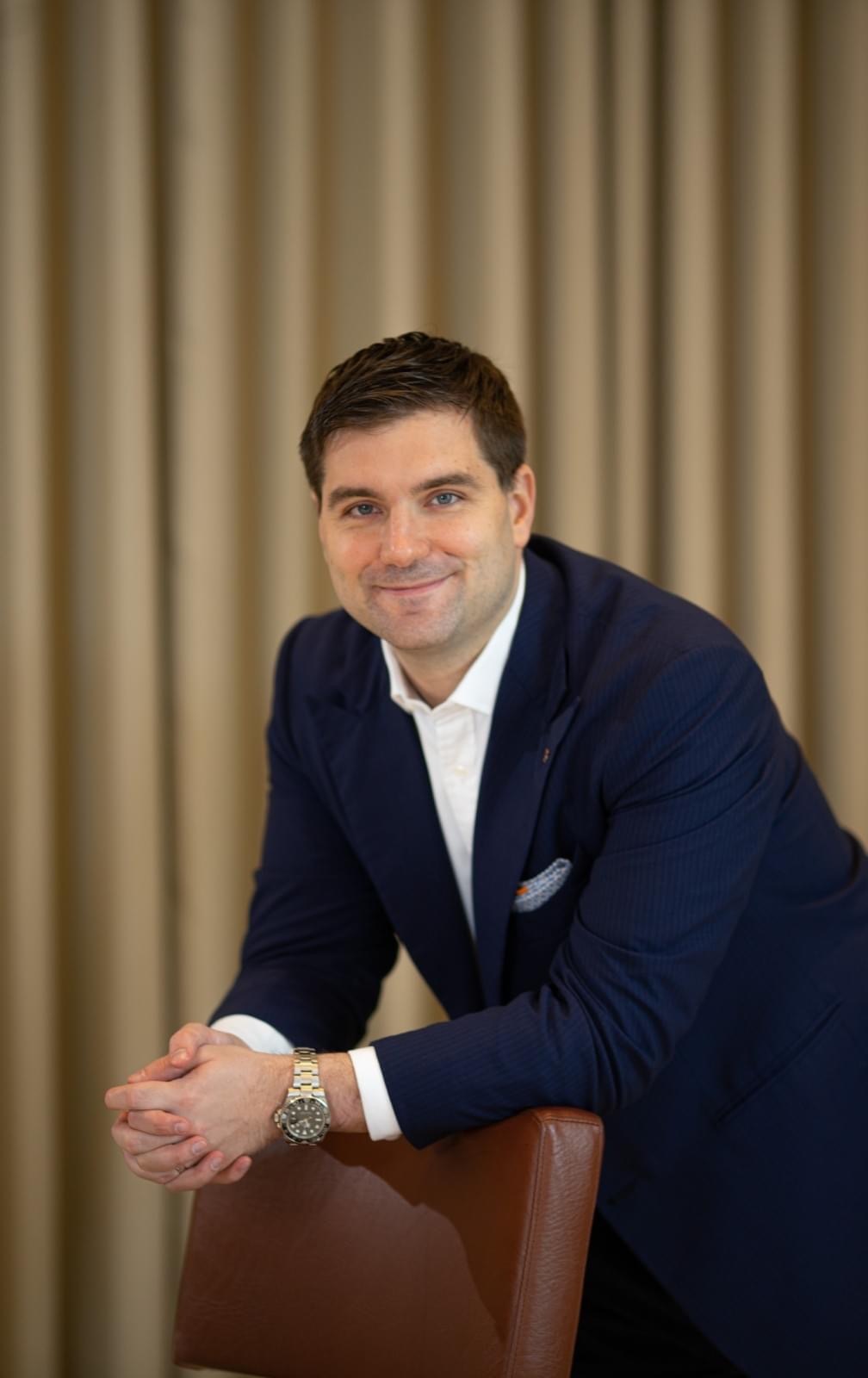
Philip Barnes serves as the Country General Manager for The Ascott Limited in Indonesia. Known for his people-centric, adaptive, and empowerment-focused leadership philosophy, Philip oversees Ascott’s extensive multi-brand operations and development pipeline across the Indonesian archipelago. Under his stewardship, Ascott Indonesia continues to drive an asset-light, multi-typology expansion strategy, blending international hospitality standards with deep regional cultural authenticity, flexible stay models, and a steadfast belief that human connection remains the heart of the guest experience