

Following the latest earnings releases across global hotel chains, second-quarter and first-half 2026 financial reports confirm that Asia-Pacific remains a primary engine of system growth, resilient room rates, and strategic pipeline expansion.
While macroeconomic conditions, shifting travel patterns, and regional disruptions created a varied operational landscape, major international groups, including IHG Hotels & Resorts, Marriott International, Minor Hotels, Wyndham Hotels & Resorts, and Meliá Hotels International, demonstrated strong top-line momentum and expanded execution across key Asian sub-markets.
While macroeconomic conditions, shifting travel patterns, and regional disruptions created a varied operational landscape, major international groups, including IHG Hotels & Resorts, Marriott International, Minor Hotels, Wyndham Hotels & Resorts, and Meliá Hotels International, demonstrated strong top-line momentum and expanded execution across key Asian sub-markets.
IHG Hotels & Resorts: Strong System Expansion & Regional Resilience
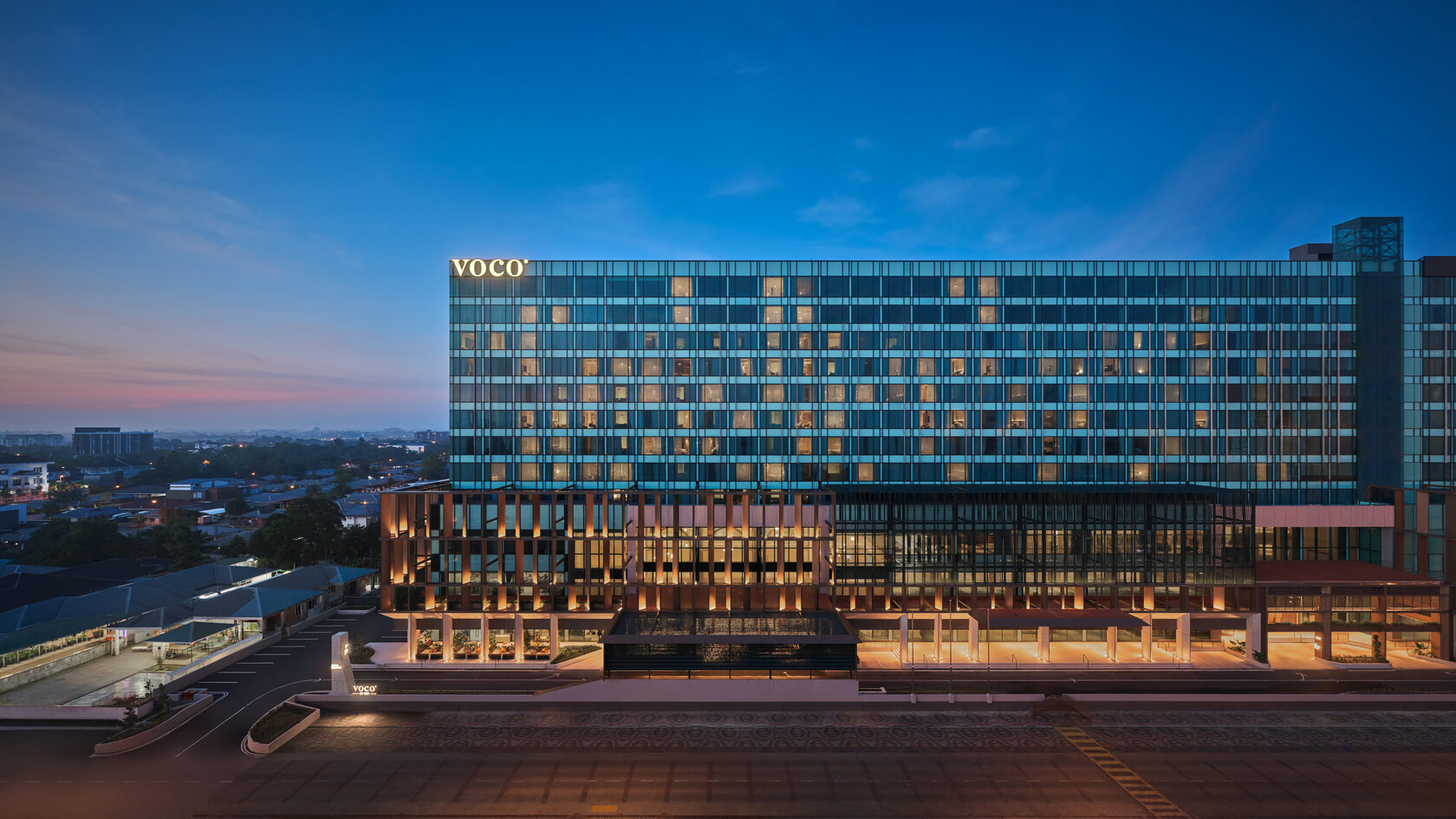
IHG delivered a solid first half in 2026, with group reportable segment revenue advancing 7% year-on-year to $1.255 billion and reportable segment EBIT increasing 10% to $655 million. Global RevPAR grew by 4.1%, driven by a 2.5% increase in Average Daily Rate (ADR) and a 1-percentage-point gain in occupancy.
In the Asia-Pacific theater, performance across the EMEAA region (Europe, Middle East, Asia & Africa) delivered a 3% H1 RevPAR increase. While Middle East operations faced headwinds due to regional conflict, the rest of the EMEAA footprint performed strongly, with the East Asia & Pacific sub-region delivering 6% RevPAR growth in Q2.
Greater China posted a 3.1% RevPAR increase in H1 2026. Operating profit for Greater China jumped 25% to $55 million, with fee margins expanding 460 basis points to 62.5%. On the development front, IHG signed 17,100 rooms across Greater China and 19,500 rooms in EMEAA during H1, maintaining robust long-term pipeline visibility.
In the Asia-Pacific theater, performance across the EMEAA region (Europe, Middle East, Asia & Africa) delivered a 3% H1 RevPAR increase. While Middle East operations faced headwinds due to regional conflict, the rest of the EMEAA footprint performed strongly, with the East Asia & Pacific sub-region delivering 6% RevPAR growth in Q2.
Greater China posted a 3.1% RevPAR increase in H1 2026. Operating profit for Greater China jumped 25% to $55 million, with fee margins expanding 460 basis points to 62.5%. On the development front, IHG signed 17,100 rooms across Greater China and 19,500 rooms in EMEAA during H1, maintaining robust long-term pipeline visibility.
Marriott International: APEC and Luxury Portfolios Lead the Way

Marriott reported a 3.4% increase in worldwide RevPAR for Q2 2026, supported by rate strength across leisure and luxury segments. While international RevPAR edged down 0.5% overall due to sharp declines in the Middle East, Marriott’s Asia-Pacific portfolio delivered strong gains.
Marriott added roughly 17,900 net rooms globally during the quarter, reaching a total net room growth of 4.5% year-on-year and expanding its worldwide development pipeline to nearly 629,000 rooms.
- Asia Pacific Excluding China (APEC): RevPAR rose over 5% in Q2, fueled by improving international flight capacity and robust intra-regional leisure travel across Southeast Asia and East Asia.
- Greater China: RevPAR grew over 3% in Q2, outperforming broader regional consumer spending softness. Demand was anchored by high-end leisure recovery in key destination markets like Hong Kong, Taiwan, and Hainan, alongside market share gains across Marriott’s luxury brand portfolio.
Marriott added roughly 17,900 net rooms globally during the quarter, reaching a total net room growth of 4.5% year-on-year and expanding its worldwide development pipeline to nearly 629,000 rooms.
Minor Hotels: Luxury Rate Integrity and Asset-Right Expansion

Bangkok-headquartered Minor Hotels delivered core profit growth of 2% year-on-year in Q2 2026 to THB 2.8 billion ($84.3 million), supported by disciplined cost control and rate integrity. First-half core revenue reached THB 66.2 billion, up 3% year-on-year.
Operating across a diverse global ecosystem, Minor saw distinct highlights across its Asian footprint:
Minor also accelerated its asset-right expansion strategy, securing 20 new hotel management agreements in Q2 alone and bringing its H1 total to 29 management contracts (2,165 keys), putting the group well ahead of its historical development pace.
Operating across a diverse global ecosystem, Minor saw distinct highlights across its Asian footprint:
- Thailand Core Performance: Minor’s home market in Thailand posted a 6% RevPAR increase in H1 2026. The performance was led by its luxury properties (including the flagship Anantara and Avani brands), which achieved a 7% RevPAR boost in Q2 driven entirely by higher average daily rates.
- Asia & Indian Ocean Regional Growth: Across the broader Asia and Indian Ocean portfolio, H1 system-wide RevPAR surged 10% year-on-year.
Minor also accelerated its asset-right expansion strategy, securing 20 new hotel management agreements in Q2 alone and bringing its H1 total to 29 management contracts (2,165 keys), putting the group well ahead of its historical development pace.
Meliá Hotels International: Leisure Focus in Key Asian Outposts

Spain’s Meliá Hotels International continued to leverage its specialized resort positioning throughout the first half of 2026. The group’s global strategy emphasized high-end leisure experiences, sustainable operational practices, and selective asset management across high-growth leisure corridors.
In Asia-Pacific, Meliá maintained steady progress across its key resort clusters in Southeast Asia, notably in Vietnam, Thailand, and Indonesia. The group's focus on premium leisure and wellness-led resort concepts allowed its regional properties to hold rate resilience amidst softening global corporate budgets, aligning with broader regional demand trends for destination leisure travel.
In Asia-Pacific, Meliá maintained steady progress across its key resort clusters in Southeast Asia, notably in Vietnam, Thailand, and Indonesia. The group's focus on premium leisure and wellness-led resort concepts allowed its regional properties to hold rate resilience amidst softening global corporate budgets, aligning with broader regional demand trends for destination leisure travel.
Wyndham Hotels & Resorts: International System Growth & Development Traction

Wyndham reported net income of $102 million for Q2 2026, up 17% year-on-year, while total global system footprint grew 3%. International room growth led Wyndham’s system expansion, surging 8% year-on-year. This expansion was driven by rapid master-license additions and conversion activity across the Asia-Pacific and EMEA/Latin America regions.
While international RevPAR experienced currency and market-adjustment headwinds across select Asia-Pacific corridors, Wyndham maintained record pipeline momentum, closing the quarter with approximately 2,200 properties (~261,000 rooms) in its development queue.
While international RevPAR experienced currency and market-adjustment headwinds across select Asia-Pacific corridors, Wyndham maintained record pipeline momentum, closing the quarter with approximately 2,200 properties (~261,000 rooms) in its development queue.
Key Takeaways for Asia-Pacific Hospitality in H2 2026
- Intra-Regional Travel Is the Chief Growth Engine: The surge in APEC RevPAR for major operators like Marriott (+5%) and IHG's East Asia & Pacific division (+6%) confirms that intra-regional flight capacity recovery and regional tourism routes are sustaining room demand.
- Luxury ADR Resilience: Across both domestic markets like Thailand and international gateway hubs like Hong Kong and Hainan, high-end and luxury properties outperformed midscale tiers in pricing power.
- Accelerated Development via Asset-Light Models: Hotel groups are aggressively deploying asset-light and management-contract models (such as Minor’s record signings and IHG’s rapid conversion strategies) to capture pipeline growth without taking heavy balance-sheet risk.
Driven by strong intra-regional leisure travel, pricing elasticity in the luxury segment, and accelerated conversion-led developments, these international groups are navigating macroeconomic headwinds with agility. As the second half of 2026 unfolds, operators that successfully combine asset-light regional expansion with strong local market positioning remain best positioned to capture high-yielding demand across Asia-Pacific's dynamic travel corridors.