
📌 3 Key Takeaways
- Linking Top-Line Revenue with Expense Discipline: Protecting true Net GOP requires evaluating every revenue-generating channel against its operational overhead, customer acquisition cost, and labor requirements.
- Data-Driven Tech Deployment: Implementing AI and digital management tools strictly to eliminate operational friction and enhance team efficiency—never as decorative technology.
- Unlocking Total Floorplan Productivity: Treating every square meter of a property as an active asset by repurposing underutilized spaces into flexible, revenue-generating environments.
The contemporary hospitality landscape often falls prey to vanity metrics. In highly competitive destination hubs like Bangkok and Pattaya, hotel owners and operators frequently judge performance by a singular, easily visible metric: Average Daily Rate (ADR). However, chasing high room rates without evaluating the operational overhead required to sustain them can rapidly dilute an asset's real returns.
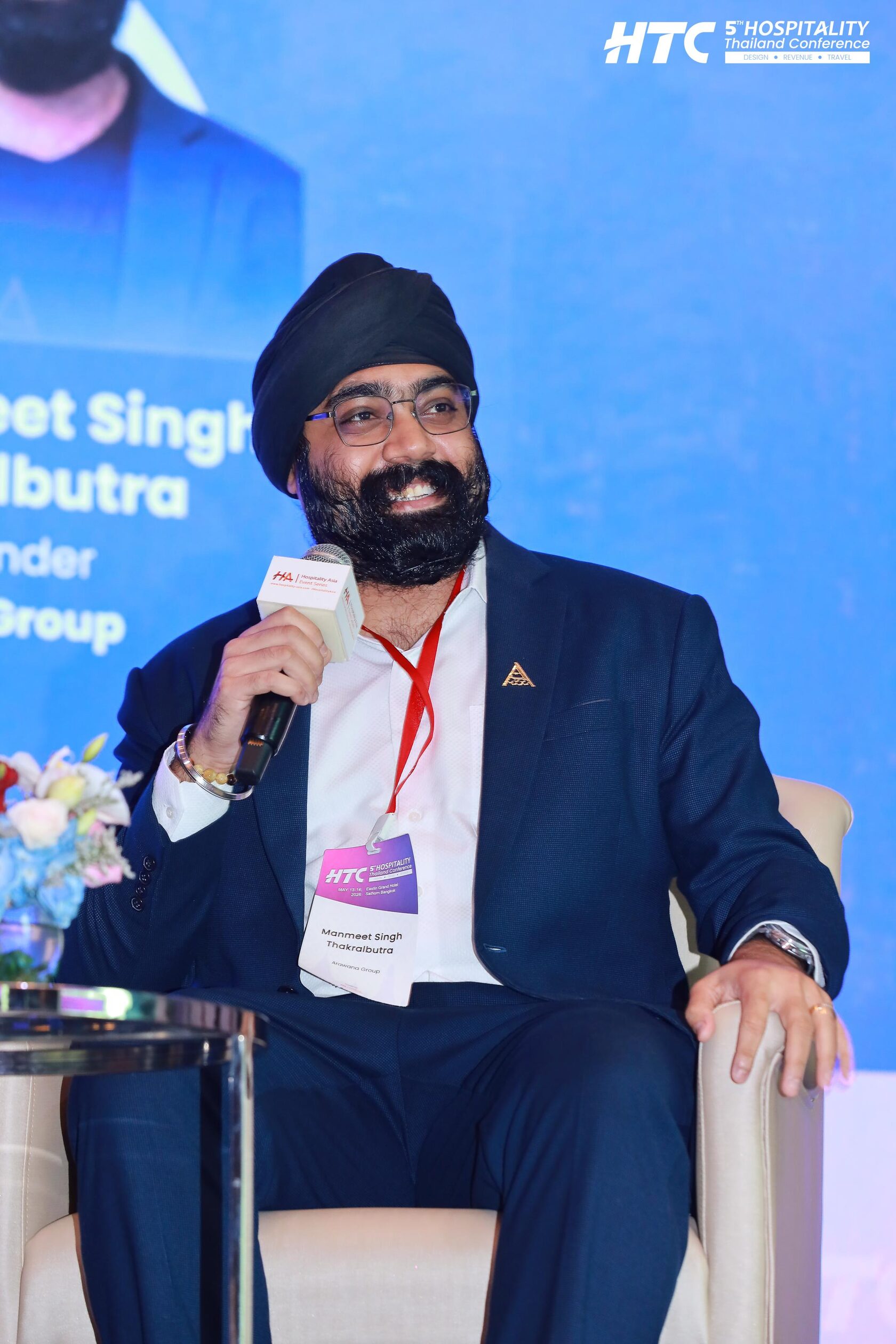
Stepping forward with a counter-framework is Manmeet Singh Thakralbutra, CEO and Founder of Arawana Group. Since launching the group in 2020, Thakralbutra has engineered a fast-growing portfolio of hotels, hostels, and residences across prime Thai markets by anchoring his strategy in total property performance.
Stepping forward with a counter-framework is Manmeet Singh Thakralbutra, CEO and Founder of Arawana Group. Since launching the group in 2020, Thakralbutra has engineered a fast-growing portfolio of hotels, hostels, and residences across prime Thai markets by anchoring his strategy in total property performance.
The Holistic Performance Strategy: Balancing ADR, Occupancy, and GOP
When people discuss revenue, they are naturally looking at the top line. While the top line is important, the most critical metric remains the bottom line, specifically, how much cash operations actually take back at the end of the day. ADR is critical because selling a room at a higher price point lifts the bottom line, but it must be balanced perfectly with occupancy.
"Within our own organization, we say you can't take ADR home with you. Basically, you're taking the Gross Operating Profit (GOP) back with you. Because of this, we try to see not the best way to maximize revenue, but the best way to maximize profit. That gives us a more holistic approach. We're not just looking at how to earn the money, but also how we spend it in terms of expenses, because the two are inherently linked."
If an operator decides to charge an aggressively high ADR, the property must immediately deliver an elevated service standard to match guest expectations. This shifts the internal cost structure, incurring extra manning costs, additional premium amenities, and higher marketing overhead. If the resulting GOP is not in a better position, increasing the ADR to that level is fundamentally counterproductive. Rates must be kept within a reasonable, market-responsive threshold that links directly with expense discipline to drive maximum business profitability.
This approach requires careful communication with hotel owners, who traditionally fixate on ADR because it is an external metric that is easy to check against the competitive set. Because owners do not see the inner workings or cost structures of neighboring properties, they often apply pressure to raise rates arbitrarily. Hoteliers must counter this pressure through total financial transparency, analyzing whether the property is driving occupancy, targeting a specific market segment, or operating a different product baseline. As long as communication is clear and grounded in bottom-line logic, owners understand the strategic decisions behind commercial yield models.
This approach requires careful communication with hotel owners, who traditionally fixate on ADR because it is an external metric that is easy to check against the competitive set. Because owners do not see the inner workings or cost structures of neighboring properties, they often apply pressure to raise rates arbitrarily. Hoteliers must counter this pressure through total financial transparency, analyzing whether the property is driving occupancy, targeting a specific market segment, or operating a different product baseline. As long as communication is clear and grounded in bottom-line logic, owners understand the strategic decisions behind commercial yield models.
Driving Total Property Performance Across Shared Real Estate
Traditionally, revenue management operated in a silo, focusing almost entirely on room nights. Today, every square meter of a property must be treated as a live, revenue-generating asset. Meeting spaces, co-working zones, food and beverage outlets, wellness spaces, transportation services, and even structured early check-in or late check-out programs must be integrated into a unified commercial strategy.
"At Arawana, we increasingly look at total guest value rather than simply room revenue. A guest who stays longer, uses additional services, and returns multiple times may ultimately be more valuable than a guest who simply pays the highest room rate."
The mechanism that unlocks this value is the connection of guest profiles with real-time operational data. When a hotel understands the exact demographic behavior and core motivation of a stay, it can push tailored, secondary offers throughout the guest journey. This shift requires analyzing the total lifetime value of a guest rather than an isolated room rate. A guest who registers a slightly lower room rate but stays longer, utilizes the dining venues, books ancillary services, and repeatedly returns to the brand is far more commercially valuable over a long horizon than a transient guest who simply pays a premium rate for a single night.
"Many hotels still apply static pricing to assets that experience fluctuating demand. I believe there is significant opportunity to apply revenue management principles beyond guestrooms. The objective is not necessarily to maximize price, but to maximize the overall contribution of the asset throughout the day."
This philosophy applies directly to underutilized public spaces like meeting rooms or lobbies that sit empty during specific daytime blocks. The industry relies far too heavily on static pricing for public assets that experience massive, predictable fluctuations in daily demand. Hoteliers must execute a strict analysis of their hourly utilization patterns and deploy dynamic pricing tools, hourly packages, remote-work memberships, local community events, or bundled corporate products. An executive meeting room that sits completely dark during mid-week blocks can be instantly repurposed for localized remote workers or small-scale business training sessions. The underlying goal is not to force the maximum price per hour, but to maximize the net financial contribution of every square meter across a full 24-hour cycle.
Financial Resilience, Cost Discipline, and Shared KPIs
As global inflation and payroll costs continue to squeeze margins across the region, protecting net profit margins cannot be achieved by simply raising rates. Modern travelers are highly informed, digitally connected, and intensely price-sensitive. If an operator continuously pushes prices up without introducing a clear, visible upgrade to the property's core value proposition, guests notice immediately and defect to competitors.
"The answer is not simply raising rates. Today's guests are very informed and price-sensitive. If hotels continuously increase prices without improving value, guests will notice. Instead, hotels should focus on operational efficiency, productivity, technology adoption, and smarter cost management."
To protect net profit margins, leadership must turn inward and focus heavily on operational efficiency, labor productivity, and technological optimization. This means systematically restructuring staffing models, stripping away manual processes, refining procurement chains, and deploying smart systems to eradicate unnecessary overhead. True margin protection is achieved by building sustainable secondary revenue streams and enforcing absolute cost discipline across the entire business model, rather than relying on aggressive pricing.
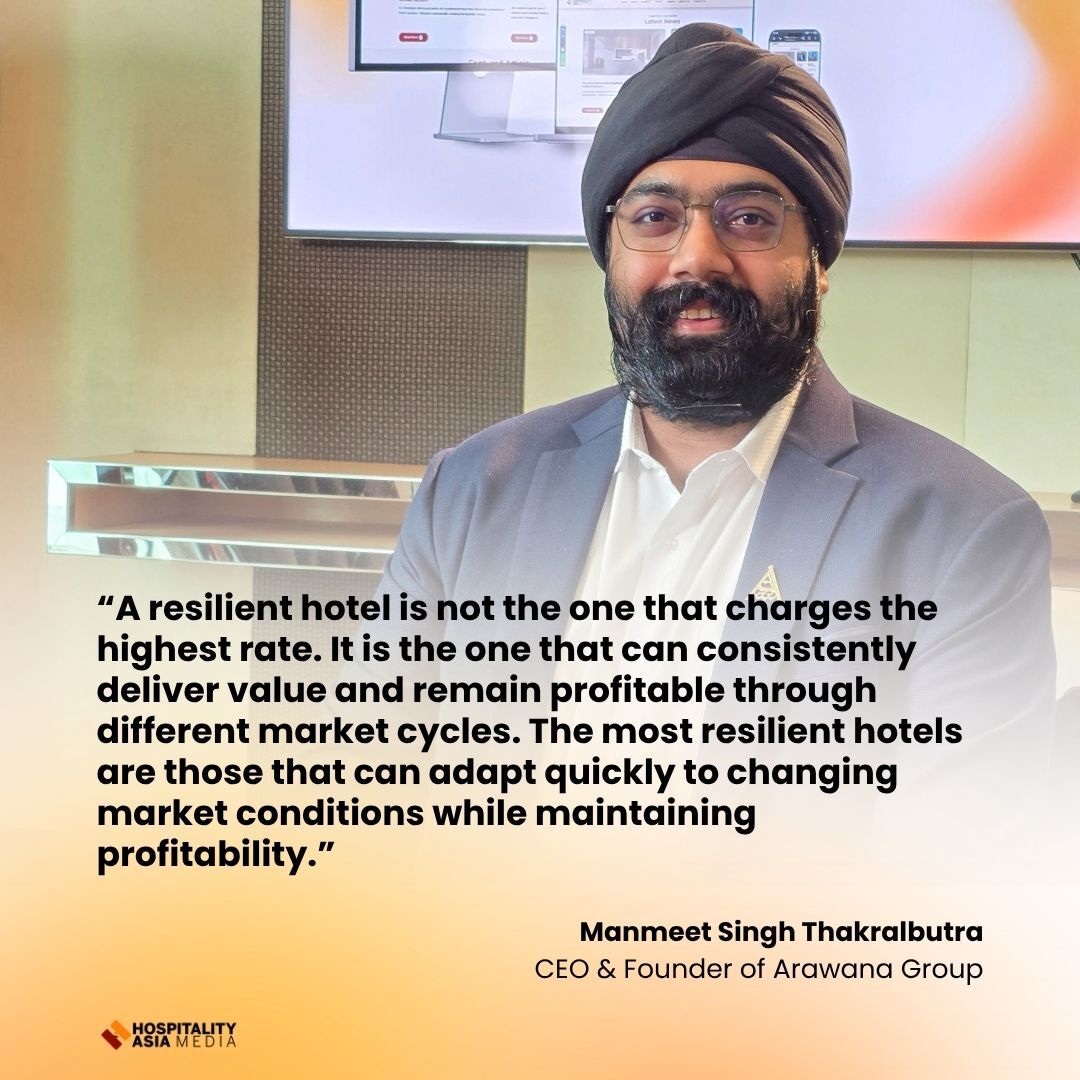
"For me, resilience has much more to do with operational flexibility than aggressive pricing. Aggressive pricing can generate short-term revenue, but it does not necessarily create a sustainable business. A resilient hotel is not the one that charges the highest rate. It is the one that can consistently deliver value and remain profitable through different market cycles."
The most resilient properties are those that can instantly pivot their operational costs and demand sourcing to match changing market conditions without degrading the customer experience. Focusing on lean operational matrices backed by strong visibility into performance data allows a cost structure to adapt dynamically, protecting margins through every phase of the macroeconomic cycle.
"One of the biggest challenges in hospitality is that departments often work toward different objectives. I believe hotels need to move toward shared commercial KPIs that focus on total business performance. When sales, marketing, operations, and revenue management are all measured against common business goals, decision-making becomes much stronger and the guest experience becomes more consistent."
Finally, modern hotel brands must restructure their internal corporate KPIs to stop individual departments from working against each other. One of the most systemic legacy failures in the hospitality industry is that departments traditionally chase isolated, conflicting objectives, sales teams chase room nights, marketing teams optimize web traffic, and revenue managers obsess over isolated ADR and occupancy metrics. None of these isolated milestones guarantee that the property is actually profitable. Organizations must discard separate departmental strategies and move toward shared commercial KPIs that align every team member toward total property profitability, measuring success through total revenue per guest, direct booking contribution ratios, customer acquisition costs, segment flow-through, and overall GOP performance.
About Manmeet Singh Thakralbutra
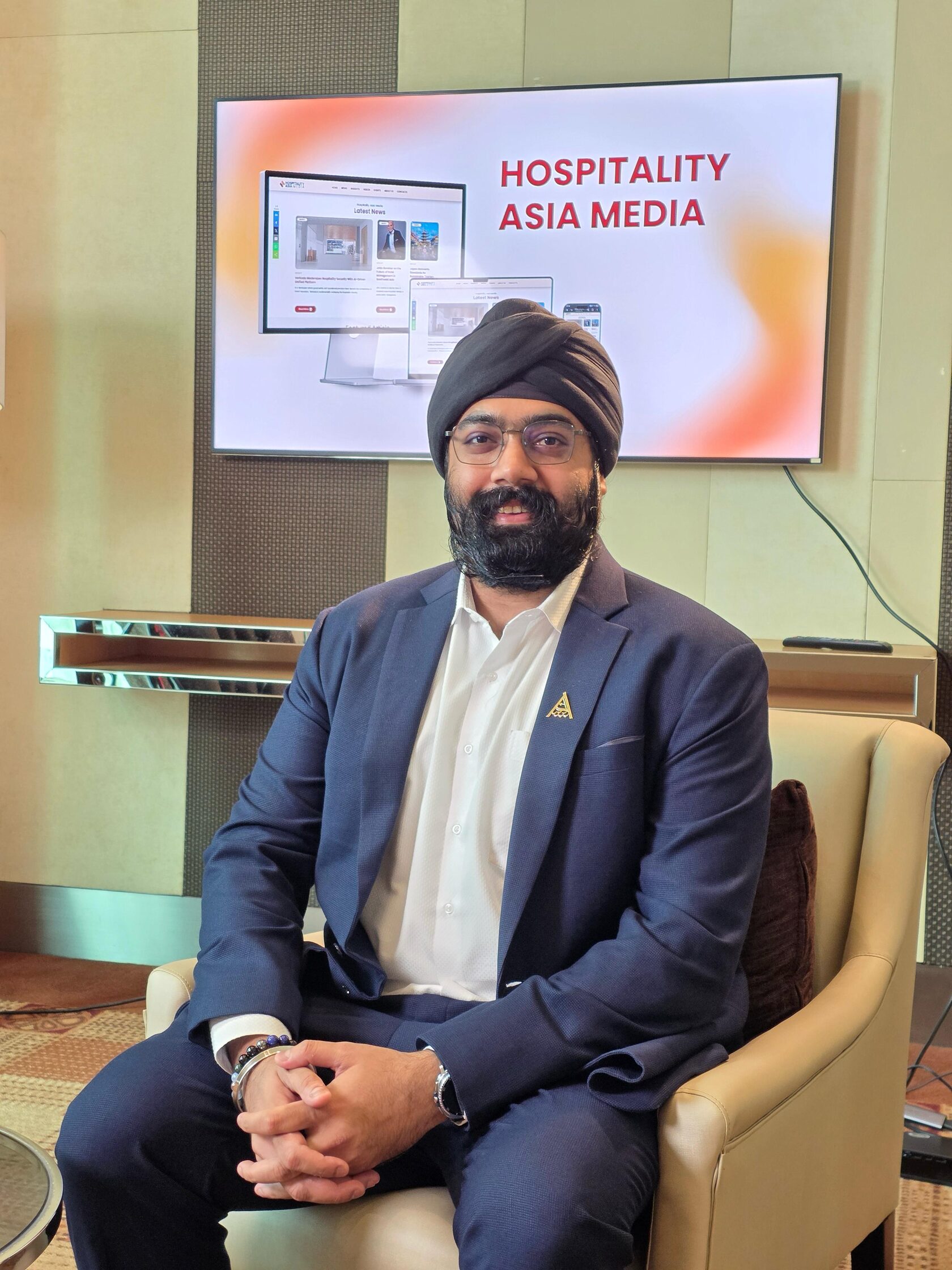
Manmeet Singh Thakralbutra is the CEO and Founder of Arawana Group, a hospitality management and development company with an expanding portfolio of hotels, hostels, and premium residences across strategic tourist and corporate markets in Bangkok and Pattaya. Backed by more than 15 years of operational experience across hotel operations, restaurant management, and hospitality asset development, he specializes in building lean, tech-driven business models. His professional focus centers on maximizing long-term real estate liquidity, establishing direct channel distribution networks, and implementing Total Revenue Management frameworks that drive deep gross operating profitability.