
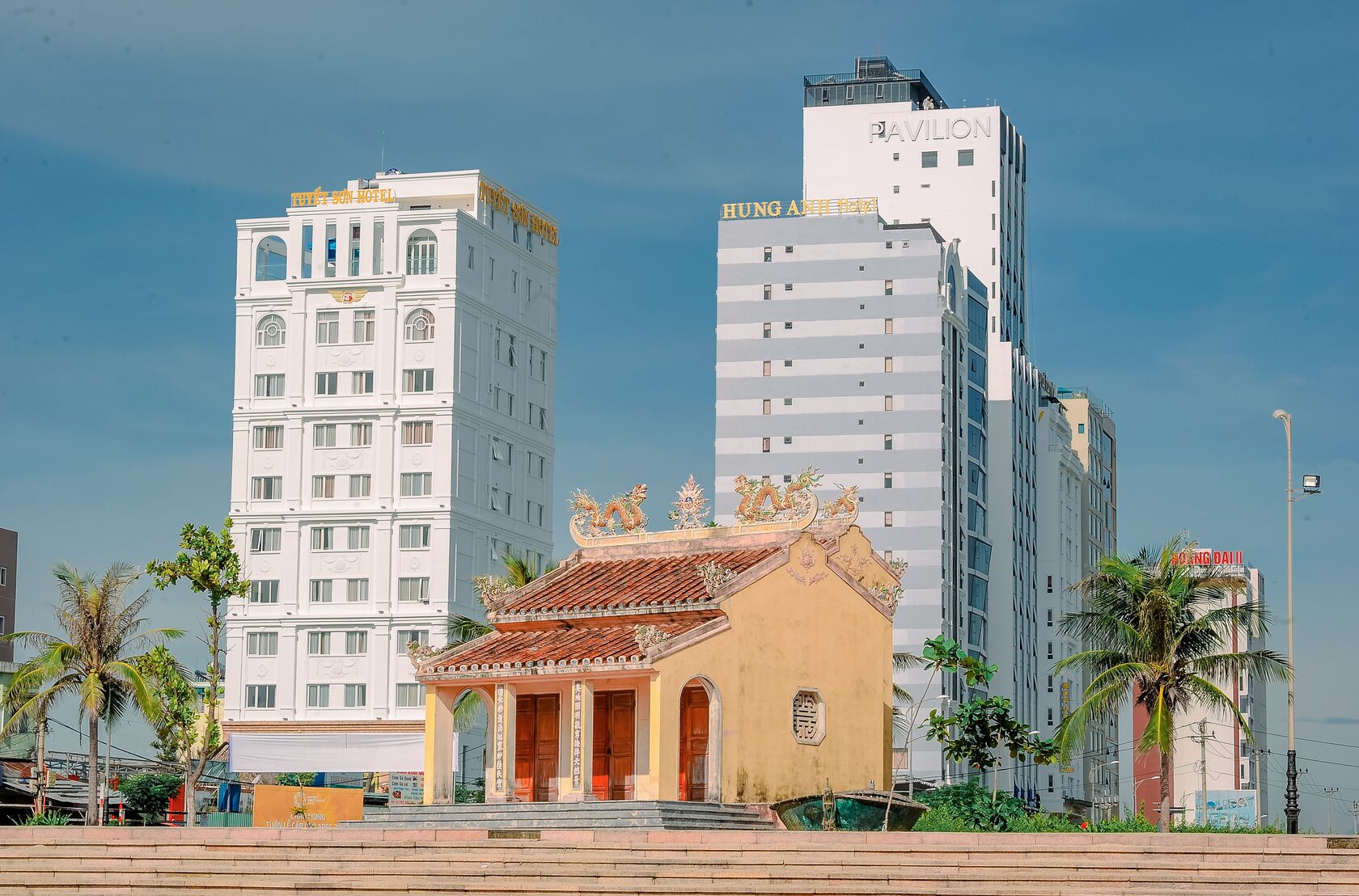
The Southeast Asian hospitality market has transformed into a highly polarized ecosystem. Underpinned by changing consumer habits and complex macroeconomic realities, the traditional three-star mid-scale segment is facing intense structural compression. Escalating borrowing costs, land expenses, and widespread construction inflation have made ground-up mid-tier developments increasingly unviable.
Concurrently, travelers are aggressively choosing either cost-efficient budget spaces or upgrading to highly curated experiential luxury assets. This distinct performance trajectory has permanently altered regional pricing dynamics, capital flows, and operational models across Southeast Asia.
Concurrently, travelers are aggressively choosing either cost-efficient budget spaces or upgrading to highly curated experiential luxury assets. This distinct performance trajectory has permanently altered regional pricing dynamics, capital flows, and operational models across Southeast Asia.
The Luxury Trajectory: Rate-Driven Premiumization
The ultra-luxury hospitality market in Southeast Asia is experiencing a highly lucrative expansion, expanding at an anticipated compound annual growth rate (CAGR) of 8.06% through 2034 to approach a regional sector valuation near $9.5 billion. Unlike lower-tier properties that rely heavily on high occupancy volume to secure profitability, luxury asset returns are entirely rate-driven. High-net-worth individuals and premium corporate travelers exhibit extreme price inelasticity, allowing top-tier properties to maximize margins through aggressive Average Daily Rate (ADR) increases rather than pure occupancy pursuit.
Geographically, this elite capital wave is manifesting in specific regional hot spots. Driven by severe structural market maturation, premium demand in Indonesia has completely recovered to historic baselines, forcing luxury room rates up more than 40% compared to pre-pandemic baselines. In mature resort destinations like Bali, high-end assets consistently capture a massive 315 to 525 basis point RevPAR premium over broader market averages, while established luxury networks swallow an outsized 65.2% slice of total regional travel expenditures.
Vietnam stands out as another massive outperformer due to a highly favorable supply-demand balance and unshakeable investor confidence. Because ultra-luxury properties command extensive construction timelines, a natural supply shield protects existing premium assets from oversupply, locking in sustained performance across coastal clusters like Phu Quoc, Da Nang, and Phu Yen. Meanwhile, in urban financial centers like Kuala Lumpur, premium hospitality has become a favored defensive asset for institutional funds, with luxury transactions jumping to account for 30% of total hotel real estate volumes.
To expand margins even further, luxury operators over-index heavily on high-margin ancillary revenue channels. Fine-dining concepts, exclusive cocktail lounges, and bespoke destination spa packages allow luxury lifestyle properties to generate 30% higher food and beverage revenue per occupied room than market averages. Furthermore, luxury brands excel at bypassing costly Online Travel Agency (OTA) commissions by driving direct brand website transactions, which now account for 42.7% of total luxury reservations, effectively insulating gross operating profit from margin dilution.
Geographically, this elite capital wave is manifesting in specific regional hot spots. Driven by severe structural market maturation, premium demand in Indonesia has completely recovered to historic baselines, forcing luxury room rates up more than 40% compared to pre-pandemic baselines. In mature resort destinations like Bali, high-end assets consistently capture a massive 315 to 525 basis point RevPAR premium over broader market averages, while established luxury networks swallow an outsized 65.2% slice of total regional travel expenditures.
Vietnam stands out as another massive outperformer due to a highly favorable supply-demand balance and unshakeable investor confidence. Because ultra-luxury properties command extensive construction timelines, a natural supply shield protects existing premium assets from oversupply, locking in sustained performance across coastal clusters like Phu Quoc, Da Nang, and Phu Yen. Meanwhile, in urban financial centers like Kuala Lumpur, premium hospitality has become a favored defensive asset for institutional funds, with luxury transactions jumping to account for 30% of total hotel real estate volumes.
To expand margins even further, luxury operators over-index heavily on high-margin ancillary revenue channels. Fine-dining concepts, exclusive cocktail lounges, and bespoke destination spa packages allow luxury lifestyle properties to generate 30% higher food and beverage revenue per occupied room than market averages. Furthermore, luxury brands excel at bypassing costly Online Travel Agency (OTA) commissions by driving direct brand website transactions, which now account for 42.7% of total luxury reservations, effectively insulating gross operating profit from margin dilution.

The Budget Sector: Tech-Enabled, Volume-Driven Efficiency
On the opposite side of the spectrum, the budget and economy lodging sectors are expanding aggressively, driven by cost-conscious regional tourists and expanding intercity corporate travel. Valued globally at over $315 billion, the budget tier relies on an entirely different financial architecture focused on lean operations and volume-driven efficiency. Unlike the luxury sector, where ADR drives two-thirds of all RevPAR gains, budget hotel profitability is completely optimized around sheer occupancy; a 1% increase in economy occupancy yields a 0.8% rise in gross operating profit, whereas a similar 1% lift in ADR contributes only 0.6, based on the research by Zenton Global Digit.
The regional growth engines for affordable accommodations have pivoted toward secondary and tertiary cities where margins remain healthier and competition is less fierce. In Indonesia, budget hotels function as the critical backbone for domestic intercity business travel, pushing local hospitality giants to accelerate regional development pipelines. In Vietnam, new industrial corridors and secondary coastal areas are seeing a wave of lean development supported by strong local demand.
Conversely, mature primary hubs like Bangkok and Phuket are wrestling with structural oversupply challenges, forcing operators to execute strategic decentralization plans. In Thailand, budget brands are partnering with fuel and retail operators to position select-service properties directly adjacent to major highway service stations, successfully capturing regional transit traffic.
Because room-rate pricing power is strictly capped by highly price-sensitive consumers, budget hotel groups utilize cloud-based revenue management tools and dynamic real-time pricing to protect margins against fierce local competition. Operators are also forced to monetize underutilized spaces via creative ancillary channels, converting empty lobby zones into paid co-working desks for digital nomads or selling unbooked transit rooms in flexible three-to-six-hour micro-stay blocks.
Despite rising top-line revenues, budget net profitability faces serious headwinds. A 22% spike in localized energy and utility costs, combined with a severe regional hospitality labor shortage, continues to squeeze operating margins. Additionally, the budget segment faces an ongoing 12% market share dilution caused by alternative short-term vacation rentals and stylized lifestyle hostels, preventing budget properties from raising base room rates to offset inflation.
The regional growth engines for affordable accommodations have pivoted toward secondary and tertiary cities where margins remain healthier and competition is less fierce. In Indonesia, budget hotels function as the critical backbone for domestic intercity business travel, pushing local hospitality giants to accelerate regional development pipelines. In Vietnam, new industrial corridors and secondary coastal areas are seeing a wave of lean development supported by strong local demand.
Conversely, mature primary hubs like Bangkok and Phuket are wrestling with structural oversupply challenges, forcing operators to execute strategic decentralization plans. In Thailand, budget brands are partnering with fuel and retail operators to position select-service properties directly adjacent to major highway service stations, successfully capturing regional transit traffic.
Because room-rate pricing power is strictly capped by highly price-sensitive consumers, budget hotel groups utilize cloud-based revenue management tools and dynamic real-time pricing to protect margins against fierce local competition. Operators are also forced to monetize underutilized spaces via creative ancillary channels, converting empty lobby zones into paid co-working desks for digital nomads or selling unbooked transit rooms in flexible three-to-six-hour micro-stay blocks.
Despite rising top-line revenues, budget net profitability faces serious headwinds. A 22% spike in localized energy and utility costs, combined with a severe regional hospitality labor shortage, continues to squeeze operating margins. Additionally, the budget segment faces an ongoing 12% market share dilution caused by alternative short-term vacation rentals and stylized lifestyle hostels, preventing budget properties from raising base room rates to offset inflation.

Conversions, Collection Brands, and Asset Transformation
With ground-up development constrained by elevated financing and material costs, institutional capital across both luxury and budget tiers is heavily prioritizing conversions and the adaptive reuse of existing structures over ground-up builds. Older, struggling mid-scale properties are being aggressively acquired and structurally reimagined.
On one end, they are being stripped down into high-efficiency, tech-enabled select-service budget assets utilizing digital check-in kiosks and automated grab-and-go food systems to eliminate excessive staffing costs. On the higher end, these properties are being repositioned into boutique, experience-led lifestyle spaces or integrated into soft-branded "collection brands." This soft-brand model allows independent owners to retain their unique local identity and design language while instantly plugging into the global distribution architectures and lucrative loyalty platforms of major international hotel groups, creating an agile path to revenue optimization.
On one end, they are being stripped down into high-efficiency, tech-enabled select-service budget assets utilizing digital check-in kiosks and automated grab-and-go food systems to eliminate excessive staffing costs. On the higher end, these properties are being repositioned into boutique, experience-led lifestyle spaces or integrated into soft-branded "collection brands." This soft-brand model allows independent owners to retain their unique local identity and design language while instantly plugging into the global distribution architectures and lucrative loyalty platforms of major international hotel groups, creating an agile path to revenue optimization.