
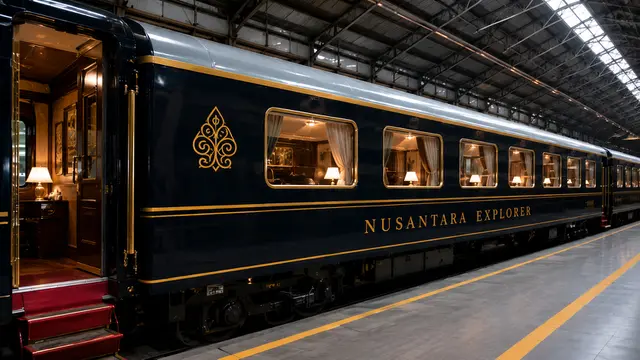
Indonesia, July 2026 — PT Kereta Api Indonesia (PT KAI) has advanced the development of its Nusantara Explorer Luxury Sleeper Train after completing static and dynamic testing on two train cars that have finished their interior construction at Balai Yasa Surabaya Gubeng. The milestone represents the next stage in KAI's plan to develop a 12-car luxury trainset designed to expand premium rail tourism offerings while strengthening the company's in-house rolling stock development capabilities.
The testing program forms part of a broader evaluation process before the project proceeds to its next phase. The two completed cars are the first units from the planned 12-car formation, which is expected to include sleeper cabins, a Grand Restaurant, a Lounge, and additional operational support cars. By progressing through technical validation before continuing construction, KAI is preparing the trainset according to operational and technical requirements prior to further development.
Development of the Nusantara Explorer is being carried out at Balai Yasa Surabaya Gubeng, where KAI employees are responsible for the modification and construction process. The facility serves as the center for the project, reflecting the company's effort to develop railway assets through its own workforce and engineering capabilities.
The completed train cars underwent two separate stages of testing. Static testing was conducted while the train remained stationary to verify the performance of onboard systems and passenger facilities. This stage examined whether the installed systems functioned according to technical requirements before moving into operational testing.
Dynamic testing followed on the Surabaya Gubeng–Lamongan railway corridor using a round-trip route. During this phase, KAI evaluated how the train performed under operating conditions. The assessment covered train stability, braking systems, electrical systems, and the functionality of supporting passenger facilities while the train was in motion. The testing process was carried out in stages to verify that each system met operational and technical needs.
The results from both testing phases will become part of KAI's evaluation before additional train cars proceed through subsequent development stages. Following the dynamic test, the company plans to continue with technical evaluations, facility improvements, equipment inspections, preparation of service standards, and construction work on the remaining train cars included in the overall project.
The Nusantara Explorer has been designed as a Luxury Sleeper Train intended to combine private accommodation, personalized services, dining experiences, entertainment, and panoramic railway travel into a single premium travel concept. The project expands beyond transportation by integrating multiple hospitality-style facilities within the train formation, positioning the service as a higher-value tourism product within Indonesia's rail sector.
The planned sleeper accommodations are divided into three cabin categories, each offering different levels of privacy and space utilization. Signature Class is designed with larger private space and exclusive facilities. Advanced Class combines sleeping comfort with an efficient cabin arrangement, while Compact Class features a more space-efficient layout equipped with rest and storage facilities. Each category provides different cabin compositions and privacy levels to accommodate varying customer requirements within the same trainset.
Beyond accommodation, KAI plans to incorporate hospitality-oriented facilities into the train. The Grand Restaurant is designed as a dedicated dining space featuring arranged dining tables, lighting concepts, and private dining areas. The restaurant is intended to support onboard culinary services as part of the overall passenger experience during longer journeys.
The testing program forms part of a broader evaluation process before the project proceeds to its next phase. The two completed cars are the first units from the planned 12-car formation, which is expected to include sleeper cabins, a Grand Restaurant, a Lounge, and additional operational support cars. By progressing through technical validation before continuing construction, KAI is preparing the trainset according to operational and technical requirements prior to further development.
Development of the Nusantara Explorer is being carried out at Balai Yasa Surabaya Gubeng, where KAI employees are responsible for the modification and construction process. The facility serves as the center for the project, reflecting the company's effort to develop railway assets through its own workforce and engineering capabilities.
The completed train cars underwent two separate stages of testing. Static testing was conducted while the train remained stationary to verify the performance of onboard systems and passenger facilities. This stage examined whether the installed systems functioned according to technical requirements before moving into operational testing.
Dynamic testing followed on the Surabaya Gubeng–Lamongan railway corridor using a round-trip route. During this phase, KAI evaluated how the train performed under operating conditions. The assessment covered train stability, braking systems, electrical systems, and the functionality of supporting passenger facilities while the train was in motion. The testing process was carried out in stages to verify that each system met operational and technical needs.
The results from both testing phases will become part of KAI's evaluation before additional train cars proceed through subsequent development stages. Following the dynamic test, the company plans to continue with technical evaluations, facility improvements, equipment inspections, preparation of service standards, and construction work on the remaining train cars included in the overall project.
The Nusantara Explorer has been designed as a Luxury Sleeper Train intended to combine private accommodation, personalized services, dining experiences, entertainment, and panoramic railway travel into a single premium travel concept. The project expands beyond transportation by integrating multiple hospitality-style facilities within the train formation, positioning the service as a higher-value tourism product within Indonesia's rail sector.
The planned sleeper accommodations are divided into three cabin categories, each offering different levels of privacy and space utilization. Signature Class is designed with larger private space and exclusive facilities. Advanced Class combines sleeping comfort with an efficient cabin arrangement, while Compact Class features a more space-efficient layout equipped with rest and storage facilities. Each category provides different cabin compositions and privacy levels to accommodate varying customer requirements within the same trainset.
Beyond accommodation, KAI plans to incorporate hospitality-oriented facilities into the train. The Grand Restaurant is designed as a dedicated dining space featuring arranged dining tables, lighting concepts, and private dining areas. The restaurant is intended to support onboard culinary services as part of the overall passenger experience during longer journeys.
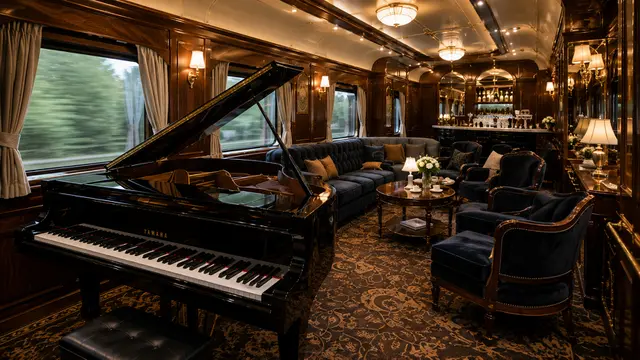
The planned Lounge will serve as a social and relaxation area equipped with lounge seating, a bar, entertainment facilities, a piano, an audio system, and large windows for viewing landscapes throughout the journey. These facilities are designed to complement the train's premium positioning by providing shared spaces alongside private accommodations.
Interior design also forms a central element of the Nusantara Explorer concept. KAI has incorporated neoclassical proportions, warm-toned materials, and soft lighting into the train's design while integrating Indonesian cultural elements throughout the interior. Inspiration is drawn from Wayang Kulit, Batik Lasem, Sekar Jagad, and Balinese motifs, which appear in decorative patterns, materials, colors, and interior components. Each section of the train has its own visual identity while remaining connected under a unified Nusantara travel theme.
The development program extends beyond interior completion and facility installation. After the current testing phase, KAI will continue refining technical aspects of the train while preparing operational readiness and service standards before additional development stages proceed. Facility enhancements, equipment inspections, and technical evaluations are included within the planned workflow before the remaining train cars advance through construction.
The Nusantara Explorer project is structured around a planned 12-car formation rather than individual luxury coaches. Once completed, the trainset is expected to integrate sleeper accommodation, dining services, lounge facilities, and operational support cars into a single premium rail product. At present, two train cars have completed interior construction and successfully entered the static and dynamic testing phase.
PT KAI President Director Bobby Rasyidin said the Nusantara Explorer demonstrates the capability of KAI personnel to develop railway assets through competencies continuously built at Balai Yasa Surabaya Gubeng. He said each development stage is being implemented gradually while prioritizing safety, quality, and reliability so that, once operational, the train can deliver an improved travel experience for customers.
The completion of testing on the first two cars marks a development milestone within the broader Nusantara Explorer program as KAI continues the remaining stages of technical evaluation, facility refinement, operational inspection, service preparation, and construction of the rest of the planned luxury sleeper train formation.
Interior design also forms a central element of the Nusantara Explorer concept. KAI has incorporated neoclassical proportions, warm-toned materials, and soft lighting into the train's design while integrating Indonesian cultural elements throughout the interior. Inspiration is drawn from Wayang Kulit, Batik Lasem, Sekar Jagad, and Balinese motifs, which appear in decorative patterns, materials, colors, and interior components. Each section of the train has its own visual identity while remaining connected under a unified Nusantara travel theme.
The development program extends beyond interior completion and facility installation. After the current testing phase, KAI will continue refining technical aspects of the train while preparing operational readiness and service standards before additional development stages proceed. Facility enhancements, equipment inspections, and technical evaluations are included within the planned workflow before the remaining train cars advance through construction.
The Nusantara Explorer project is structured around a planned 12-car formation rather than individual luxury coaches. Once completed, the trainset is expected to integrate sleeper accommodation, dining services, lounge facilities, and operational support cars into a single premium rail product. At present, two train cars have completed interior construction and successfully entered the static and dynamic testing phase.
PT KAI President Director Bobby Rasyidin said the Nusantara Explorer demonstrates the capability of KAI personnel to develop railway assets through competencies continuously built at Balai Yasa Surabaya Gubeng. He said each development stage is being implemented gradually while prioritizing safety, quality, and reliability so that, once operational, the train can deliver an improved travel experience for customers.
The completion of testing on the first two cars marks a development milestone within the broader Nusantara Explorer program as KAI continues the remaining stages of technical evaluation, facility refinement, operational inspection, service preparation, and construction of the rest of the planned luxury sleeper train formation.