
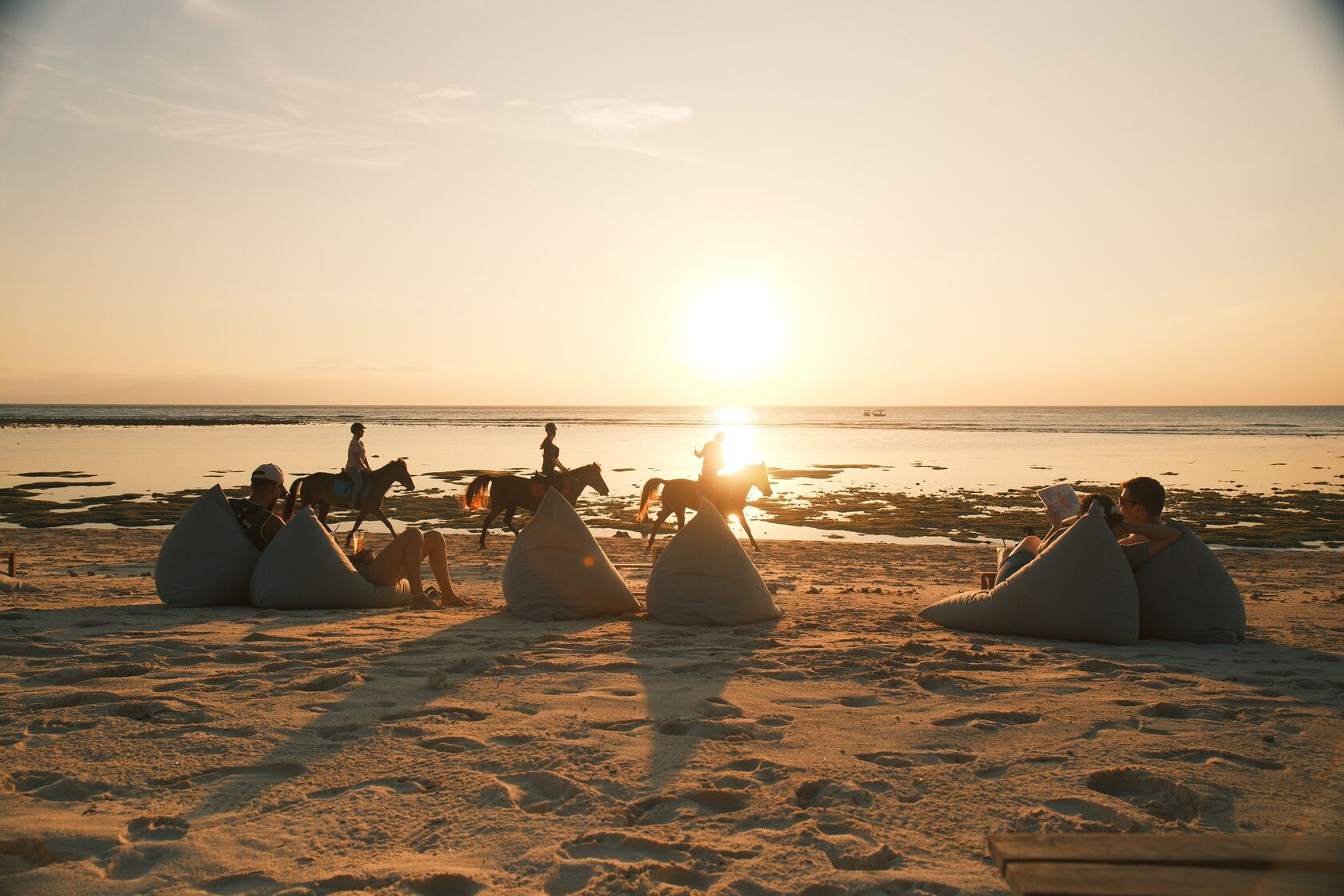
The global jet set is quietly rewriting the rules of premium travel, trading overdeveloped tropical corridors for low-impact, context-rich spaces. At the absolute center of this structural shift is Gili Trawangan. Long generalized as a budget backpacker enclave, the island has completed a rapid, high-yield transformation into Southeast Asia's ultimate luxury eco-sanctuary.
Driven by an estimated 90% resort occupancy rate during the peak mid-year holiday season, the island’s hospitality sector is seeing a major shift toward sustainable luxury and boutique glamping. By leveraging a strict ban on motorized vehicles, this tiny Indonesian paradise is systematically outperforming its neighbors, positioning itself as a highly profitable alternative to the heavily congested, mature landscape of mainland Bali.
Driven by an estimated 90% resort occupancy rate during the peak mid-year holiday season, the island’s hospitality sector is seeing a major shift toward sustainable luxury and boutique glamping. By leveraging a strict ban on motorized vehicles, this tiny Indonesian paradise is systematically outperforming its neighbors, positioning itself as a highly profitable alternative to the heavily congested, mature landscape of mainland Bali.
Market & Rental Data: Gili Trawangan vs. Bali Real Estate
The financial performance of premium assets on the island is heavily outpacing mainland structural markets. According to national performance data from eHotelier Insights, Indonesia's luxury hotel sector has officially returned to pre-pandemic occupancy levels, completely outperforming all other hotel classes by 5.5 percentage points.
While mature hubs like Seminyak, Canggu, and Uluwatu in Bali grapple with soaring land prices, dense traffic, and tightening regulations, boutique villas on Gili Trawangan deliver a 12% to 15% net annual ROI. This significantly outperforms traditional apartment and villa rentals in Bali's saturated mainland markets, which typically average yields between 7% and 9%.
Luxury and upper-upscale hotels on Gili Trawangan and the surrounding Lombok region are projecting annual gross revenues between $3.2 million and $5.5 million per property. This performance is fueled by a severe bifurcation premium: while economy and mid-scale hotels face pressure from short-term rental oversupply, luxury properties are leading the market with double-digit RevPAR growth.
While mature hubs like Seminyak, Canggu, and Uluwatu in Bali grapple with soaring land prices, dense traffic, and tightening regulations, boutique villas on Gili Trawangan deliver a 12% to 15% net annual ROI. This significantly outperforms traditional apartment and villa rentals in Bali's saturated mainland markets, which typically average yields between 7% and 9%.
Luxury and upper-upscale hotels on Gili Trawangan and the surrounding Lombok region are projecting annual gross revenues between $3.2 million and $5.5 million per property. This performance is fueled by a severe bifurcation premium: while economy and mid-scale hotels face pressure from short-term rental oversupply, luxury properties are leading the market with double-digit RevPAR growth.
- Average Daily Rate (ADR): Rising from $295 to $340 (+15.2% Year-over-Year), driven by a 40%+ macro rate surge since 2019.
- Annual Occupancy Rate: Projected at 58% (up from 52% previously), fueled by high-spending travelers returning to dedicated island destinations.
- RevPAR Acceleration: Climbing 28.5% to $197.20, accelerating past mid-scale asset classes.
- Ancillary Revenue Explosion: Wellness packages, private yacht charters, and premium dive centers have surged by 46.9%, now making up nearly 30% of total luxury revenue.
- Macroeconomic Tailwinds: The broader Indonesian "Accommodation and Food Service" sector recorded a massive 13.14% year-on-year economic growth, funneling domestic elite and regional corporate wealth directly into luxury island sanctuaries.
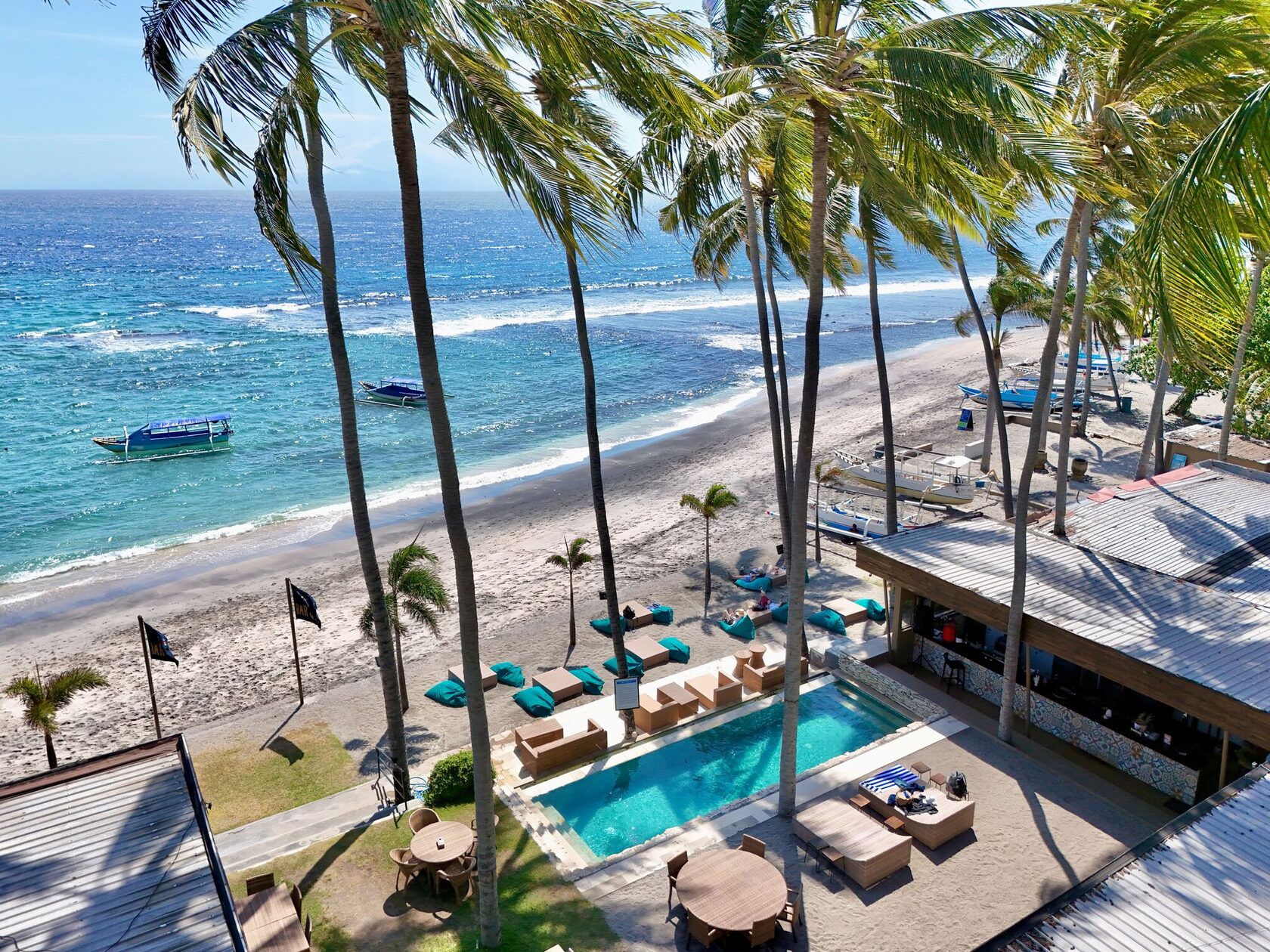
The Travel Trend: Gili Trawangan Outpacing Saturated Destinations
Total traveler traffic to Gili Trawangan is pacing to exceed 1.2 million visitors, marking a robust 11.2% year-on-year growth in foreign arrivals. While previous tourism cycles relied on sheer post-pandemic volume, the market is now defined by a distinct spending surge, individual tourist expenditure has jumped by 5.36% (averaging $1,345.61 per visit).
While the Gilis historically trended as a budget backpacker and party destination, the current trend is a massive shift toward wellness tourism, luxury eco-travel, and culinary exploration. The island is trending ahead of historical regional baselines for an entirely new set of drivers:
Ultimately, the transformation of Gili Trawangan sends a clear signal to the broader Southeast Asian real estate market: true luxury is no longer defined by how much concrete a developer can pour, but by how well they can preserve the surrounding environment. By successfully leveraging its unique vehicle-free blueprint, this island has flipped a historical geographical disadvantage into its ultimate premium asset.
Saturated, high-traffic destinations will always maintain strong baseline demand, but the market's highest yields and most innovative concepts are migrating to low-density, highly exclusive island sanctuaries. As Gili Trawangan steps firmly into its identity as an elite wellness and eco-travel powerhouse, it proves that in the future of hospitality investment, the most valuable luxury of all is silence and the market is more than willing to pay a premium for it.
While the Gilis historically trended as a budget backpacker and party destination, the current trend is a massive shift toward wellness tourism, luxury eco-travel, and culinary exploration. The island is trending ahead of historical regional baselines for an entirely new set of drivers:
- The World's Best Swimming Spot: Gili Trawangan captured global attention after being ranked #1 on Forbes’ list of the World’s Best Destinations for Swimming. Audited by luxury specialists CV Villas, it beat out 100 global competitors due to its zero-wind calm waters, stable ocean temperatures, and breathtaking 30-meter diving visibility.
- The Hustle-Free Aesthetic: Unlike Bali, where major holiday zones deal with heavy motorbike exhaust and congested beach routes, motorized vehicles are completely banned on the Gilis. Moving exclusively by bicycle, walking, or traditional horse carts (cidomos) has gone highly viral among slow-travelers and premium digital nomads.
- The Rise of High-Value Slow Travel: Short-stay backpackers are being replaced by long-haul European and Australian digital nomads. The average length of stay has expanded by 15.3% to 10.84 nights, keeping premium boutique glamping and villa occupancy consistently high.
Ultimately, the transformation of Gili Trawangan sends a clear signal to the broader Southeast Asian real estate market: true luxury is no longer defined by how much concrete a developer can pour, but by how well they can preserve the surrounding environment. By successfully leveraging its unique vehicle-free blueprint, this island has flipped a historical geographical disadvantage into its ultimate premium asset.
Saturated, high-traffic destinations will always maintain strong baseline demand, but the market's highest yields and most innovative concepts are migrating to low-density, highly exclusive island sanctuaries. As Gili Trawangan steps firmly into its identity as an elite wellness and eco-travel powerhouse, it proves that in the future of hospitality investment, the most valuable luxury of all is silence and the market is more than willing to pay a premium for it.