
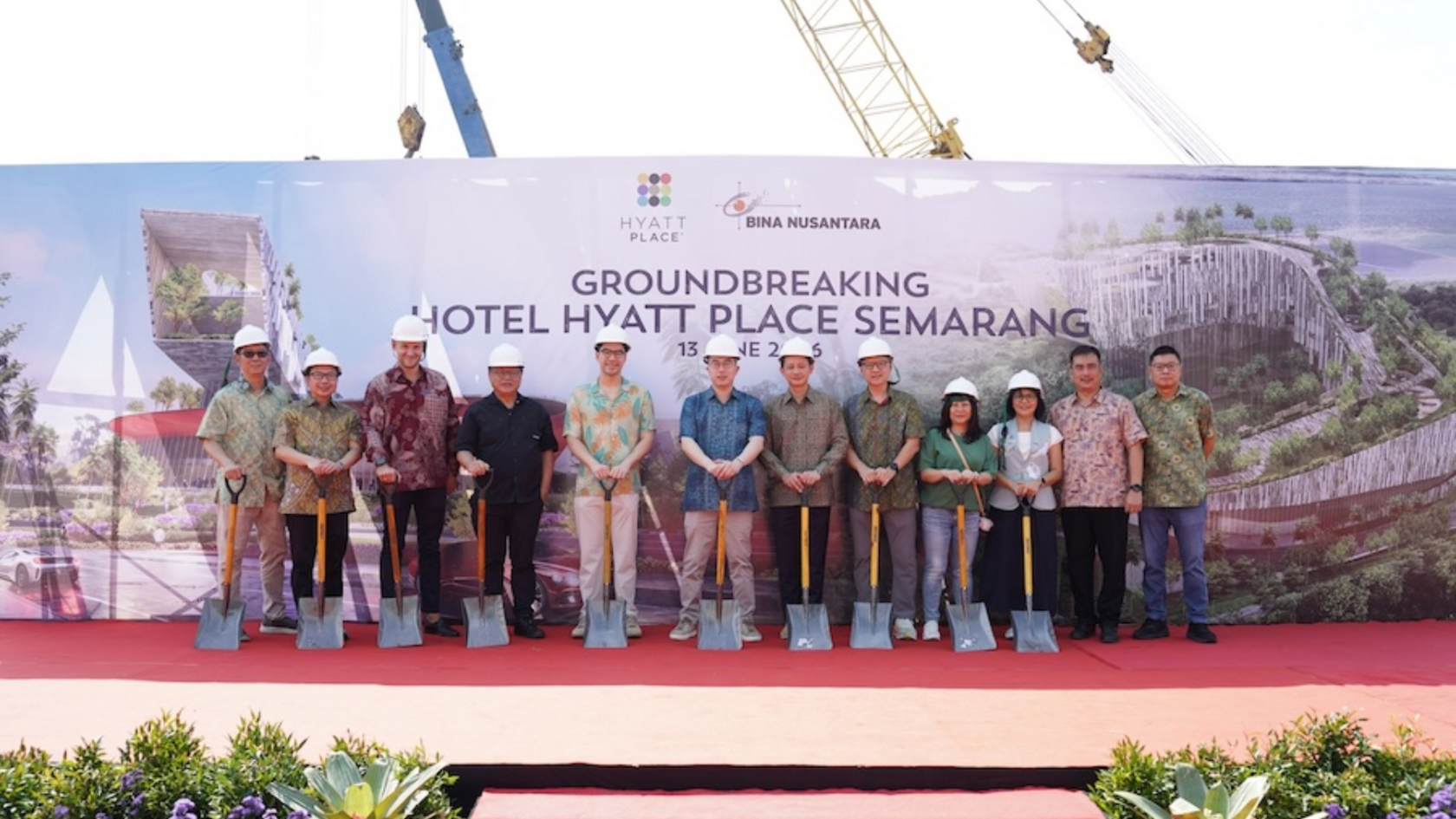
Hyatt Hotels Corporation has formalized plans for the development of Hyatt Place Semarang through a management agreement signed by a Hyatt affiliate with PT PAM and BINA NUSANTARA, marking a strategic extension of the company’s select-service portfolio in Indonesia. The announcement, issued by Hyatt Hotels Corporation on June 16, 2026, positions the project within a broader integrated ecosystem in Semarang that combines education, retail, community, and hospitality functions.
The development site is structured as part of a multi-component environment that includes BINUS SCHOOL Semarang, BINUS University @Semarang, 23 Semarang Mall, and additional supporting facilities. The ecosystem is designed to function as a connected operational zone where academic institutions, commercial activity, and hospitality infrastructure operate within a unified spatial and functional framework. Hyatt Place Semarang is embedded within this structure as a hospitality asset intended to serve overlapping demand from education-related activity, business travel, and mixed-use development flows.
The agreement reflects Hyatt’s continued portfolio expansion in Southeast Asia, with Hyatt Place positioned under the company’s Essentials portfolio. Within this segment, the brand is designed around select-service operations emphasizing functional design, 24/7 service availability, and standardized operational efficiency. In Semarang, the property is expected to introduce this operating model into a mixed-use development that integrates hospitality with academic and commercial anchors.
Hyatt Place Semarang is planned as a seven-floor hotel with 154 rooms. The physical asset will include a lobby, all-day dining facility, ballroom, meeting rooms, restaurant, gym, swimming pool, and a rooftop bar overlooking the Java Sea. The structure of the development indicates a balanced allocation between business-oriented facilities and social or leisure-oriented spaces, reflecting the dual-purpose positioning of the brand within urban mixed-use environments.
The project is developed through collaboration between Hyatt Hotels Corporation, PT PAM, and BINA NUSANTARA. PT PAM’s leadership, represented by its Managing Director Lawrence Wibisono, positioned the development as part of BINA NUSANTARA’s broader institutional expansion strategy. The approach integrates educational infrastructure with adjacent commercial and hospitality assets to create a connected environment supporting community development and regional growth.
BINA NUSANTARA’s role in the ecosystem includes academic institutions and commercial real estate components, forming a structured development model where hospitality assets are aligned with student populations, visiting academics, business partners, and retail traffic. Within this configuration, Hyatt Place Semarang functions as a supporting infrastructure component that provides accommodation and meeting facilities aligned with institutional and commercial activity cycles.
From Hyatt’s perspective, the agreement reinforces its growth strategy in key Indonesian destinations. The announcement positions Semarang as an emerging market for business, tourism, and education-driven travel demand. Hyatt’s Head of Growth & Owner Relations for North East Asia and South East Asia, Sarah Leow, highlighted the collaboration as part of the company’s expansion into cities experiencing structural demand growth across multiple sectors.
Hyatt Place Semarang is also designed with an architectural concept inspired by organic forms and coastal characteristics. The design incorporates dynamic building geometry, green open spaces, and an inner court structure intended to maximize natural light penetration. This architectural direction aligns with the coastal identity of Semarang while supporting environmental integration within a dense mixed-use development environment.
The project reflects a coordinated development model where hospitality infrastructure is planned alongside educational and retail components. BINUS SCHOOL Semarang and BINUS University @Semarang are positioned as long-term demand generators for accommodation, conferencing, and extended-stay requirements. Meanwhile, 23 Semarang Mall contributes retail and lifestyle traffic that complements hotel occupancy patterns and meeting demand.
Francis Budiraharja Santoso, Commissioner of PT PAM, positioned the development as part of a long-term ecosystem strategy focused on connectivity between education, talent development, lifestyle, and hospitality. The structure of the project aligns institutional assets with commercial real estate components to create a consolidated development platform in Semarang.
The 154-room Hyatt Place Semarang will operate within this framework as a hospitality node integrated into daily flows of students, faculty, business visitors, and retail consumers. Meeting rooms and ballroom facilities are designed to support institutional events, corporate gatherings, and hybrid academic-commercial functions, while dining and leisure spaces extend usability beyond standard accommodation services.
The announcement from Hyatt Hotels Corporation underscores the increasing role of integrated development models in hospitality expansion strategies across Southeast Asia. Rather than standalone hotel assets, the Semarang project is structured as part of a multi-use ecosystem where hospitality infrastructure is embedded within a broader real estate and institutional network.
Hyatt’s portfolio positioning under its Essentials segment reflects its continued focus on scalable select-service formats. Within this framework, Hyatt Place Semarang represents an extension of standardized operational models adapted to mixed-use urban developments. The project aligns with broader corporate positioning across more than 1,500 properties globally as of March 31, 2026, spanning multiple brand categories including Luxury, Lifestyle, Inclusive, Classics, and Essentials portfolios.
The Semarang development demonstrates how hospitality operators are aligning with institutional developers to create integrated environments where accommodation, education, and retail infrastructure coexist within a single planning framework. The management agreement structure allows operational oversight by Hyatt while enabling localized development execution through PT PAM and BINA NUSANTARA.
In this configuration, Hyatt Place Semarang functions as a hospitality component within a larger urban development system, supporting both inbound business activity and institutional ecosystem flows in Semarang.
The development site is structured as part of a multi-component environment that includes BINUS SCHOOL Semarang, BINUS University @Semarang, 23 Semarang Mall, and additional supporting facilities. The ecosystem is designed to function as a connected operational zone where academic institutions, commercial activity, and hospitality infrastructure operate within a unified spatial and functional framework. Hyatt Place Semarang is embedded within this structure as a hospitality asset intended to serve overlapping demand from education-related activity, business travel, and mixed-use development flows.
The agreement reflects Hyatt’s continued portfolio expansion in Southeast Asia, with Hyatt Place positioned under the company’s Essentials portfolio. Within this segment, the brand is designed around select-service operations emphasizing functional design, 24/7 service availability, and standardized operational efficiency. In Semarang, the property is expected to introduce this operating model into a mixed-use development that integrates hospitality with academic and commercial anchors.
Hyatt Place Semarang is planned as a seven-floor hotel with 154 rooms. The physical asset will include a lobby, all-day dining facility, ballroom, meeting rooms, restaurant, gym, swimming pool, and a rooftop bar overlooking the Java Sea. The structure of the development indicates a balanced allocation between business-oriented facilities and social or leisure-oriented spaces, reflecting the dual-purpose positioning of the brand within urban mixed-use environments.
The project is developed through collaboration between Hyatt Hotels Corporation, PT PAM, and BINA NUSANTARA. PT PAM’s leadership, represented by its Managing Director Lawrence Wibisono, positioned the development as part of BINA NUSANTARA’s broader institutional expansion strategy. The approach integrates educational infrastructure with adjacent commercial and hospitality assets to create a connected environment supporting community development and regional growth.
BINA NUSANTARA’s role in the ecosystem includes academic institutions and commercial real estate components, forming a structured development model where hospitality assets are aligned with student populations, visiting academics, business partners, and retail traffic. Within this configuration, Hyatt Place Semarang functions as a supporting infrastructure component that provides accommodation and meeting facilities aligned with institutional and commercial activity cycles.
From Hyatt’s perspective, the agreement reinforces its growth strategy in key Indonesian destinations. The announcement positions Semarang as an emerging market for business, tourism, and education-driven travel demand. Hyatt’s Head of Growth & Owner Relations for North East Asia and South East Asia, Sarah Leow, highlighted the collaboration as part of the company’s expansion into cities experiencing structural demand growth across multiple sectors.
Hyatt Place Semarang is also designed with an architectural concept inspired by organic forms and coastal characteristics. The design incorporates dynamic building geometry, green open spaces, and an inner court structure intended to maximize natural light penetration. This architectural direction aligns with the coastal identity of Semarang while supporting environmental integration within a dense mixed-use development environment.
The project reflects a coordinated development model where hospitality infrastructure is planned alongside educational and retail components. BINUS SCHOOL Semarang and BINUS University @Semarang are positioned as long-term demand generators for accommodation, conferencing, and extended-stay requirements. Meanwhile, 23 Semarang Mall contributes retail and lifestyle traffic that complements hotel occupancy patterns and meeting demand.
Francis Budiraharja Santoso, Commissioner of PT PAM, positioned the development as part of a long-term ecosystem strategy focused on connectivity between education, talent development, lifestyle, and hospitality. The structure of the project aligns institutional assets with commercial real estate components to create a consolidated development platform in Semarang.
The 154-room Hyatt Place Semarang will operate within this framework as a hospitality node integrated into daily flows of students, faculty, business visitors, and retail consumers. Meeting rooms and ballroom facilities are designed to support institutional events, corporate gatherings, and hybrid academic-commercial functions, while dining and leisure spaces extend usability beyond standard accommodation services.
The announcement from Hyatt Hotels Corporation underscores the increasing role of integrated development models in hospitality expansion strategies across Southeast Asia. Rather than standalone hotel assets, the Semarang project is structured as part of a multi-use ecosystem where hospitality infrastructure is embedded within a broader real estate and institutional network.
Hyatt’s portfolio positioning under its Essentials segment reflects its continued focus on scalable select-service formats. Within this framework, Hyatt Place Semarang represents an extension of standardized operational models adapted to mixed-use urban developments. The project aligns with broader corporate positioning across more than 1,500 properties globally as of March 31, 2026, spanning multiple brand categories including Luxury, Lifestyle, Inclusive, Classics, and Essentials portfolios.
The Semarang development demonstrates how hospitality operators are aligning with institutional developers to create integrated environments where accommodation, education, and retail infrastructure coexist within a single planning framework. The management agreement structure allows operational oversight by Hyatt while enabling localized development execution through PT PAM and BINA NUSANTARA.
In this configuration, Hyatt Place Semarang functions as a hospitality component within a larger urban development system, supporting both inbound business activity and institutional ecosystem flows in Semarang.