
How Japan’s Local Luxury Hotel Brands Drive Historic Revenue and Outperform Global Entrants
24.09.2026
The luxury lodging market in Japan is undergoing an unprecedented commercial transformation driven by record inbound travel and high-net-worth consumer spending. In 2025, Japan welcomed approximately 42.68 million international visitors, generating a massive tourism expenditure pool of JPY 9.4549 trillion. While global hotel conglomerates aggressively expand their metropolitan pipelines across Tokyo and Kyoto, a vital structural factor defines the market: domestic Japanese brands control more than 90% of the overall lodging footprint.
Local luxury hospitality is fundamentally distinct from standardized international luxury. While conventional global luxury relies on uniform hardware specifications, predictable marble-lobby architecture, and rigid service procedures, homegrown Japanese luxury is anchored in omotenashi, a centuries-old philosophy of intuitive, unscripted, and deeply localized cultural care. By combining prime legacy real estate assets with site-specific culinary, architectural, and wellness programming, local luxury operators achieve superior pricing power, longer multi-night stays, and exceptional guest retention that international chains struggle to match.
Local luxury hospitality is fundamentally distinct from standardized international luxury. While conventional global luxury relies on uniform hardware specifications, predictable marble-lobby architecture, and rigid service procedures, homegrown Japanese luxury is anchored in omotenashi, a centuries-old philosophy of intuitive, unscripted, and deeply localized cultural care. By combining prime legacy real estate assets with site-specific culinary, architectural, and wellness programming, local luxury operators achieve superior pricing power, longer multi-night stays, and exceptional guest retention that international chains struggle to match.
Macro Performance Indicators and Market Snapshot
The operational indicators across Japan’s luxury accommodation sector illustrate a clear dynamic between metropolitan hubs and regional retreats. Urban city hotels maintain an efficient 74.1% average national occupancy rate, driven by high-margin corporate travel, state banquets, and year-round international leisure traffic. In contrast, destination resorts maintain a stable 56.9% national occupancy, providing the structural capacity needed to preserve privacy, protect high Average Daily Rates (ADR), and capture extended stays outside major metropolitan transit corridors.
Transparency remains a focal point for the sector. Following a 2025 regulatory review by the Japan Fair Trade Commission that issued pricing transparency warnings to 15 iconic luxury properties in Tokyo, domestic operators have refined their dynamic yield management systems to ensure long-term rate integrity and consumer confidence.
Transparency remains a focal point for the sector. Following a 2025 regulatory review by the Japan Fair Trade Commission that issued pricing transparency warnings to 15 iconic luxury properties in Tokyo, domestic operators have refined their dynamic yield management systems to ensure long-term rate integrity and consumer confidence.
Hoshino Resorts: The Flagship of Homegrown Luxury Innovation
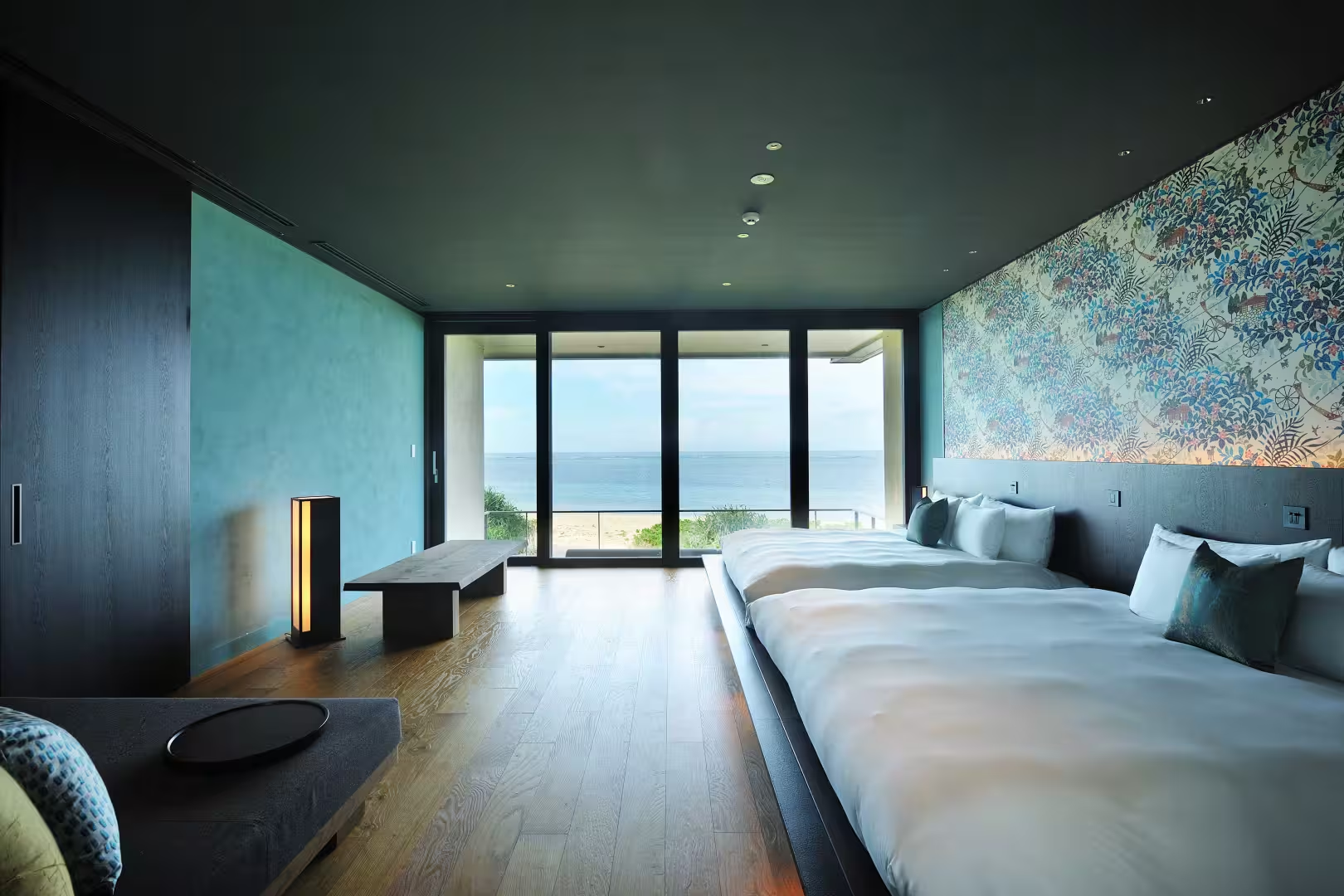
Among homegrown luxury hospitality companies, Hoshino Resorts stands as the dominant domestic operator. Founded over a century ago in 1914 as a single hot-spring ryokan in Karuizawa, the group has scaled a multi-tiered brand architecture. Its ultra-luxury flagship brand, HOSHINOYA, blends modern architectural design with deep immersion into regional Japanese heritage.
Financially, Hoshino Resorts generates $119 million USD (approximately JPY 17.88 billion) in trailing 12-month Real Estate Investment Trust revenue. Fueled by high-spending foreign visitors, net profit margins reached 42.2%, with first-half revenues jumping 22% year-on-year and net income expanding by 43%. Structurally, Hoshino Resorts projects a 3.6% annual revenue growth rate, comfortably outperforming the global hotel REIT average of 2.5%.
The flagship HOSHINOYA brand commands an average guest stay of 3.35 nights per property, the longest average stay duration among all local luxury brands in Japan. This extended stay profile is sustained by the brand's focus on immersive nature retreats and cultural authenticity. To avoid over-saturated urban pipelines, Hoshino Resorts prioritizes historic preservation and adaptive reuse. A key example is HOSHINOYA Nara Prison, which transforms a Meiji-era brick prison into a boutique luxury resort, successfully converting Nara from a brief day-trip destination into a multi-night luxury stay.
Premier Local Luxury Institutions
Beyond Hoshino Resorts, Japan’s domestic luxury landscape is anchored by iconic single-asset grand dames and established hotel groups. Palace Hotel Tokyo operates as an independent single-asset titan in Chiyoda, occupying an historic plot along the Imperial Palace moat. Holding 11 consecutive years as a Forbes Travel Guide Five-Star property, over 50% of its 300 rooms feature open-air balconies looking out onto the Imperial Palace gardens, a physical asset feature unique among central Tokyo luxury properties. The property maintains an industry-leading guest satisfaction rating of 9.8 out of 10.
Imperial Hotel, Ltd. represents Japan’s historic grand dame legacy, generating annual corporate sales of JPY 56.27 billion. Holding a 9.5 out of 10 guest rating across its Tokyo and Osaka flagship assets, the company expanded its footprint into Japan's cultural heartland with the opening of the Imperial Hotel Kyoto in the historic Gion district.
The Okura Tokyo commands an estimated 5.8% market share in the domestic premium and luxury lodging segment. Holding a 9.4 out of 10 guest rating, the Minato property combines traditional Japanese aesthetic design with modern culinary capabilities and large-scale diplomatic banquet facilities.
Seibu Prince Hotels & Resorts controls an estimated 5.4% market share with 60 domestic properties across major metropolitan hubs and resort destinations like Karuizawa and Hakone. Rated 9.3 out of 10, the group utilizes its unified Seibu Prince Global Rewards program to drive international direct bookings and cultivate brand loyalty among wealthy repeat travelers.
Strategic Pivots and Geographic Dominance
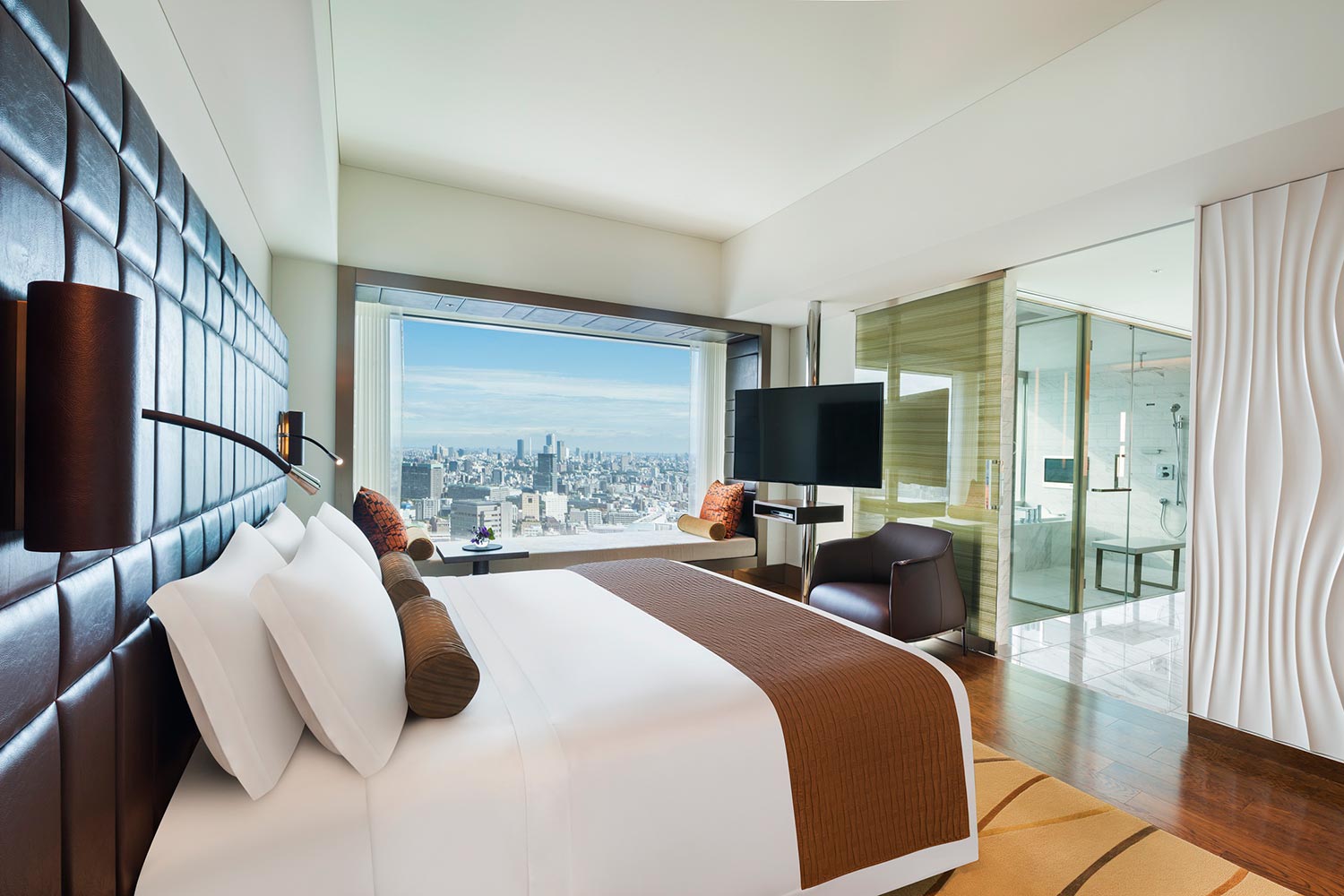
To defend market share against foreign entries, local luxury operators are adapting their real estate strategies. Domestic brands are actively expanding beyond the traditional Tokyo-Kyoto-Osaka Golden Route to establish boutique wellness retreats in regional areas like Hokkaido, Kyushu, and Chubu. Simultaneously, legacy properties are modernizing interior room layouts to expand average floor plans beyond the traditional 30-square-meter standard, incorporating private open-air hot-spring baths to match the physical room volumes offered by new international construction.
Regionally, domestic operators tailor their offerings to match local topographies. In Kansai, HOSHINOYA Kyoto in Arashiyama requires guests to check in via a private 15-minute boat ride up the Oi River to reach a restored 17th-century merchant mansion. In central mountain regions like Fuji and Hakone, FUFU Japan Small Luxury Resorts operates design-forward hideaways such as FUFU Kawaguchiko, built from raw stone and timber with private volcanic stone baths in every suite. In Hokkaido, Hoshino Resorts operates RISONARE Tomamu, featuring two multi-colored towers rising directly out of powder-snow fields alongside the famous Unkai Terrace. In subtropical Okinawa, AQUASENSE Hotel & Resort in Onna Village operates a massive 2,200-square-meter pool terrace where every guest room features a private balcony with an outdoor heated jet bath overlooking the East China Sea.
As foreign visitor arrivals reach record levels, Japan’s local luxury brands remain uniquely positioned. By anchoring their business models in authentic cultural heritage, site-specific architecture, and omotenashi, homegrown Japanese operators prove that true local luxury offers an irreplaceable value proposition that continues to lead the global hospitality industry.