
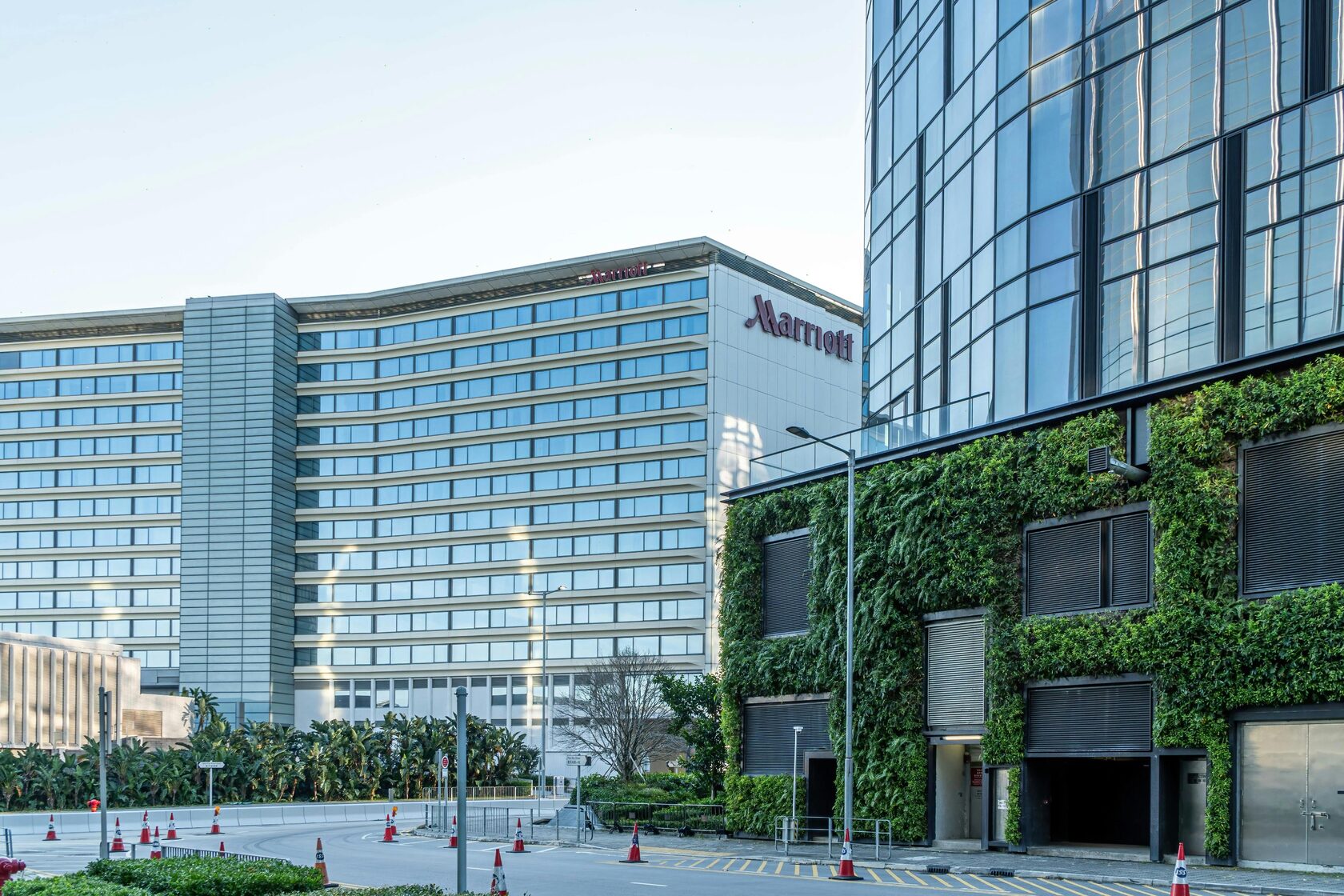
The global hospitality industry has kicked off 2026 with an explosive start, proving that the appetite for international travel remains insatiable despite geopolitical and economic shifts. As major hotel groups release their first-quarter earnings, a clear theme has emerged: a profitability-first approach combined with aggressive system expansion is yielding historic results. From luxury urban retreats to extended-stay powerhouses, the sector is demonstrating remarkable resilience, with revenue per available room (RevPAR) climbing across nearly every major geographic region.
Marriott International: Global Expansion Hits New Heights
Marriott International delivered a standout performance in Q1 2026, reporting a 4.2% rise in global revenue per available room (RevPAR) compared to Q1 2025. This growth was balanced across both domestic and international markets, with a 4% increase in the US and Canada and a 4.6% jump in international regions.
Financially, the company’s adjusted earnings before interest, taxes, depreciation, and amortisation (EBITDA) reached $1.3 billion, a significant 15% increase year-over-year. Adjusted net income was recorded at $726 million, while franchise and base management fees rose by 13% to $1.2 billion.
Marriott’s development engine showed no signs of slowing, as the company added approximately 15,900 rooms worldwide, bringing its total managed portfolio to nearly 1.8 million rooms. With a development pipeline exceeding 618,000 rooms, Marriott is positioning itself for sustained dominance.
Financially, the company’s adjusted earnings before interest, taxes, depreciation, and amortisation (EBITDA) reached $1.3 billion, a significant 15% increase year-over-year. Adjusted net income was recorded at $726 million, while franchise and base management fees rose by 13% to $1.2 billion.
Marriott’s development engine showed no signs of slowing, as the company added approximately 15,900 rooms worldwide, bringing its total managed portfolio to nearly 1.8 million rooms. With a development pipeline exceeding 618,000 rooms, Marriott is positioning itself for sustained dominance.
Accor: Resilience Amidst Regional Challenges
Despite geopolitical disruptions in the Middle East, Accor reported a Q1 2026 revenue of approximately $1.42 billion (€1,313 million), marking a 2.3% increase at constant currency. The group’s growth was primarily fueled by a 5.1% increase in RevPAR, with particularly strong showings in Europe, Southeast Asia, and Brazil.
While the luxury and lifestyle division saw a minor revenue dip of 0.7% due to disposals, the premium, midscale, and economy segments grew by 4.6%. Accor also prioritized shareholder returns, initiating a roughly $487 million (€450 million) share buyback program. The company maintained healthy growth by opening 48 new hotels, achieving a net unit growth of 3.8% over the last 12 months.
While the luxury and lifestyle division saw a minor revenue dip of 0.7% due to disposals, the premium, midscale, and economy segments grew by 4.6%. Accor also prioritized shareholder returns, initiating a roughly $487 million (€450 million) share buyback program. The company maintained healthy growth by opening 48 new hotels, achieving a net unit growth of 3.8% over the last 12 months.
IHG: Beating Estimates with Cultural Relevance
IHG reported a strong Q1 2026 trading update, with global RevPAR increasing by 4.4% year-over-year, surpassing market expectations. Growth was driven by a 5.6% increase in EMEAA (Europe, Middle East, Asia, Africa) and a 5.7% rise in Greater China, alongside a 3.6% increase in the Americas. Average daily rates (ADR) rose 2.0%, while occupancy increased by 1.5 percentage points.
Demand remained particularly high for group bookings, which rose by 7%, and business travel, which increased by 6%. IHG’s expansion remained aggressive, opening 82 hotels totaling 14,900 rooms during the quarter. The company also completed $240 million of a planned $950 million share buyback for 2026.
Demand remained particularly high for group bookings, which rose by 7%, and business travel, which increased by 6%. IHG’s expansion remained aggressive, opening 82 hotels totaling 14,900 rooms during the quarter. The company also completed $240 million of a planned $950 million share buyback for 2026.
Hilton Worldwide: Record Profits and Raised Outlooks
Hilton Worldwide reported a profitable first quarter with total revenues reaching $2.94 billion, representing a 9% year-over-year increase. Adjusted EBITDA rose 13% to $901 million, and system-wide RevPAR increased 3.6% on a currency-neutral basis.
During the period, Hilton added 16,300 rooms to its system, pushing its massive development pipeline to 527,000 rooms. Encouraged by this strong momentum and an adjusted EPS of $2.01 that exceeded guidance, Hilton raised its full-year 2026 outlook, now expecting RevPAR growth of 2% to 3% and net unit growth of 6% to 7%.
During the period, Hilton added 16,300 rooms to its system, pushing its massive development pipeline to 527,000 rooms. Encouraged by this strong momentum and an adjusted EPS of $2.01 that exceeded guidance, Hilton raised its full-year 2026 outlook, now expecting RevPAR growth of 2% to 3% and net unit growth of 6% to 7%.

Shilla Hotel: A Return to Profitability
South Korea’s Shilla Hotel reported a strong Q1 2026, returning to profitability with consolidated revenue of approximately $770 million (1.0535 trillion won). This represents an 8.4% increase in revenue year-on-year, driven by a 16.7% revenue boost in its hotel and leisure division.
The company’s Travel Retail (TR) division saw a return to profitability for the first time in seven quarters, aided by lower commissions and better inventory management. Operating profit for the quarter reached roughly $14.9 million (20.4 billion won), swinging from a previous deficit to a surplus. Leadership also initiated a 20-billion-won share purchase to bolster market confidence.
The company’s Travel Retail (TR) division saw a return to profitability for the first time in seven quarters, aided by lower commissions and better inventory management. Operating profit for the quarter reached roughly $14.9 million (20.4 billion won), swinging from a previous deficit to a surplus. Leadership also initiated a 20-billion-won share purchase to bolster market confidence.
Choice Hotels International: Record Revenue in Higher Segments
Choice Hotels International achieved record total revenue of $340.6 million in Q1 2026, up from $332.9 million a year earlier. This performance was underpinned by a 3% rise in revenue excluding reimbursable costs ($216.7 million), fueled by global rooms growth in the extended-stay and upscale segments.
International growth was particularly impressive, with net rooms increasing by 13% year-year. The company also reported that U.S. conversion room openings increased by 59% during the quarter. Adjusted EBITDA reached $125.7 million, in line with expectations.
International growth was particularly impressive, with net rooms increasing by 13% year-year. The company also reported that U.S. conversion room openings increased by 59% during the quarter. Adjusted EBITDA reached $125.7 million, in line with expectations.
CapitaLand Ascott Trust (CLAS): Stability Through Diversification
CapitaLand Ascott Trust maintained a stable performance for Q1 2026, with a revenue per available unit (RevPAU) of approximately $102 (S$137), representing a 1% year-on-year increase. While Japan and the UK saw declines, the Singapore and Australia markets registered significant improvements.
Australia, which represents 10% of total assets, saw a 7% rise in RevPAU to roughly $124 (A$188), driven by major events such as the Ashes cricket matches and Ed Sheeran concerts. The trust remains in a strong financial position for future growth, holding roughly $1.41 billion (S$1.9 billion) in debt headroom for potential acquisitions.
Australia, which represents 10% of total assets, saw a 7% rise in RevPAU to roughly $124 (A$188), driven by major events such as the Ashes cricket matches and Ed Sheeran concerts. The trust remains in a strong financial position for future growth, holding roughly $1.41 billion (S$1.9 billion) in debt headroom for potential acquisitions.
Global Hotel Alliance (GHA): Loyalty and Luxury Drive 24% Surge
The Global Hotel Alliance (GHA) reported a phenomenal start to the year, with total hotel revenues reaching $921 million, a 24% increase year-on-year. Total room revenue alone jumped 27% to $738 million, while cross-brand revenue surged by 40%.
International stays contributed to 69% of total room revenue, with the UAE (+63%), China (+43%), and India (+40%) leading the growth. Loyalty momentum was also key, as GHA DISCOVERY membership reached 35 million, with a 30% increase in reward dollar redemptions.
The record-breaking figures seen across these diverse portfolios signal that 2026 is shaping up to be a year of strategic triumph for the hospitality sector. Despite regional softening in markets like the Middle East toward the end of the quarter, the robust demand for both leisure and business travel, coupled with massive loyalty program growth, suggests that the industry has successfully found its footing in a new era of global travel.
International stays contributed to 69% of total room revenue, with the UAE (+63%), China (+43%), and India (+40%) leading the growth. Loyalty momentum was also key, as GHA DISCOVERY membership reached 35 million, with a 30% increase in reward dollar redemptions.
The record-breaking figures seen across these diverse portfolios signal that 2026 is shaping up to be a year of strategic triumph for the hospitality sector. Despite regional softening in markets like the Middle East toward the end of the quarter, the robust demand for both leisure and business travel, coupled with massive loyalty program growth, suggests that the industry has successfully found its footing in a new era of global travel.