
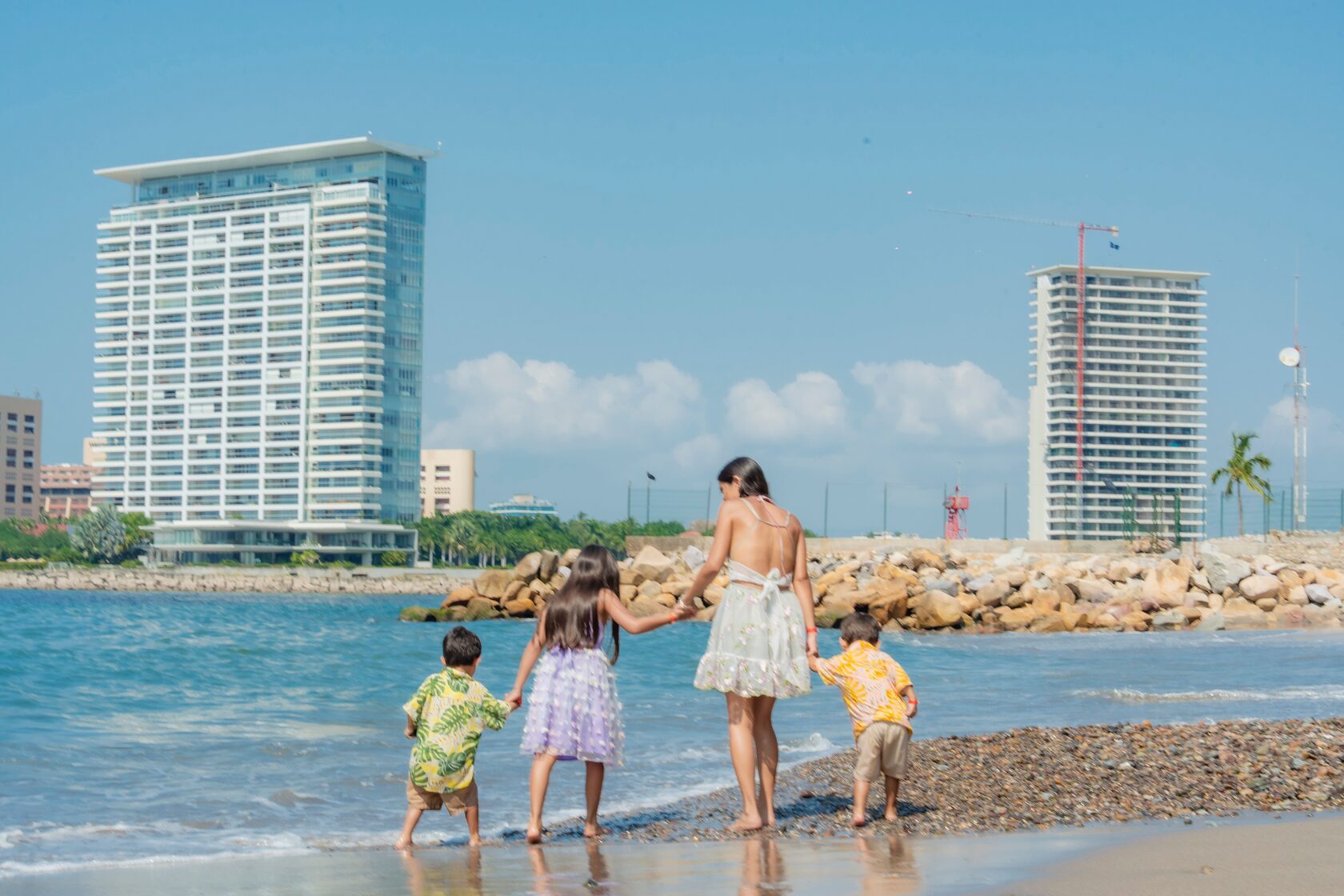
Family travel has quietly evolved into the most powerful economic engine in the Asian hospitality sector. Far exceeding the market share of solo travelers, corporate per-diems, or couples, family travel ranks as the single most preferred mode of travel across the region. According to survey data from digital travel platform Agoda, family travel leads all other travel preferences in Asia, capturing 52% of regional travelers. In key markets, the concentration is even higher: Indonesians lead the region at 69%, followed by Vietnam (61%), Malaysia (59%), Taiwan (58%), the Philippines (55%), Thailand (50%), South Korea (50%), India (40%), and Japan (32%).
Driven by rising regional wealth and deep-rooted cultural values surrounding multi-generational bonding, Asian families are moving beyond standard child-friendly amenities. Hoteliers are responding by redesigning physical spaces, elevating food and beverage (F&B) programs, and pivoting toward Total Revenue Per Available Room (TRevPAR) models to capture high-margin, multi-generational spend.
Driven by rising regional wealth and deep-rooted cultural values surrounding multi-generational bonding, Asian families are moving beyond standard child-friendly amenities. Hoteliers are responding by redesigning physical spaces, elevating food and beverage (F&B) programs, and pivoting toward Total Revenue Per Available Room (TRevPAR) models to capture high-margin, multi-generational spend.
Re-engineering Hotel Revenue Spreadsheets
Family tourism fundamentally alters how cash flows into property balance sheets compared to corporate accounts, optimizing multiple revenue channels simultaneously:
- TRevPAR Acceleration: Total Revenue Per Available Room spikes up to 2.5 times higher in family-centric resorts due to on-site monetization, including kids' club fees, private excursions, spa packages, and multi-generational dining.
- F&B Wallet Capture: Inside the broader regional travel wallet share, Food and Beverage accounts for 21.7% of total expenditures. Because families prioritize convenience and child safety, they heavily rely on on-property dining, capturing lucrative margins through private beach BBQs, all-inclusive packages, and tailored menus.
- Extended Length of Stay (LoS) & Operational Savings: Inbound leisure families average extended stays, such as 7.8 days in South Korea. For hoteliers, longer stays dramatically lower operational housekeeping turnaround and check-in/check-out costs, yielding 15% to 20% in operational savings compared to rapid-turnover business guests.
- Villa & Suite ADR Premiums: To accommodate multi-generational groups, properties are replacing standard adjoining rooms with 2- and 3-bedroom villas or flexible suites, commanding significantly higher Average Daily Rates (ADR) and protecting baseline occupancy against seasonal dips.
How Family Demand Manifests Across Asia
The impact of family travel manifests differently across Southeast Asia, Japan, and South Korea, each offering unique opportunities for revenue optimization.
Southeast Asia: The Volume and Ancillary Anchor
In a Southeast Asian travel and tourism market valued at $59 billion, family travel acts as a direct volume and spend anchor for top destinations like Phuket, Bali, Kuala Lumpur, Ho Chi Minh City, and Goa.
With corporate travel per-diems tightening globally, resorts in Thailand, Indonesia, and Malaysia rely on high-spending families, particularly those in the prime 35–44 age bracket with significant purchasing power, to drive direct bookings and high-margin ancillary sales. To capture this market, properties are expanding modular suite inventories, glamping setups, and resort villas, which are experiencing an 18.32% Compound Annual Growth Rate (CAGR) in demand across the ASEAN region.
Japan: Regional Wealth Dispersion and Premium Long-Stays
International visitor spending in Japan reached ¥9.5 trillion, with hotel accommodations representing the largest single spending category at 37%. While overall tourist stays remain heavily concentrated (~73%) in core urban centers like Tokyo and Kyoto, family travelers systematically deviate to secondary prefectures and resort regions, such as Osaka, Hokkaido (for skiing), and Okinawa.
Large hospitality groups like Hoshino Resorts capitalize on this demand by offering luxury serviced apartments and family suites, capturing long-stay regional wealth while dispersing high-occupancy revenues outside core metropolitan nodes.
South Korea: Experiential Upselling and Cultural Itineraries
South Korea’s booming cultural appeal attracts family units who split extended itineraries between urban K-culture hubs in Seoul and nature-focused resorts on Jeju Island. Households in South Korea demonstrate strong leisure resilience, with family-centric spending on travel, lodging, and dining out growing 29.8% year-over-year.
Hotels monetize this extended duration through experiential cross-selling, partnering with local vendors for family cultural workshops, transportation add-ons, and pop-culture tours, significantly elevating the guest's lifetime customer value.
Southeast Asia: The Volume and Ancillary Anchor
In a Southeast Asian travel and tourism market valued at $59 billion, family travel acts as a direct volume and spend anchor for top destinations like Phuket, Bali, Kuala Lumpur, Ho Chi Minh City, and Goa.
With corporate travel per-diems tightening globally, resorts in Thailand, Indonesia, and Malaysia rely on high-spending families, particularly those in the prime 35–44 age bracket with significant purchasing power, to drive direct bookings and high-margin ancillary sales. To capture this market, properties are expanding modular suite inventories, glamping setups, and resort villas, which are experiencing an 18.32% Compound Annual Growth Rate (CAGR) in demand across the ASEAN region.
Japan: Regional Wealth Dispersion and Premium Long-Stays
International visitor spending in Japan reached ¥9.5 trillion, with hotel accommodations representing the largest single spending category at 37%. While overall tourist stays remain heavily concentrated (~73%) in core urban centers like Tokyo and Kyoto, family travelers systematically deviate to secondary prefectures and resort regions, such as Osaka, Hokkaido (for skiing), and Okinawa.
Large hospitality groups like Hoshino Resorts capitalize on this demand by offering luxury serviced apartments and family suites, capturing long-stay regional wealth while dispersing high-occupancy revenues outside core metropolitan nodes.
South Korea: Experiential Upselling and Cultural Itineraries
South Korea’s booming cultural appeal attracts family units who split extended itineraries between urban K-culture hubs in Seoul and nature-focused resorts on Jeju Island. Households in South Korea demonstrate strong leisure resilience, with family-centric spending on travel, lodging, and dining out growing 29.8% year-over-year.
Hotels monetize this extended duration through experiential cross-selling, partnering with local vendors for family cultural workshops, transportation add-ons, and pop-culture tours, significantly elevating the guest's lifetime customer value.
Operations & Personalization: The Multi-Generational Nuance
Capturing multi-generational travel requires operational sensitivity. Serving three generations under one roof demands flexible spatial design and culturally aware front-line service.
"Family travel is often multi-generational. Dining preferences may include halal requirements, preferred spice levels or familiar comfort dishes. Some guests value privacy and quiet recognition, while others appreciate a more visible welcome. Respectful language, tone, body language and timing are equally important." Giordano Faggioli, General Manager at Raffles Jakarta
To align operational models with these guest expectations, properties are adopting three main strategies:
- Urban Resortification: City hotels in hubs like Tokyo, Seoul, and Singapore are redesigning layouts to include resort-style amenities, adding dedicated kids' clubs, interactive cooking classes, and family spas to capture urban staycation demand.
- Captive Digital Distribution: With the ASEAN online accommodation market projected to hit $46.48 billion, direct hotel web portals are growing at a 15.51% CAGR. Operators use mobile apps to lock in families pre-arrival by offering customized room configurations and activity scheduling.
- Flexible Spatial Design: Properties are deploying modular rooms with sliding acoustic walls and multi-bedroom layouts, allowing a single floor plan to convert seamlessly between corporate rooms and multi-generational family suites.
Strategic Revenue Framework
Hotels that successfully adapt to family tourism shift away from low-margin room volume to maximize total guest wallet capture:
As the Asian middle class expands, family tourism has transitioned from a seasonal surge into a permanent, structural growth pillar. By catering to the complex requirements of multi-generational groups, balancing privacy, cultural nuances, and shared experiences, hoteliers can diversify away from corporate volatility, protect pricing power, and unlock sustainable, long-term TRevPAR growth across Asia's dynamic hospitality landscape.
- Inventory Design: Flexible, modular suites and multi-bedroom villas yield higher baseline ADR through premium, high-occupancy room categories.
- Ancillary Package Structuring: All-inclusive multi-generational packages (covering F&B, spa, and curated excursions) increase TRevPAR by keeping guest wallets spent entirely on-property.
- Multi-Gen Loyalty Structures: Subscriptions and loyalty points programs tailored for extended family accounts lower Customer Acquisition Costs (CAC) while driving repeat, multi-generational visits.
As the Asian middle class expands, family tourism has transitioned from a seasonal surge into a permanent, structural growth pillar. By catering to the complex requirements of multi-generational groups, balancing privacy, cultural nuances, and shared experiences, hoteliers can diversify away from corporate volatility, protect pricing power, and unlock sustainable, long-term TRevPAR growth across Asia's dynamic hospitality landscape.