
The World Economic Forum and major global travel brands are signaling a fundamental transformation in consumer behavior: the post-pandemic era of forced travel perfection is over. According to Hilton’s flagship 2027 Travel Trends Report, titled "The Great Rebalance: How Travelers Are Expecting to Reset and Recalibrate in 2027", backed by a global study of over 14,000 travelers across 14 countries in partnership with Morning Consult, travelers are ditching rigid, picture-perfect itineraries.
Instead, 2027 is defined by intentionality, personal growth, flexibility, and a desire for authentic discovery. Across Asia-Pacific, where high-density living and intense work cultures have traditionally fueled high-stress travel, these five emerging trends are fundamentally reshaping hotel operations, commercial strategy, and asset management.
Instead, 2027 is defined by intentionality, personal growth, flexibility, and a desire for authentic discovery. Across Asia-Pacific, where high-density living and intense work cultures have traditionally fueled high-stress travel, these five emerging trends are fundamentally reshaping hotel operations, commercial strategy, and asset management.
The Rise of 'Ish': Letting Go of the Perfect Vacation
Modern travelers are rejecting the pressure of the "perfect" trip. Globally, 54% of travelers report feeling societal or group pressure when planning vacations, whether accommodating group demands (24%), pleasing family (27%), or following online recommendations (23%). In response, consumers are adopting an "ish" mindset that embraces balance over perfection.
Healthy-ish: Rather than strict diets or total bingeing, 27% of travelers choose a middle ground, maintaining healthy morning routines while making room for culinary indulgence. Extended-stay travelers increasingly demand in-room kitchens (60% rank this as vital) to manage their diet. At Tempo by Hilton Times Square, over 20% of cocktails ordered in late 2025 came from its non-alcoholic "Free-Spirited" menu, proving that guests want choice without extreme restrictions.
Solo-ish: Solo travel is no longer about total isolation. While 41% of travelers plan a solo trip next year (with 92% being repeat solo travelers), 31% do so to meet friends or family at the destination, 20% book group day excursions, and 16% join multi-day tours with strangers. Motto by Hilton reports that over 50% of its global reservations over the past year were from solo guests.
Local-ish: Travelers seek personal milestones over tourist traps. While 44% feel truly "on vacation" when exploring a new town, 33% feel it the moment they arrive at their hotel, a figure that surges to 47% among Japanese travelers, who prioritize immediate hotel relaxation over exhaustive sightseeing.
In dense Asian urban gateways, Japanese properties are capturing the "Local-ish" traveler by focusing on arrival experiences that instantly induce a vacation state of mind. Japanese consumers lead global data with 47% identifying hotel check-in as their primary relaxation trigger. Simultaneously, across regional growth centers, brands like Motto by Hilton deploy flexible, compact room layouts with movable furniture and vibrant communal ground-floor spaces (like Junto or Lulla), allowing "Solo-ish" travelers across Asia to seamlessly pivot between independent privacy and social connection.
The Travel Trust Equation: Human Expertise Meets Digital Frictionlessness
In an era saturated with generative AI, the "Travel Trust Equation" dictates that while digital tools accelerate initial discovery, human expertise builds real booking confidence, and loyalty status validates the experience.
Human Expertise vs. Algorithmic Limits
While 63% of travelers trust AI tools for general travel decisions, trust drops significantly when handling nuanced choices: only 22% trust AI to build tailored itineraries, 20% trust it for restaurant recommendations, and 18% trust it for hidden local experiences. Conversely, 70% of travelers trust hotel staff as a primary planning resource, while 87% trust family recommendations above all.
Regional nuances are pronounced: Chinese travelers lead global AI adoption (35% use general AI; 21% use AI travel planners), whereas U.S. and Japanese travelers rely far more heavily on hotel staff and family.
Points-Maxxing as a Status Signal
Loyalty programs have evolved from simple point-earning systems into social proof and credibility:
In China, where 35% of travelers embrace AI-powered trip planning, Conrad Chongqing integrates digital discovery with high-touch human execution. To cater to performance travelers and "points-maxxing" loyalty members visiting for events like the BOB Beijing MC Marathon or local athletic races, the hotel provides curated running maps, hydration stations, cooling towels, and post-run recovery kits. This high-touch human execution validates the recommendations guests find online, cementing loyalty trust.
Human Expertise vs. Algorithmic Limits
While 63% of travelers trust AI tools for general travel decisions, trust drops significantly when handling nuanced choices: only 22% trust AI to build tailored itineraries, 20% trust it for restaurant recommendations, and 18% trust it for hidden local experiences. Conversely, 70% of travelers trust hotel staff as a primary planning resource, while 87% trust family recommendations above all.
Regional nuances are pronounced: Chinese travelers lead global AI adoption (35% use general AI; 21% use AI travel planners), whereas U.S. and Japanese travelers rely far more heavily on hotel staff and family.
Points-Maxxing as a Status Signal
Loyalty programs have evolved from simple point-earning systems into social proof and credibility:
- 50% of travelers are more likely to trust recommendations from someone with elite loyalty status.
- 49% agree elite status holders exert greater influence over group travel decisions.
- 29% admit jealousy toward friends with higher loyalty status, while 43% view elite status as a sign of personal success.
- 38% would book a trip specifically to earn or maintain their loyalty status, with 30% booking group stays on their account and 25% putting entire group dining tabs on their card to maximize points.
In China, where 35% of travelers embrace AI-powered trip planning, Conrad Chongqing integrates digital discovery with high-touch human execution. To cater to performance travelers and "points-maxxing" loyalty members visiting for events like the BOB Beijing MC Marathon or local athletic races, the hotel provides curated running maps, hydration stations, cooling towels, and post-run recovery kits. This high-touch human execution validates the recommendations guests find online, cementing loyalty trust.
Growth Getaways: Travel That Changes You
Travel is increasingly evaluated by its long-term personal dividend rather than short-term entertainment. The concept of "Growth Getaways" focuses on returning home transformed, whether with a new skill, mindset, or healthier habit.
The Beforeglow: The mental health benefits of travel begin months before departure. 76% of travelers agree having a trip on the calendar gives them purpose, while 71% say a booked trip motivates them to achieve personal goals.
Skillcations: 42% of travelers report that travel helped them discover new passions or hobbies. Gen Z travelers are nearly twice as likely as Baby Boomers to seek a new hobby during a trip to continue at home. Furthermore, 38% seek stronger personal connections, 35% want a renewed sense of purpose, and 34% look for a fresh life perspective.
At Conrad Bali, the resort directly addresses the "Skillcation" movement by moving away from passive leisure toward active cultural immersion. Its signature Foraging & Forest Bathing journey combines kayaking, rainforest trekking, wild foraging, and a waterfall-side culinary experience. The program transforms standard beach stays into an educational, transformative journey, directly serving the 42% of travelers seeking new passions and the 28% who state wildlife and outdoor bucket-list experiences foster personal growth.
Wellness, Rewired: The New Balance of Wellbeing
Wellness in 2027 blends high-tech bio-hacking with grounded, analog nature immersion. 65% of travelers actively seek experiences that calm the nervous system, and 76% say travel enables them to recharge in ways impossible at home.
Back to Nature: 79% of travelers say fresh air is essential for relaxation, 54% spend more time in nature while traveling than at home, and 35% would book a hotel specifically for dedicated outdoor relaxation spaces.
Hydrotherapy Surge: 61% of travelers are more likely to engage in water-based wellness experiences while traveling, and 60% prefer sharing these experiences with others. Thermal baths, saunas (desired by 20%), cold plunges, and swimming pools (desired by 29%) are transitioning from enclosed spa amenities to central social hubs.
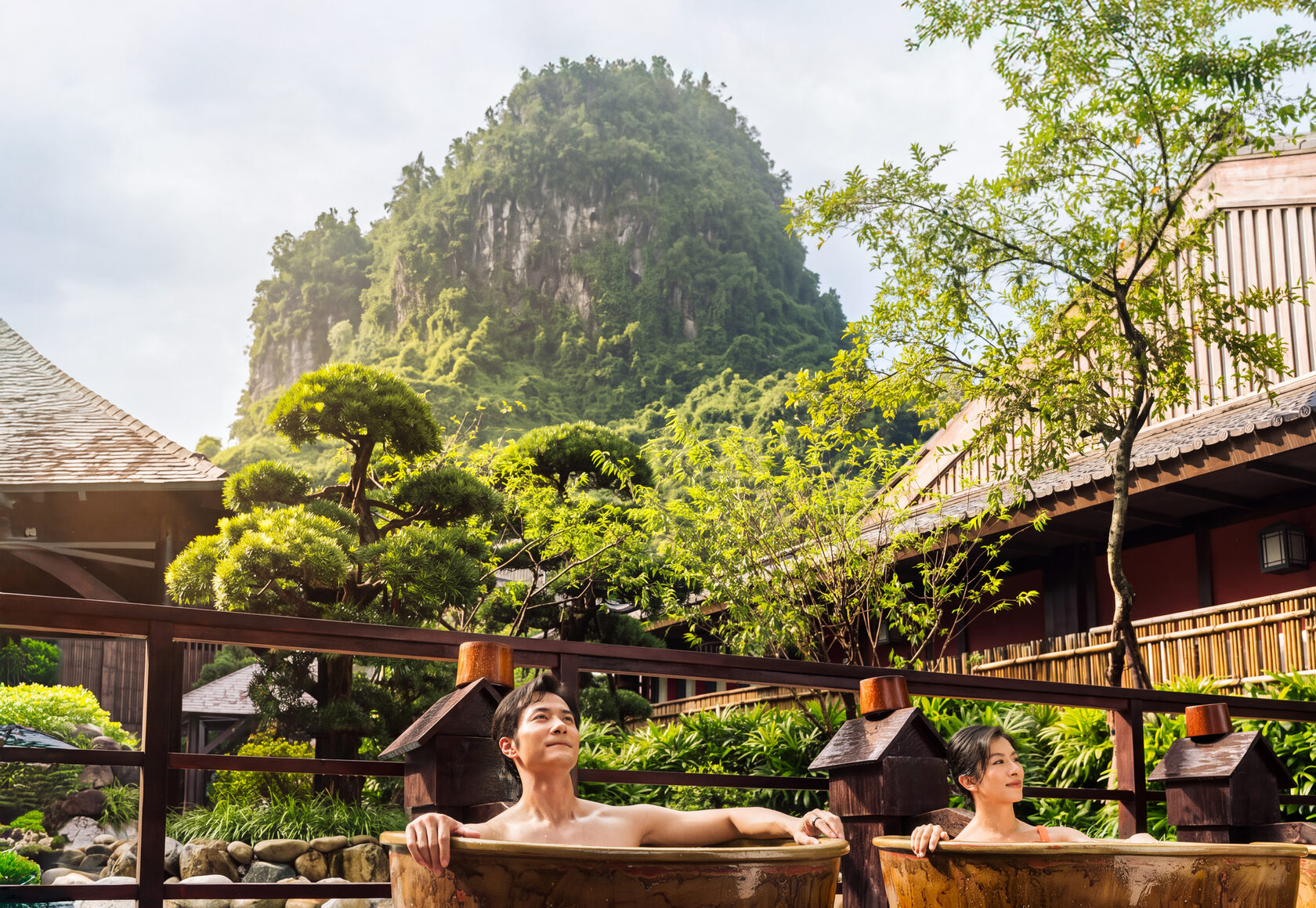
Deep in the Takagamine foothills, ROKU KYOTO blends traditional ryokan heritage with modern luxury. The resort features Kyoto’s only natural outdoor thermal spring pool fed by mineral-rich hot springs year-round. By positioning thermal bathing at the center of the guest experience, the property addresses the 61% of global travelers seeking hydrotherapy while catering to travelers looking to reset their nervous system in a serene, nature-rich environment.
The Micro-Travel Mindset: Small Trips, Big Impact
With time constraints defining modern lives, travelers are opting for shorter, more frequent escapes. 67% of travelers prefer trips that pack rich experiences into short timeframes, and 63% prioritize central accommodations surrounded by attractions.
The definition of a micro-trip varies dramatically by market:
Micro-travelers split into two distinct operational personas:
Across fast-paced Asian financial centers like Tokyo, Seoul, Singapore, and Bangkok, where Japanese and Korean travelers define micro-trips as under 48 hours, every operational minute matters. Hilton properties across APAC leverage Digital Key (used over 67.4 million times globally in H1 2026) and Digital Check-Out (up 25% year-over-year). This friction-free tech allows "Stackers" and "Selectors" on tight 2-day itineraries to bypass front-desk queues entirely, maximizing their limited time on the ground.
Hilton’s 2027 Travel Trends Report confirms that guest satisfaction is no longer built on flawless, rigid service scripts. Hospitality performance in 2027 hinges on operational agility: providing friction-free digital check-ins, leveraging hotel staff for trusted local curation, creating social hydrotherapy and nature spaces, and structuring flexible room formats that seamlessly accommodate the "solo-ish," "healthy-ish," and "micro-traveling" consumer.
The definition of a micro-trip varies dramatically by market:
- Japan (86%) and South Korea (59%): Define a short trip as fewer than 2 days.
- United States (88%): Defines a short trip as fewer than 3–4 days.
- Saudi Arabia (29%) and Germany (26%): Consider short trips to extend 5–6 days or longer.
Micro-travelers split into two distinct operational personas:
- The Selectors (51%): Build a trip around a single defining experience (such as a concert, marathon, or coveted restaurant reservation) and focus entirely on that anchor event.
- The Stackers (67%): Attempt to pack multiple experiences into short windows, with 57% visiting multiple cities in one trip and 55% feeling a day is wasted without scheduled activities.
Across fast-paced Asian financial centers like Tokyo, Seoul, Singapore, and Bangkok, where Japanese and Korean travelers define micro-trips as under 48 hours, every operational minute matters. Hilton properties across APAC leverage Digital Key (used over 67.4 million times globally in H1 2026) and Digital Check-Out (up 25% year-over-year). This friction-free tech allows "Stackers" and "Selectors" on tight 2-day itineraries to bypass front-desk queues entirely, maximizing their limited time on the ground.
Hilton’s 2027 Travel Trends Report confirms that guest satisfaction is no longer built on flawless, rigid service scripts. Hospitality performance in 2027 hinges on operational agility: providing friction-free digital check-ins, leveraging hotel staff for trusted local curation, creating social hydrotherapy and nature spaces, and structuring flexible room formats that seamlessly accommodate the "solo-ish," "healthy-ish," and "micro-traveling" consumer.