

Key Takeaways
- The Core of Modern Revenue Management: Revenue management must shift from reactive troubleshooting to structured, multi-scenario risk mitigation.
- The Future of Competitive Advantage: As AI and automated pricing tools become commoditized, sustained competitive advantage will rely on managerial ability to interpret complex data, manage strategic trade-offs, and protect brand equity.
- Balancing Human and AI Roles: Effective revenue strategy requires a strict division of labor where algorithms process broad datasets while humans focus on contextual insights, emotional intelligence, and long-term brand positioning that systems cannot replicate.
The digital transformation of hospitality revenue management has reached a critical inflection point. As artificial intelligence and predictive algorithms assume greater control over real-time dynamic pricing, commercial leaders face a complex strategic mandate: leveraging automated speed without forfeiting brand equity, market context, and long-term pricing power. In volatile, high-growth markets like Southeast Asia, competitive advantage is no longer secured by technology adoption alone, but by the managerial judgment that directs it.
Examining this intersection of technology and human expertise is Chris Legaspi, Chief Commercial Officer at Archipelago International. In this exclusive interview, Legaspi breaks down the operational realities of AI integration, the fallacies of top-line RevPAR, systemic approaches to managing hyper-local market anomalies, and why managerial judgment remains the ultimate non-imitable commercial asset.
Examining this intersection of technology and human expertise is Chris Legaspi, Chief Commercial Officer at Archipelago International. In this exclusive interview, Legaspi breaks down the operational realities of AI integration, the fallacies of top-line RevPAR, systemic approaches to managing hyper-local market anomalies, and why managerial judgment remains the ultimate non-imitable commercial asset.
The Philosophy of Continuous Adjustment
Q: From a strategic standpoint, how do you define the core essence of modern hospitality?
Chris Legaspi: Hospitality is the business of taking care of people who are away from home. But what makes it complex is that guest needs are never static, they shift between individuals, across seasons, and alongside changing market dynamics. The same holds true for commercial strategy: demand patterns fluctuate, channels evolve, and booking behaviors are constantly rewritten.
Therefore, the core point of hospitality is continuous adjustment. It is not about setting a single operational standard and repeating it indefinitely; it is about reading real-time demand, executing an adjustment, measuring the outcome, and adjusting again. In strategy literature, this is known as dynamic capabilities. Because hotel inventory is perishable, capacity is fixed, and demand is volatile, any competitive advantage erodes quickly and must be constantly renewed. Crucially, that continuous adjustment does not originate from the physical asset or the software alone. AI can sense market shifts faster than any human, but leaders must decide what the system is pointed at, when to trust its outputs, and when to intervene.
Q: Looking at the Indonesian market specifically, what unique strengths define its hospitality landscape, and what represents its most pressing commercial challenge?
Chris Legaspi: Indonesian hospitality possesses two major advantages. The first is an authentic service culture. In many global markets, hospitality is trained; in Indonesia, warmth is cultural and innate, making it almost impossible for competing international markets to replicate. The second is an extraordinarily resilient domestic traveler base. While many regional destinations live and die by foreign arrivals, Indonesia’s domestic volume sustains the industry through broader economic shocks, as demonstrated clearly during the pandemic.
However, the primary commercial challenge in Indonesia is a tendency to compete on price too early. As new supply enters the market, properties anxious about short-term occupancy frequently reach for aggressive discounting. Neighboring hotels match those rates, resulting in high volume but eroded margins. This habit of buying occupancy instead of building value points to a decision-making capability gap. Many commercial choices are still made on instinct or lagging historical data. The solution is investing in commercial talent capable of reading demand, protecting rate integrity, and leveraging data tools to defend pricing with reason rather than fear.
Chris Legaspi: Hospitality is the business of taking care of people who are away from home. But what makes it complex is that guest needs are never static, they shift between individuals, across seasons, and alongside changing market dynamics. The same holds true for commercial strategy: demand patterns fluctuate, channels evolve, and booking behaviors are constantly rewritten.
Therefore, the core point of hospitality is continuous adjustment. It is not about setting a single operational standard and repeating it indefinitely; it is about reading real-time demand, executing an adjustment, measuring the outcome, and adjusting again. In strategy literature, this is known as dynamic capabilities. Because hotel inventory is perishable, capacity is fixed, and demand is volatile, any competitive advantage erodes quickly and must be constantly renewed. Crucially, that continuous adjustment does not originate from the physical asset or the software alone. AI can sense market shifts faster than any human, but leaders must decide what the system is pointed at, when to trust its outputs, and when to intervene.
Q: Looking at the Indonesian market specifically, what unique strengths define its hospitality landscape, and what represents its most pressing commercial challenge?
Chris Legaspi: Indonesian hospitality possesses two major advantages. The first is an authentic service culture. In many global markets, hospitality is trained; in Indonesia, warmth is cultural and innate, making it almost impossible for competing international markets to replicate. The second is an extraordinarily resilient domestic traveler base. While many regional destinations live and die by foreign arrivals, Indonesia’s domestic volume sustains the industry through broader economic shocks, as demonstrated clearly during the pandemic.
However, the primary commercial challenge in Indonesia is a tendency to compete on price too early. As new supply enters the market, properties anxious about short-term occupancy frequently reach for aggressive discounting. Neighboring hotels match those rates, resulting in high volume but eroded margins. This habit of buying occupancy instead of building value points to a decision-making capability gap. Many commercial choices are still made on instinct or lagging historical data. The solution is investing in commercial talent capable of reading demand, protecting rate integrity, and leveraging data tools to defend pricing with reason rather than fear.
Re-Engineering the AI Landscape in Revenue Strategy
Q: In an unpredictable market, how must hoteliers redefine the fundamental purpose of a demand forecast?
Chris Legaspi: We must candidly acknowledge that a forecast was never an absolute prediction of the future; it has always been an educated estimate bounded by a confidence interval. In today’s market, the purpose of a forecast has evolved from a static grading tool into an active sensing device. Its primary value is not proving itself right, but signaling rapidly when market conditions have diverged from assumptions. When actual performance deviates from the forecast, that variance is vital market intelligence, alerting teams to underlying shifts weeks before they register on a P&L statement.
Furthermore, forecasting must shift from generating a single static number to executing multi-scenario risk mitigation. Instead of asking what will happen, leaders must define specific operational responses for varying demand thresholds. The financial cost of forecasting errors is rarely symmetric: pricing yourself out of a soft week carries a very different risk profile than underpricing into an unseen demand wave. Evaluating these asymmetric risks in advance transforms revenue management from reactive troubleshooting into structured risk management.
Q: What significant shifts have defined the adoption of AI in revenue management over the past five years?
Chris Legaspi: The technology has evolved faster than organizational capability to steer it effectively. Adoption is high, but deep understanding remains uneven. Five major structural shifts stand out:
Q: How do you establish a clear division of labor between algorithmic pricing recommendations and human commercial intuition?
Chris Legaspi: Rather than drawing a rigid boundary, I view it as a strict division of labor guided by one question: Do I possess information that the system cannot see? The algorithm processes broad datasets faster, without fatigue or emotional bias. Attempting to out-calculate the machine on data it already sees is an inefficient use of human capital. However, the system only comprehends data within its pipeline. It does not know if a competitor is opening across the street, if a flight route was altered, or if a corporate account shared crucial context over coffee. When a leader holds contextual data outside the model, manual intervention becomes necessary.
Leaders must also rigorously distinguish genuine pattern recognition from emotional anxiety. When overriding a recommended rate, if a commercial manager cannot articulate the reason using new, objective information, they are often acting out of fear rather than experience. To institutionalize discipline, commercial teams should log every manual override, record the underlying rationale, and audit the financial outcome post-event. This practice quickly reveals whether human overrides are genuinely creating incremental value or merely introducing unhelpful noise.
Q: How can revenue leaders avoid the trap of over-automation, where pure algorithmic efficiency erodes brand equity and internal capabilities?
Chris Legaspi: Over-automation usually stems from viewing technology as a binary choice: automate the task or keep a human assigned to it. In academic literature, Raisch and Krakowski define automation and augmentation not as mutually exclusive options, but as a paradox where each relies on the other. Automating routine calculations frees human capacity for strategic thinking; in turn, human analysis provides the insights needed to refine future automation parameters.
The greatest danger of unmonitored automation is not an occasional pricing error, but the silent erosion of internal capability. If a team stops actively engaging with commercial decisions, organizational expertise quietly dissipates. Years later, when an unexpected market shock occurs, the internal capability required to navigate the anomaly no longer exists. Furthermore, algorithms naturally optimize for short-term, measurable metrics within a current quarter. Intangible assets like brand positioning and long-term client trust do not register in a single month's RevPAR. Protecting these assets requires deliberate human guardrails.
Q: What strategic guardrails must be configured within revenue management software to protect market positioning and long-term rate integrity?
Chris Legaspi: Rather than chasing raw occupancy at the expense of profitability, software guardrails must act as the digital safeguard of brand strategy. This requires moving beyond fixed pricing by setting dynamic rate floors backed by strict booking conditions, capping price ceilings during sudden demand spikes to prevent reputational damage, limiting daily rate fluctuations to maintain consumer trust, and reserving inventory for high-value partners so discounted volume doesn't displace long-term profitability.
Q: How can hoteliers accurately evaluate marketing ROI and channel attribution to ensure they are driving profitable Net-RevPAR rather than vanity volume?
Chris Legaspi: Traditional last-click channel attribution often provides a misleading picture of marketing effectiveness, as multiple platforms routinely claim credit for the same booking. A more rigorous approach measures true incrementality, evaluating total net performance when a specific marketing initiative is paused in a test market. If total net volume remains stable, the campaign was merely capturing demand that would have converted through other channels.
Commercial teams must evaluate performance using Net-RevPAR after subtracting all customer acquisition costs, including commissions, paid search spend, loyalty point accruals, transaction fees, and channel technology expenses. A direct booking secured through heavy digital ad spend and price discounting can sometimes cost more than a standard third-party commission. Ultimately, customer retention remains the most effective acquisition lever: repeat guests dramatically lower long-term acquisition costs, making operational execution a core driver of commercial profitability.
Chris Legaspi: We must candidly acknowledge that a forecast was never an absolute prediction of the future; it has always been an educated estimate bounded by a confidence interval. In today’s market, the purpose of a forecast has evolved from a static grading tool into an active sensing device. Its primary value is not proving itself right, but signaling rapidly when market conditions have diverged from assumptions. When actual performance deviates from the forecast, that variance is vital market intelligence, alerting teams to underlying shifts weeks before they register on a P&L statement.
Furthermore, forecasting must shift from generating a single static number to executing multi-scenario risk mitigation. Instead of asking what will happen, leaders must define specific operational responses for varying demand thresholds. The financial cost of forecasting errors is rarely symmetric: pricing yourself out of a soft week carries a very different risk profile than underpricing into an unseen demand wave. Evaluating these asymmetric risks in advance transforms revenue management from reactive troubleshooting into structured risk management.
Q: What significant shifts have defined the adoption of AI in revenue management over the past five years?
Chris Legaspi: The technology has evolved faster than organizational capability to steer it effectively. Adoption is high, but deep understanding remains uneven. Five major structural shifts stand out:
- From Historical Patterns to Live Demand Signals: The pandemic broke historical baseline models. The industry was forced to shift away from backward-looking historical patterns toward real-time, forward-looking demand signals.
- From System Recommendations to Full Automation: The operational workflow moved from systems proposing rate changes for human approval to systems executing dynamic rates automatically while humans review exceptions.
- Democratization of Advanced Tools: High-tier revenue management systems are no longer exclusive to major international chains. They are accessible to independent and midscale hotels, shifting the competitive edge from possessing the tool to how effectively teams direct it.
- Scope Expansion Toward Total Profitability: Optimization is expanding beyond traditional room RevPAR to calculate channel acquisition costs, guest lifetime value, and net bottom-line contribution.
- Generative AI Analytics Access: Data query barriers have dissolved. The primary bottleneck is no longer retrieving analytics, but asking the right strategic questions and acting on the outputs.
Q: How do you establish a clear division of labor between algorithmic pricing recommendations and human commercial intuition?
Chris Legaspi: Rather than drawing a rigid boundary, I view it as a strict division of labor guided by one question: Do I possess information that the system cannot see? The algorithm processes broad datasets faster, without fatigue or emotional bias. Attempting to out-calculate the machine on data it already sees is an inefficient use of human capital. However, the system only comprehends data within its pipeline. It does not know if a competitor is opening across the street, if a flight route was altered, or if a corporate account shared crucial context over coffee. When a leader holds contextual data outside the model, manual intervention becomes necessary.
Leaders must also rigorously distinguish genuine pattern recognition from emotional anxiety. When overriding a recommended rate, if a commercial manager cannot articulate the reason using new, objective information, they are often acting out of fear rather than experience. To institutionalize discipline, commercial teams should log every manual override, record the underlying rationale, and audit the financial outcome post-event. This practice quickly reveals whether human overrides are genuinely creating incremental value or merely introducing unhelpful noise.
Q: How can revenue leaders avoid the trap of over-automation, where pure algorithmic efficiency erodes brand equity and internal capabilities?
Chris Legaspi: Over-automation usually stems from viewing technology as a binary choice: automate the task or keep a human assigned to it. In academic literature, Raisch and Krakowski define automation and augmentation not as mutually exclusive options, but as a paradox where each relies on the other. Automating routine calculations frees human capacity for strategic thinking; in turn, human analysis provides the insights needed to refine future automation parameters.
The greatest danger of unmonitored automation is not an occasional pricing error, but the silent erosion of internal capability. If a team stops actively engaging with commercial decisions, organizational expertise quietly dissipates. Years later, when an unexpected market shock occurs, the internal capability required to navigate the anomaly no longer exists. Furthermore, algorithms naturally optimize for short-term, measurable metrics within a current quarter. Intangible assets like brand positioning and long-term client trust do not register in a single month's RevPAR. Protecting these assets requires deliberate human guardrails.
Q: What strategic guardrails must be configured within revenue management software to protect market positioning and long-term rate integrity?
Chris Legaspi: Rather than chasing raw occupancy at the expense of profitability, software guardrails must act as the digital safeguard of brand strategy. This requires moving beyond fixed pricing by setting dynamic rate floors backed by strict booking conditions, capping price ceilings during sudden demand spikes to prevent reputational damage, limiting daily rate fluctuations to maintain consumer trust, and reserving inventory for high-value partners so discounted volume doesn't displace long-term profitability.
Q: How can hoteliers accurately evaluate marketing ROI and channel attribution to ensure they are driving profitable Net-RevPAR rather than vanity volume?
Chris Legaspi: Traditional last-click channel attribution often provides a misleading picture of marketing effectiveness, as multiple platforms routinely claim credit for the same booking. A more rigorous approach measures true incrementality, evaluating total net performance when a specific marketing initiative is paused in a test market. If total net volume remains stable, the campaign was merely capturing demand that would have converted through other channels.
Commercial teams must evaluate performance using Net-RevPAR after subtracting all customer acquisition costs, including commissions, paid search spend, loyalty point accruals, transaction fees, and channel technology expenses. A direct booking secured through heavy digital ad spend and price discounting can sometimes cost more than a standard third-party commission. Ultimately, customer retention remains the most effective acquisition lever: repeat guests dramatically lower long-term acquisition costs, making operational execution a core driver of commercial profitability.
Managing Ancillary Revenue and Consumer Transparency
Q: What structural and operational challenges impede dynamic pricing for ancillary streams like F&B and function spaces, and how can properties address them?
Chris Legaspi: Dynamic pricing for ancillary streams is hindered less by software limitations than by core operational and data structural hurdles. Because spas, outlets, and function spaces operate on isolated point-of-sale systems, guest profile data remains fragmented away from the primary PMS. Furthermore, unlike room inventory, ancillary demand lacks a forward booking pace, often materializing just hours before service, while low daily transaction volumes provide insufficient data for predictive algorithms. Compounding these issues are rigid departmental silos, where outlets are still evaluated on traditional metrics like covers and food costs rather than total inventory yield.
To capture untapped ancillary yield, properties should first apply dynamic strategies where variable pricing is already accepted, such as room upgrades, early check-ins, late check-outs, parking, and meeting spaces. For food and beverage, rather than surging menu prices during peak hours, outlets should utilize value-add bundling and off-peak promotional incentives. Establishing unified guest profiles across all point-of-sale systems remains the essential operational prerequisite for holistic revenue management.
Q: How can hoteliers deploy personalized pricing and dynamic offers transparently without triggering consumer pushback?
Chris Legaspi: Consumer dissatisfaction arises when pricing practices lack legibility and equity. A clear boundary must be drawn between personalizing the offer and personalizing the price. Charging different rates to different guests for an identical room based solely on tracking data can feel extractive. However, offering lower rates because a guest booked early, committed to a longer stay, or joined a loyalty program creates a fair, transparent value exchange.
Price variations must be earned through legible, accessible rules. Furthermore, when guest data is utilized, the consumer should experience tangible value, such as remembered room preferences or streamlined check-in processes. When personalization consistently returns clear value, guests view the interaction as high-touch service rather than price discrimination.
Q: Can you share an example where strategic human intuition overrode algorithmic data to deliver a superior commercial outcome?
Chris Legaspi: At the onset of the pandemic, historical demand models lost their predictive validity overnight. Automated regressions had no relevant baseline data to analyze, creating a complete absence of readable market signals.
Rather than relying on automated forecasts, we applied the strategic principle of bricolage, reconfiguring existing assets and commercial relationships to adapt to the crisis. We evaluated key distribution partnerships to identify complementary capabilities. One major partner required high-performing inventory to sustain their digital marketing engines, while our properties needed market visibility without upfront ad spend. By offering targeted inventory agreements early, our partner maintained active marketing campaigns for our properties, sustaining critical demand during a severe downturn. No algorithm could have generated that solution, as strategic adaptation during a market collapse relies on human resource orchestration rather than historical data processing.
Q: As the industry looks toward 2027 and beyond, what major disruptions will shape revenue management, and where must hoteliers invest today?
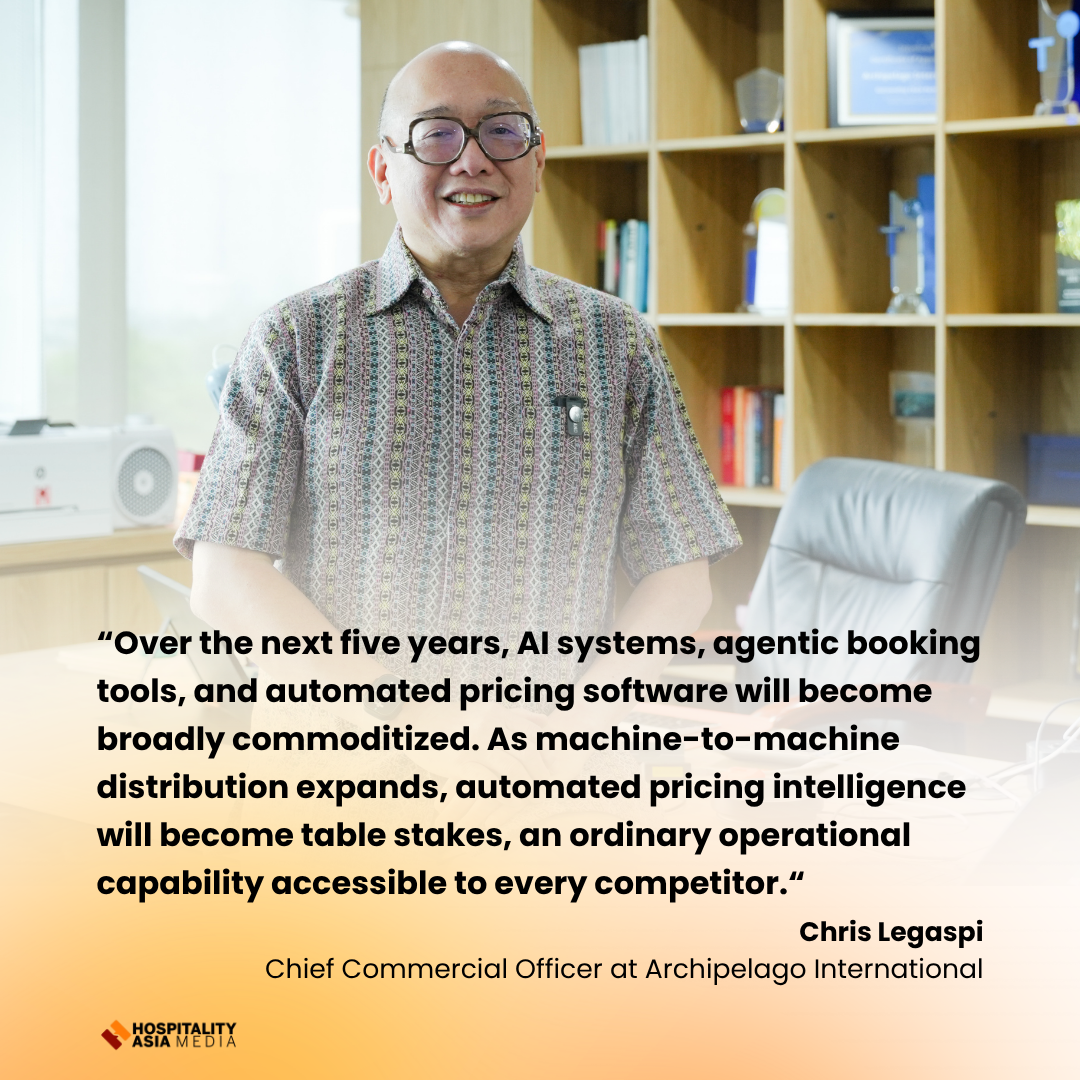
Chris Legaspi: Over the next five years, AI systems, agentic booking tools, and automated pricing software will become broadly commoditized. As machine-to-machine distribution expands, automated pricing intelligence will become table stakes, an ordinary operational capability accessible to every competitor.
Because software alone will produce market parity rather than sustained differentiation, the true competitive advantage will reside in managerial dynamic capabilities, the human ability to interpret complex data, identify contextual exceptions, manage strategic trade-offs, and align pricing with brand strategy.
Hoteliers budgeting for the future must fund advanced technology stacks while simultaneously investing in internal commercial talent. Organizations that rely entirely on automated software will find themselves limited to market parity. Long-term commercial leadership belongs to properties that pair advanced algorithmic processing with sharp, well-trained human judgment.
Chris Legaspi: Dynamic pricing for ancillary streams is hindered less by software limitations than by core operational and data structural hurdles. Because spas, outlets, and function spaces operate on isolated point-of-sale systems, guest profile data remains fragmented away from the primary PMS. Furthermore, unlike room inventory, ancillary demand lacks a forward booking pace, often materializing just hours before service, while low daily transaction volumes provide insufficient data for predictive algorithms. Compounding these issues are rigid departmental silos, where outlets are still evaluated on traditional metrics like covers and food costs rather than total inventory yield.
To capture untapped ancillary yield, properties should first apply dynamic strategies where variable pricing is already accepted, such as room upgrades, early check-ins, late check-outs, parking, and meeting spaces. For food and beverage, rather than surging menu prices during peak hours, outlets should utilize value-add bundling and off-peak promotional incentives. Establishing unified guest profiles across all point-of-sale systems remains the essential operational prerequisite for holistic revenue management.
Q: How can hoteliers deploy personalized pricing and dynamic offers transparently without triggering consumer pushback?
Chris Legaspi: Consumer dissatisfaction arises when pricing practices lack legibility and equity. A clear boundary must be drawn between personalizing the offer and personalizing the price. Charging different rates to different guests for an identical room based solely on tracking data can feel extractive. However, offering lower rates because a guest booked early, committed to a longer stay, or joined a loyalty program creates a fair, transparent value exchange.
Price variations must be earned through legible, accessible rules. Furthermore, when guest data is utilized, the consumer should experience tangible value, such as remembered room preferences or streamlined check-in processes. When personalization consistently returns clear value, guests view the interaction as high-touch service rather than price discrimination.
Q: Can you share an example where strategic human intuition overrode algorithmic data to deliver a superior commercial outcome?
Chris Legaspi: At the onset of the pandemic, historical demand models lost their predictive validity overnight. Automated regressions had no relevant baseline data to analyze, creating a complete absence of readable market signals.
Rather than relying on automated forecasts, we applied the strategic principle of bricolage, reconfiguring existing assets and commercial relationships to adapt to the crisis. We evaluated key distribution partnerships to identify complementary capabilities. One major partner required high-performing inventory to sustain their digital marketing engines, while our properties needed market visibility without upfront ad spend. By offering targeted inventory agreements early, our partner maintained active marketing campaigns for our properties, sustaining critical demand during a severe downturn. No algorithm could have generated that solution, as strategic adaptation during a market collapse relies on human resource orchestration rather than historical data processing.
Q: As the industry looks toward 2027 and beyond, what major disruptions will shape revenue management, and where must hoteliers invest today?
Chris Legaspi: Over the next five years, AI systems, agentic booking tools, and automated pricing software will become broadly commoditized. As machine-to-machine distribution expands, automated pricing intelligence will become table stakes, an ordinary operational capability accessible to every competitor.
Because software alone will produce market parity rather than sustained differentiation, the true competitive advantage will reside in managerial dynamic capabilities, the human ability to interpret complex data, identify contextual exceptions, manage strategic trade-offs, and align pricing with brand strategy.
Hoteliers budgeting for the future must fund advanced technology stacks while simultaneously investing in internal commercial talent. Organizations that rely entirely on automated software will find themselves limited to market parity. Long-term commercial leadership belongs to properties that pair advanced algorithmic processing with sharp, well-trained human judgment.
About Chris Legaspi
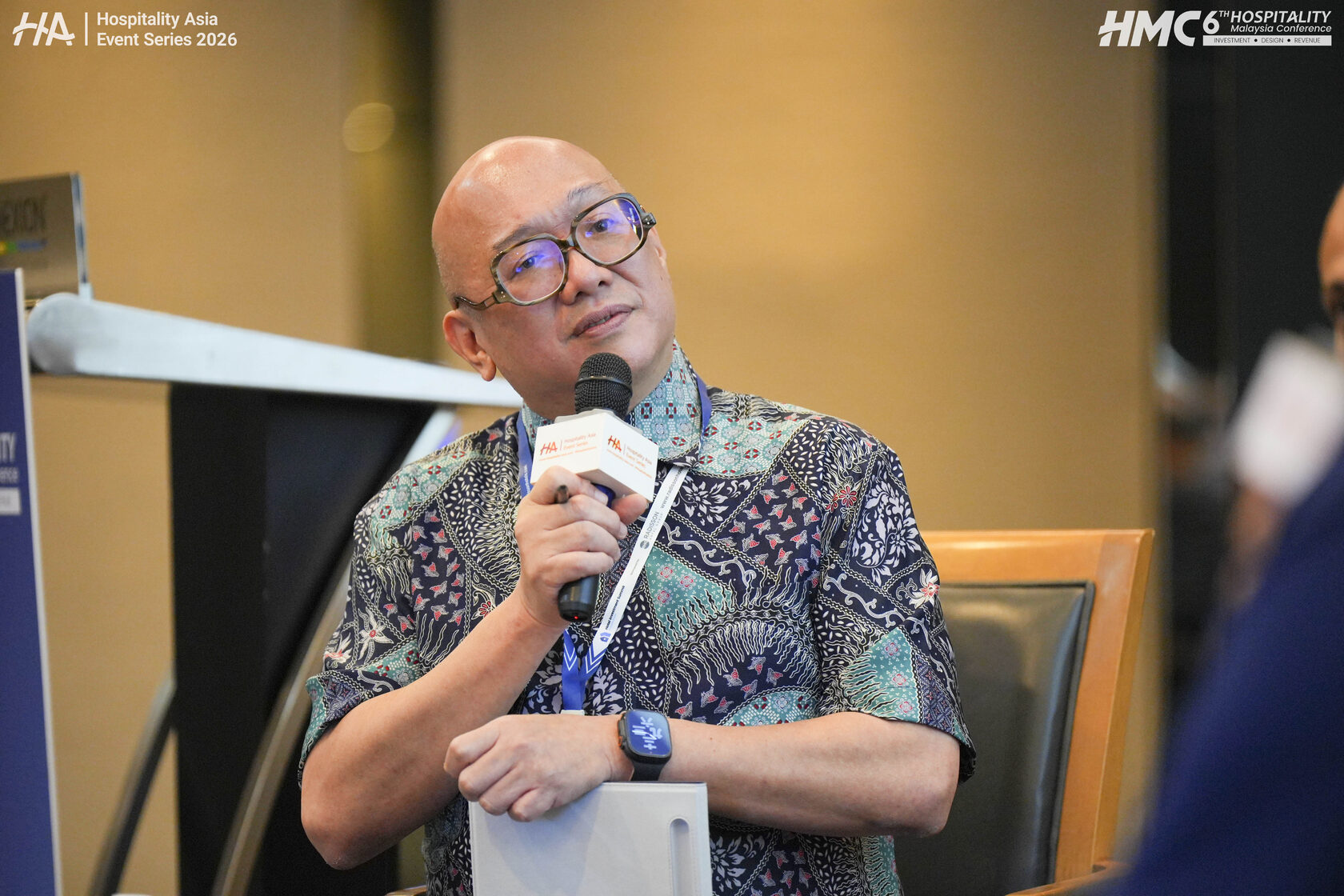
Chris Legaspi is the Chief Commercial Officer at Archipelago International, overseeing revenue strategy, distribution, and commercial operations across the group's extensive portfolio. With over two decades of hands-on hospitality experience spanning front office, sales, and executive revenue roles across Thailand, the Philippines, and Indonesia, he brings a rare combination of operational depth and commercial strategy to the role. He is the architect behind Archipelago's proprietary revenue management system, FluxRate.
Chris is currently pursuing a Doctor of Business Administration (DBA) at the Asian Institute of Management, where his research focuses on managerial dynamic capabilities and AI-driven decision automation in hotel revenue management. He writes and speaks regularly on commercial strategy and digital transformation in hospitality.
Chris is currently pursuing a Doctor of Business Administration (DBA) at the Asian Institute of Management, where his research focuses on managerial dynamic capabilities and AI-driven decision automation in hotel revenue management. He writes and speaks regularly on commercial strategy and digital transformation in hospitality.