
The economics of deploying ground-up capital into Japan's real estate market have passed a major tipping point. While inbound traveler metrics continue to surge toward an estimated full-year baseline of 41.6 million to 42 million visitors, the raw physical capacity to build new hotels has hit a historic supply wall.
Driven by material inflation and persistent labor deficiencies, hotel construction costs have nearly doubled compared to 2020 baselines. Rather than absorbing the extreme capital expenditure risks and prolonged development timelines of new builds, institutional players like Japan Hotel REIT Investment Corporation (JHR) and global mega-funds are shifting strategy. They are prioritizing strategic asset recycling: acquiring underutilized or legacy hospitality structures, modernizing their footprints, and aggressively reflagging them under premium lifestyle brands to capture record-breaking travel expenditure immediately.
Driven by material inflation and persistent labor deficiencies, hotel construction costs have nearly doubled compared to 2020 baselines. Rather than absorbing the extreme capital expenditure risks and prolonged development timelines of new builds, institutional players like Japan Hotel REIT Investment Corporation (JHR) and global mega-funds are shifting strategy. They are prioritizing strategic asset recycling: acquiring underutilized or legacy hospitality structures, modernizing their footprints, and aggressively reflagging them under premium lifestyle brands to capture record-breaking travel expenditure immediately.
The Economic Drivers: New Build vs. Modernization
A severe divergence in project economics has fundamentally rewritten the investment criteria across Tokyo, Osaka, and high-growth regional resort hubs.
- The Cost Bottleneck: Ground-up construction indices have spiked up to 200% over the last five years. Compounded by a structural deficit in construction labor, new supply growth remains heavily constrained to just 1% annually, effectively creating a defensive moat around existing property portfolios.
- The Revenue Tailwind: A weakened Japanese Yen has granted international tourists unprecedented purchasing power. Total foreign traveler spending reached a record-breaking 9.5 trillion yen, pushing luxury Average Daily Rates (ADRs) in core cities to premium global highs alongside London and New York.
- The Yield Spread Advantage: Modernization completely bypasses long municipal construction timelines and permitting delays, delivering instant yields. Investors utilize targeted, fast-turnaround refurbishments to boost Revenue Per Available Room (RevPAR) by over 14%, capturing market tailwinds without balance-sheet exposure to raw development delays.
Mechanics of Strategic Asset Recycling
The institutional value-add playbook relies on a structured, high-efficiency lifecycle designed to compress time-to-market while structurally scaling daily room rates:
- Underutilized Asset Acquisition: Value-add funds actively scan secondary markets or underperforming corporate structures for conversion opportunities. Transaction volume is heavily focused on purchasing underperforming select-service hotels or multi-family residential complexes to capture immediate lower per-key entry costs.
- Concept Renewal and Premiumization: Micro-renovations focus on physical space reconfiguration to accommodate high-spending international travelers. Saturated budget or mid-scale configurations are structurally consolidated into larger luxury suites, complemented by premium wellness integrations like experiential saunas, high-end fitness hubs, and localized spas to drive room rate premiums.
- Reflagging and Rebranding: Bringing an older domestic asset under an internationally recognized lifestyle brand banner triggers immediate global distribution network advantages. Global operators command massive pricing leverage, helping properties seamlessly transition from lower-tier operations to high-yield boutique or luxury classes.
- Green Upgrades and Efficiency: Environmental, Social, and Governance (ESG) compliance directly impacts final asset valuation. Investors incorporate smart building energy management systems, high-efficiency HVAC equipment, and eco-friendly features to secure positive GRESB ratings. This not only lowers escalating localized utility expenditures but qualifies properties for green-mandated institutional capital.
Core Investment Playbooks in 2026
Investors are deploying three distinct operational structures across the Japanese archipelago to maximize internal rates of return (IRR):
- Asset Premiumization: Converting corporate or mid-scale hotels into high-end experiential boutiques. This is heavily deployed in Tokyo, Kyoto, and Osaka to capture elite international traveler expenditure.
- Regional Georotation: Recycling capital out of saturated, low-yield urban centers into high-yield regional resort spots. This model targets premium hotspots like Hokkaido, Okinawa, and Hakone to leverage the growing repeat-traveler demand for off-the-beaten-path experiences.
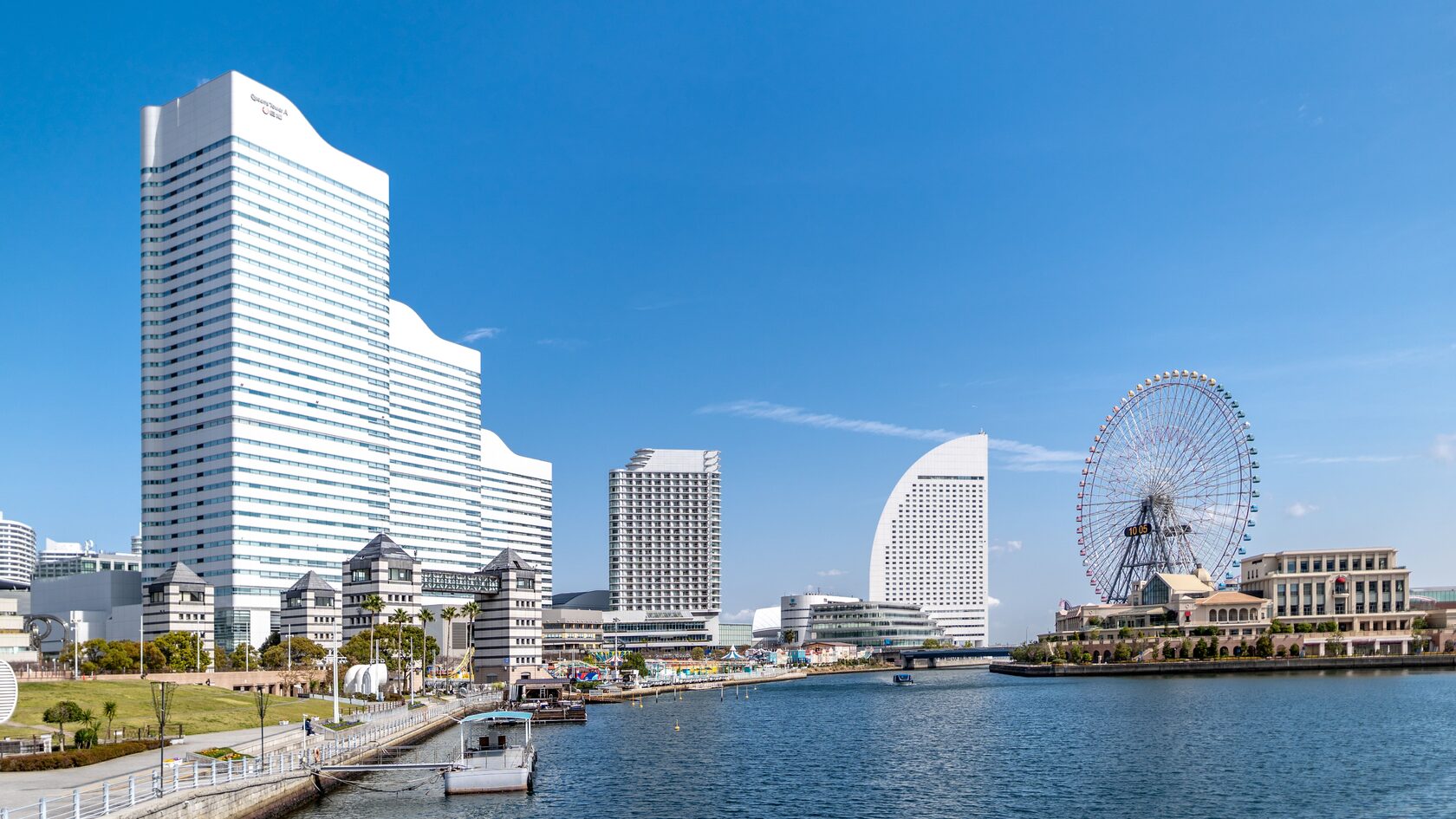
- Operational Reflagging: Transitioning rigid, legacy fixed-rent leases into variable, incentive-based management contracts. This framework is rapidly scaling across high-growth transit gateways like Yokohama, Fukuoka, and Sapporo to capture direct upside from high domestic and inbound room revenues.
Empirical Case Studies: Capital Recycling in Action
The execution of the modernization playbook across Japan provides a clear blueprint for how institutional players are successfully bypassing macro construction bottlenecks to unlock immediate premium yields.
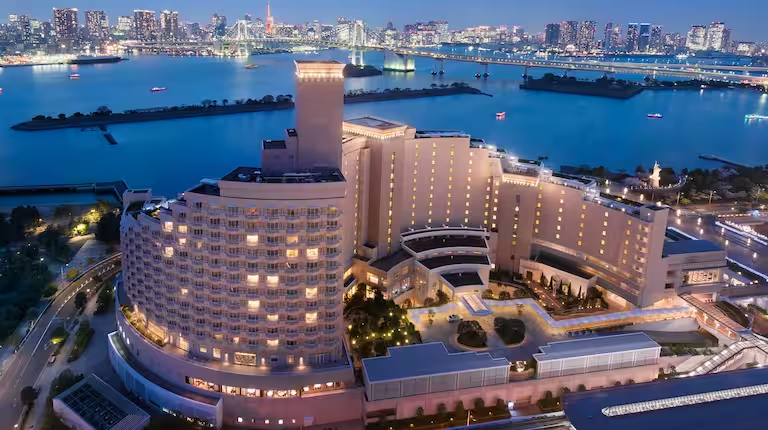
In Tokyo, Japan Hotel REIT Investment Corporation (JHR) countered massive material cost spikes by executing a strategic asset premiumization of the Hilton Tokyo Odaiba. Instead of attempting a cost-prohibitive ground-up expansion, JHR focused on reconfiguring guest rooms, common spaces, and executive lounges to match luxury standards in central Tokyo. To shield its investors from typical renovation downtime, the trust utilized internal financial engineering, reversing negative goodwill from its temporary difference adjustments to completely offset the revenue impact of room closures and fully insulate investor dividends.
Simultaneously, alternative asset operators are tackling urban saturation through decentralized adaptive reuse. In Osaka, Sekai Hotel (SOU Co., Ltd.) bypassed standard construction frameworks entirely at Sekai Hotel Fuse by converting scattered, vacant residential properties (akiya) into a decentralized neighborhood resort footprint. Spending roughly 24 million Yen per home transformation, this model cut traditional development CapEx by 20% to 30%. By eliminating internal dining and spa facilities, the hotel partners directly with existing market merchants for guest meals and public bath access, driving tourism wealth straight into the local micro-economy.
On a macro portfolio scale, institutional funds are leveraging operational optimization to hedge against inflation. Singapore’s sovereign wealth fund, GIC Private Limited, acquired an expansive 31-property hospitality portfolio from Seibu Holdings, including The Prince Park Tower Tokyo. Rather than pursuing physical expansion, GIC's long-term play relies on shifting these assets away from legacy, rigid domestic fixed-rent leases into agile, variable-pricing management contracts. This operational modernization allows the fund to capture direct upside from Japan's soaring inbound ADRs while avoiding raw development supply chain risks.
In Tokyo, Japan Hotel REIT Investment Corporation (JHR) countered massive material cost spikes by executing a strategic asset premiumization of the Hilton Tokyo Odaiba. Instead of attempting a cost-prohibitive ground-up expansion, JHR focused on reconfiguring guest rooms, common spaces, and executive lounges to match luxury standards in central Tokyo. To shield its investors from typical renovation downtime, the trust utilized internal financial engineering, reversing negative goodwill from its temporary difference adjustments to completely offset the revenue impact of room closures and fully insulate investor dividends.
Simultaneously, alternative asset operators are tackling urban saturation through decentralized adaptive reuse. In Osaka, Sekai Hotel (SOU Co., Ltd.) bypassed standard construction frameworks entirely at Sekai Hotel Fuse by converting scattered, vacant residential properties (akiya) into a decentralized neighborhood resort footprint. Spending roughly 24 million Yen per home transformation, this model cut traditional development CapEx by 20% to 30%. By eliminating internal dining and spa facilities, the hotel partners directly with existing market merchants for guest meals and public bath access, driving tourism wealth straight into the local micro-economy.
On a macro portfolio scale, institutional funds are leveraging operational optimization to hedge against inflation. Singapore’s sovereign wealth fund, GIC Private Limited, acquired an expansive 31-property hospitality portfolio from Seibu Holdings, including The Prince Park Tower Tokyo. Rather than pursuing physical expansion, GIC's long-term play relies on shifting these assets away from legacy, rigid domestic fixed-rent leases into agile, variable-pricing management contracts. This operational modernization allows the fund to capture direct upside from Japan's soaring inbound ADRs while avoiding raw development supply chain risks.
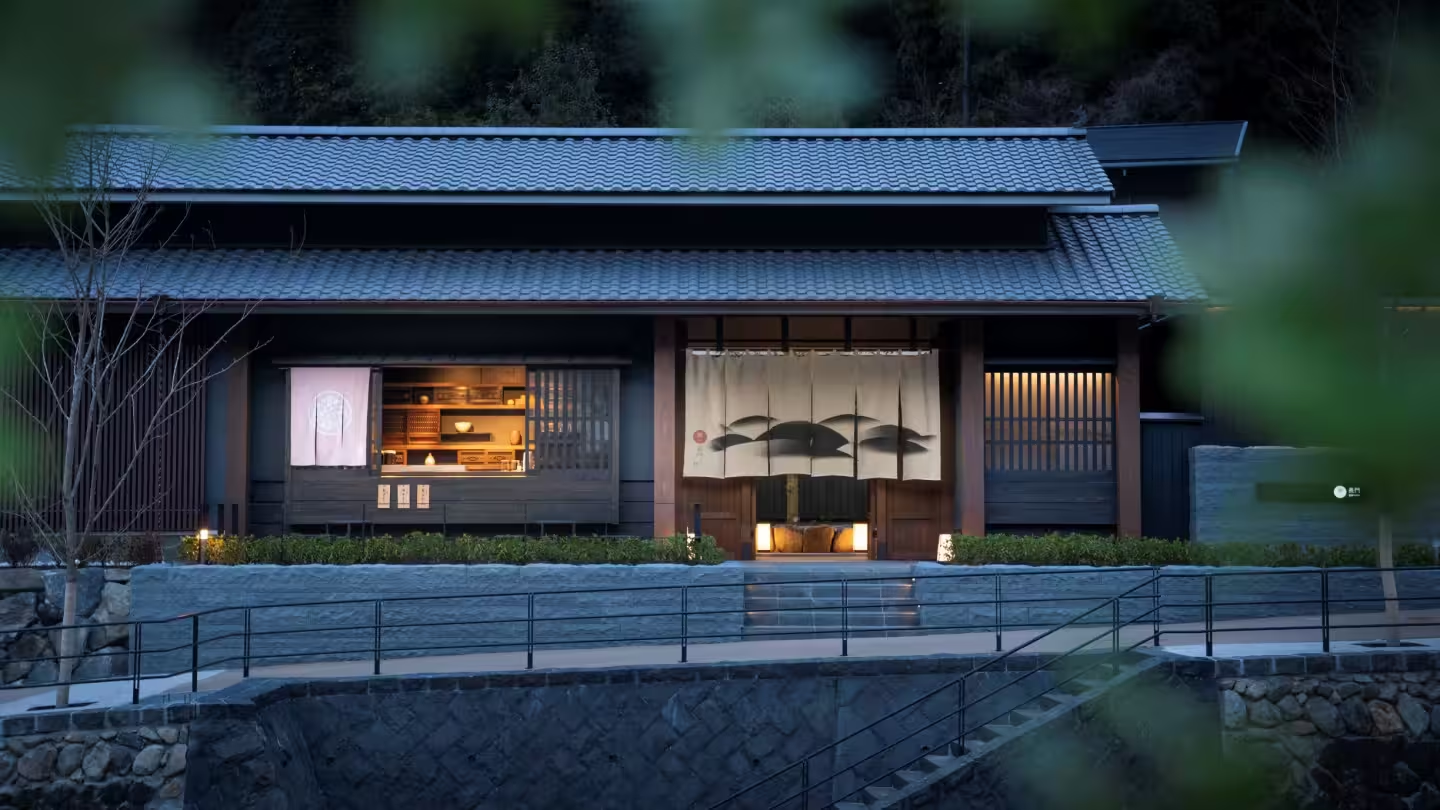
This philosophy of preserving structural shells while modernizing interior utility is also revitalizing regional hot spring (onsen) towns. Through a Public-Private Partnership (PPP) in Yamaguchi Prefecture, Hoshino Resorts collaborated with local developers to execute a targeted premiumization of SOIL Nagatoyumoto and Hoshino Resorts KAI Nagato. By modernizing the interiors of existing, decaying properties and transforming the central local bathhouse into a shared "town living room," the project entirely avoided specialized raw material bottlenecks, rapidly reviving regional tourist counts and stimulating a wave of new private retail openings along the local riverside corridor.
The New Blueprint for Sustainable Yield
The corporate financial data paints an undeniable picture for the future of Japanese hospitality real estate. As construction material costs and labor shortages show no signs of easing, the historical framework of building massive new hotel towers is no longer the most capital-efficient path to profit.
The future belongs to institutional asset recycling. By utilizing brownfield modernizations, reconfiguring interior floor layouts for international demand, and securing high-profile global brand flags, forward-thinking J-REITs and global mega-funds are demonstrating the ultimate real estate truth: the most profitable asset is often the one that has already been built.
The future belongs to institutional asset recycling. By utilizing brownfield modernizations, reconfiguring interior floor layouts for international demand, and securing high-profile global brand flags, forward-thinking J-REITs and global mega-funds are demonstrating the ultimate real estate truth: the most profitable asset is often the one that has already been built.