
The Ascott Limited has recorded its strongest-ever signing performance in Southeast Asia, adding more than 7,300 units across the region in 2025, according to a company announcement. The figure marks a 55% increase from the 4,700 units signed in 2024, representing a milestone for the company’s regional growth.
The performance places Ascott among the top three hospitality companies in Southeast Asia by new signings in 2025, based on data cited from Horwath HTL. The company’s regional portfolio currently comprises over 200 operational properties, alongside a pipeline of approximately 150 properties spanning multiple markets and accommodation typologies.
More than 25 new properties from this pipeline are expected to open within the next 12 months. According to Ascott, the pipeline reflects continued owner confidence in its brands and its ability to convert signings into operational properties at scale.
Ascott attributed its growth momentum in Southeast Asia to the region’s tourism fundamentals. The company noted that following a near-complete post-pandemic recovery in 2025, travel demand is increasingly driven by intra-ASEAN movement, rising visitor spending and improved regional connectivity.
At the same time, the hospitality market in Southeast Asia remains highly fragmented, with independent and unbranded properties accounting for the majority of hotel supply. As a result, more property owners are seeking partnerships with established international operators to access brand strength, distribution reach and revenue capabilities. This dynamic continues to support Ascott’s growth across both new signings and conversions.
Serena Lim, Chief Growth Officer at Ascott, said Southeast Asia remains one of the most dynamic hospitality markets globally, with the company positioned to capture growth opportunities through its established presence and long-term partnerships with property owners. She added that Ascott’s expansion is anchored by a “flex-hybrid model” and supported by its multi-typology brand strategy, which enables the company to expand beyond its serviced residence origins into a broader range of lodging formats.
Wong Kar Ling, Chief Strategy Officer and Managing Director for Southeast Asia at Ascott, said the upcoming wave of openings underscores the region’s role as both a core growth engine and a showcase for the company’s multi-typology strategy. She highlighted the importance of execution, including conversions and delivery capabilities, in translating pipeline projects into operational outcomes.
Ascott’s development pipeline will extend its presence into around 20 new cities across Southeast Asia. These include destinations such as Phu Quoc and Nha Trang in Vietnam; Phuket and Hat Yai in Thailand; Labuan Bajo and Medan in Indonesia; Davao and Biñan in the Philippines; as well as Johor Bahru and Langkawi in Malaysia.
The expansion reflects a strategy to move beyond established gateway cities into emerging leisure and business destinations across the region.
Conversions are expected to play a significant role in this growth. Approximately 30% of the Southeast Asia pipeline will be delivered through conversion projects, allowing Ascott to reposition existing assets under its brands and accelerate market entry.
Examples include three Bayview-branded properties in Penang and Langkawi, which will be rebranded as Ascott Batu Ferringhi Penang, Oakwood Georgetown Penang and FOX Hotel Langkawi by 2028. Other conversion projects expected to open within about a year of signing include Citadines Mitra Bandung, Oakwood Pandanaran Semarang and Fox Hotel Nagoya Batam.
Ascott stated that this dual-track approach, combining conversions and new-build developments, allows it to meet demand in markets where greenfield supply is limited while maintaining the ability to scale across different property types.
The company’s Southeast Asia pipeline spans a wide range of accommodation formats under its multi-typology strategy. These include serviced residences, hotels, resorts, social living properties and branded residences, across brands such as Ascott, Citadines, lyf, Oakwood, Somerset, The Crest Collection and The Unlimited Collection.
Resorts represent one of the most significant growth segments within this pipeline. Upcoming resort openings across Vietnam, Indonesia, the Philippines, Malaysia and Thailand are expected to complement Ascott’s existing urban portfolio and support a balance between business and leisure travel demand.
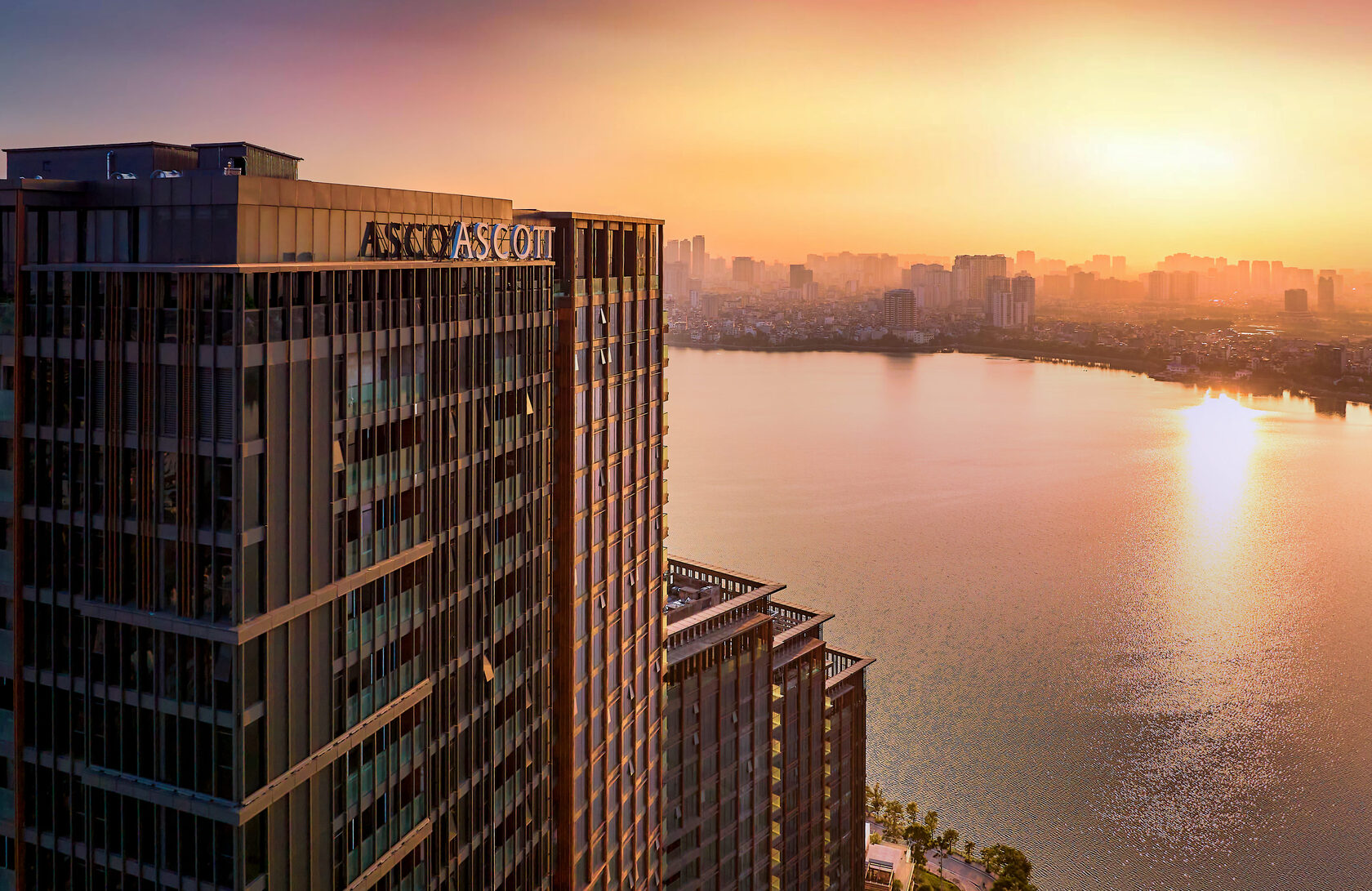
Among the developments highlighted is Ascott Tay Ho Hanoi, which is set to become the company’s largest full-service MICE hotel. Located in Hanoi’s Tay Ho District, the property will feature a convention centre with 13 event spaces, including a grand ballroom with capacity for up to 2,000 guests. When fully operational in 2027, it will offer 1,165 hotel rooms and serviced apartments, along with wellness and dining facilities.
Another project, Lasong Hotel & Villas Sam Son by The Unlimited Collection, is scheduled for full opening on 24 April 2026. The property will include boutique hotel rooms, private pool villas and a 190-room tower, alongside wellness-focused amenities such as a Korean jjimjilbang, spa and plant-based dining concepts.
HARRIS Resort Cam Ranh, expected to open progressively from the fourth quarter of 2026, will mark the debut of the HARRIS brand in Vietnam. The 693-unit resort will feature recreational facilities, dining outlets, a beach club and meeting spaces, targeting leisure and family travel segments.
In addition to Vietnam, Ascott’s resort pipeline includes projects such as Ascott Abov Patong Phuket Resort in Thailand, lyf Resort Labuan Bajo and Oakwood Jimbaran Villas and Residences Bali in Indonesia, and Balai Dajao by Preference in the Philippines.
Other upcoming openings include 1926 Heritage Hotel Penang by The Unlimited Collection, scheduled to reopen in 2026 following restoration, and lyf Chinatown Singapore, which is set to open in July 2026 with a focus on social living spaces.
Somerset Clarke Quay Singapore, part of the CanningHill Piers development, will offer 192 serviced residence units in a central riverfront location, while Ascott Ortigas Manila is expected to open in 2026 following the conversion and renovation of an existing property.
Ascott stated that these developments form part of a broader rollout across Southeast Asia, reinforcing the region’s position within its global portfolio.
The company operates more than 1,000 properties across over 230 cities in more than 40 countries, with a portfolio spanning multiple lodging formats.
The performance places Ascott among the top three hospitality companies in Southeast Asia by new signings in 2025, based on data cited from Horwath HTL. The company’s regional portfolio currently comprises over 200 operational properties, alongside a pipeline of approximately 150 properties spanning multiple markets and accommodation typologies.
More than 25 new properties from this pipeline are expected to open within the next 12 months. According to Ascott, the pipeline reflects continued owner confidence in its brands and its ability to convert signings into operational properties at scale.
Ascott attributed its growth momentum in Southeast Asia to the region’s tourism fundamentals. The company noted that following a near-complete post-pandemic recovery in 2025, travel demand is increasingly driven by intra-ASEAN movement, rising visitor spending and improved regional connectivity.
At the same time, the hospitality market in Southeast Asia remains highly fragmented, with independent and unbranded properties accounting for the majority of hotel supply. As a result, more property owners are seeking partnerships with established international operators to access brand strength, distribution reach and revenue capabilities. This dynamic continues to support Ascott’s growth across both new signings and conversions.
Serena Lim, Chief Growth Officer at Ascott, said Southeast Asia remains one of the most dynamic hospitality markets globally, with the company positioned to capture growth opportunities through its established presence and long-term partnerships with property owners. She added that Ascott’s expansion is anchored by a “flex-hybrid model” and supported by its multi-typology brand strategy, which enables the company to expand beyond its serviced residence origins into a broader range of lodging formats.
Wong Kar Ling, Chief Strategy Officer and Managing Director for Southeast Asia at Ascott, said the upcoming wave of openings underscores the region’s role as both a core growth engine and a showcase for the company’s multi-typology strategy. She highlighted the importance of execution, including conversions and delivery capabilities, in translating pipeline projects into operational outcomes.
Ascott’s development pipeline will extend its presence into around 20 new cities across Southeast Asia. These include destinations such as Phu Quoc and Nha Trang in Vietnam; Phuket and Hat Yai in Thailand; Labuan Bajo and Medan in Indonesia; Davao and Biñan in the Philippines; as well as Johor Bahru and Langkawi in Malaysia.
The expansion reflects a strategy to move beyond established gateway cities into emerging leisure and business destinations across the region.
Conversions are expected to play a significant role in this growth. Approximately 30% of the Southeast Asia pipeline will be delivered through conversion projects, allowing Ascott to reposition existing assets under its brands and accelerate market entry.
Examples include three Bayview-branded properties in Penang and Langkawi, which will be rebranded as Ascott Batu Ferringhi Penang, Oakwood Georgetown Penang and FOX Hotel Langkawi by 2028. Other conversion projects expected to open within about a year of signing include Citadines Mitra Bandung, Oakwood Pandanaran Semarang and Fox Hotel Nagoya Batam.
Ascott stated that this dual-track approach, combining conversions and new-build developments, allows it to meet demand in markets where greenfield supply is limited while maintaining the ability to scale across different property types.
The company’s Southeast Asia pipeline spans a wide range of accommodation formats under its multi-typology strategy. These include serviced residences, hotels, resorts, social living properties and branded residences, across brands such as Ascott, Citadines, lyf, Oakwood, Somerset, The Crest Collection and The Unlimited Collection.
Resorts represent one of the most significant growth segments within this pipeline. Upcoming resort openings across Vietnam, Indonesia, the Philippines, Malaysia and Thailand are expected to complement Ascott’s existing urban portfolio and support a balance between business and leisure travel demand.
Among the developments highlighted is Ascott Tay Ho Hanoi, which is set to become the company’s largest full-service MICE hotel. Located in Hanoi’s Tay Ho District, the property will feature a convention centre with 13 event spaces, including a grand ballroom with capacity for up to 2,000 guests. When fully operational in 2027, it will offer 1,165 hotel rooms and serviced apartments, along with wellness and dining facilities.
Another project, Lasong Hotel & Villas Sam Son by The Unlimited Collection, is scheduled for full opening on 24 April 2026. The property will include boutique hotel rooms, private pool villas and a 190-room tower, alongside wellness-focused amenities such as a Korean jjimjilbang, spa and plant-based dining concepts.
HARRIS Resort Cam Ranh, expected to open progressively from the fourth quarter of 2026, will mark the debut of the HARRIS brand in Vietnam. The 693-unit resort will feature recreational facilities, dining outlets, a beach club and meeting spaces, targeting leisure and family travel segments.
In addition to Vietnam, Ascott’s resort pipeline includes projects such as Ascott Abov Patong Phuket Resort in Thailand, lyf Resort Labuan Bajo and Oakwood Jimbaran Villas and Residences Bali in Indonesia, and Balai Dajao by Preference in the Philippines.
Other upcoming openings include 1926 Heritage Hotel Penang by The Unlimited Collection, scheduled to reopen in 2026 following restoration, and lyf Chinatown Singapore, which is set to open in July 2026 with a focus on social living spaces.
Somerset Clarke Quay Singapore, part of the CanningHill Piers development, will offer 192 serviced residence units in a central riverfront location, while Ascott Ortigas Manila is expected to open in 2026 following the conversion and renovation of an existing property.
Ascott stated that these developments form part of a broader rollout across Southeast Asia, reinforcing the region’s position within its global portfolio.
The company operates more than 1,000 properties across over 230 cities in more than 40 countries, with a portfolio spanning multiple lodging formats.