
Archipelago Capital: The 2026–2030 Market Outlook for Indonesia’s Island Resort Real Estate
15.10.2026
Indonesia’s island resort and hospitality real estate market in 2026 presents active development, institutional investment, and high-yield acquisition pathways, ranging from pre-built private island turnkeys to boutique villa and surf resort ownership across remote archipelagos. The defining economic storyline of the 2026 Indonesian hospitality market is known by institutional developers as "The Premium Decoupling." Historically, the resort real estate market moved in unison, where macro tourism spikes lifted all assets from budget homestays to five-star enclaves. In 2026, that unified market broke down into a striking two-track reality. The mid-scale and budget hospitality tiers are caught in a severe operational margin squeeze driven by utility inflation, localized supply chain pressures, and escalating minimum wages. Conversely, the luxury and ultra-luxury private island and boutique resort segment has fully insulated itself, absorbing increased operational costs by exercising immense pricing power.
The Indonesian hospitality real estate market is valued at USD 2.70 billion in 2026, growing at a strong 10.58% CAGR toward an anticipated USD 4.14 billion to USD 4.46 billion by 2030 to 2031. Outpacing urban business hotels due to strong experiential travel demand, the resort segment itself is expanding at a 10.92% CAGR. While the mid-tier sector faces rising overhead and paused growth, the luxury and ultra-luxury island resort segment dominates market pipelines, representing 100% of upcoming premium supply, including 1,700 luxury rooms entering Bali by 2029. Inbound foreign tourism exceeds 7 million arrivals with increasingly diversified source markets across Australia, India, China, South Korea, and Western Europe.
The Indonesian hospitality real estate market is valued at USD 2.70 billion in 2026, growing at a strong 10.58% CAGR toward an anticipated USD 4.14 billion to USD 4.46 billion by 2030 to 2031. Outpacing urban business hotels due to strong experiential travel demand, the resort segment itself is expanding at a 10.92% CAGR. While the mid-tier sector faces rising overhead and paused growth, the luxury and ultra-luxury island resort segment dominates market pipelines, representing 100% of upcoming premium supply, including 1,700 luxury rooms entering Bali by 2029. Inbound foreign tourism exceeds 7 million arrivals with increasingly diversified source markets across Australia, India, China, South Korea, and Western Europe.
Macro Economic Indicators and Segment Performance
A deep operational contrast exists between volume-driven mass hospitality and high-yield luxury island developments. The average daily rate for the mass mid-scale segment remains stagnant to flat with a zero to three percent year-over-year change, whereas the luxury and ultra-luxury private island segment has achieved an aggressive 42% cumulative surge between 2024 and 2026. This stark performance gap proves that elite travelers are willing to pay an unprecedented premium for exclusivity and geographical isolation.
Net profit margins tell a similar story. Mid-scale and budget operators have seen their net profit margins compressed to between four and six percent because rising local utility tariffs and wage inflation cannot be easily passed onto price-sensitive consumers. Luxury and ultra-luxury operators, however, have expanded their net profit margins to between 15% and 22% by passing inflationary costs directly onto guests. Furthermore, mass-market properties require a high break-even occupancy threshold of 55% to 60%, while ultra-luxury assets remain highly profitable even at exclusive, low occupancy rates of 35% to 40%. Consequently, capital deployment has shifted dramatically, with mass mid-market properties capturing less than 15% of active hospitality Foreign Direct Investment, while luxury and private island assets dominate over 85% of incoming institutional capital.
Net profit margins tell a similar story. Mid-scale and budget operators have seen their net profit margins compressed to between four and six percent because rising local utility tariffs and wage inflation cannot be easily passed onto price-sensitive consumers. Luxury and ultra-luxury operators, however, have expanded their net profit margins to between 15% and 22% by passing inflationary costs directly onto guests. Furthermore, mass-market properties require a high break-even occupancy threshold of 55% to 60%, while ultra-luxury assets remain highly profitable even at exclusive, low occupancy rates of 35% to 40%. Consequently, capital deployment has shifted dramatically, with mass mid-market properties capturing less than 15% of active hospitality Foreign Direct Investment, while luxury and private island assets dominate over 85% of incoming institutional capital.
Strategic Investment Tailwinds and Financial Mechanics
The Premium Decoupling provides international investors with a structural hedge against domestic inflation and local currency fluctuations. While mid-tier assets operate heavily within local currency frameworks, ultra-luxury outposts typically price their nightly rates in USD or peg them tightly to hard international markers. Because an elite resort can break even at a remarkably low occupancy rate, these developments require far less foot traffic to remain highly profitable, shielding them from local market volatility.
Infrastructure development and government incentives further accelerate this top-tier growth. Properties situated near active USD 95 million public mass transit initiatives and upgraded marine regional ports command a 10% to 25% pricing premium on land appreciation and room yields. Additionally, the government's Special Economic Zone toolkit offers tax-friendly frameworks, such as import duty exemptions and corporate tax holidays, explicitly designed to offset heavy upfront infrastructure costs for remote private islands. Ultimately, the operational margin gap between basic entry returns of four to six percent net and elite performance of 10% to 15% or higher is determined by operator capability, environmental licensing, and off-grid sovereignty rather than headline land pricing alone.
Infrastructure development and government incentives further accelerate this top-tier growth. Properties situated near active USD 95 million public mass transit initiatives and upgraded marine regional ports command a 10% to 25% pricing premium on land appreciation and room yields. Additionally, the government's Special Economic Zone toolkit offers tax-friendly frameworks, such as import duty exemptions and corporate tax holidays, explicitly designed to offset heavy upfront infrastructure costs for remote private islands. Ultimately, the operational margin gap between basic entry returns of four to six percent net and elite performance of 10% to 15% or higher is determined by operator capability, environmental licensing, and off-grid sovereignty rather than headline land pricing alone.
Case Studies in Premium Decoupling
The practical execution of this decoupled market model is best demonstrated through three distinct operational case studies across the Indonesian archipelago:
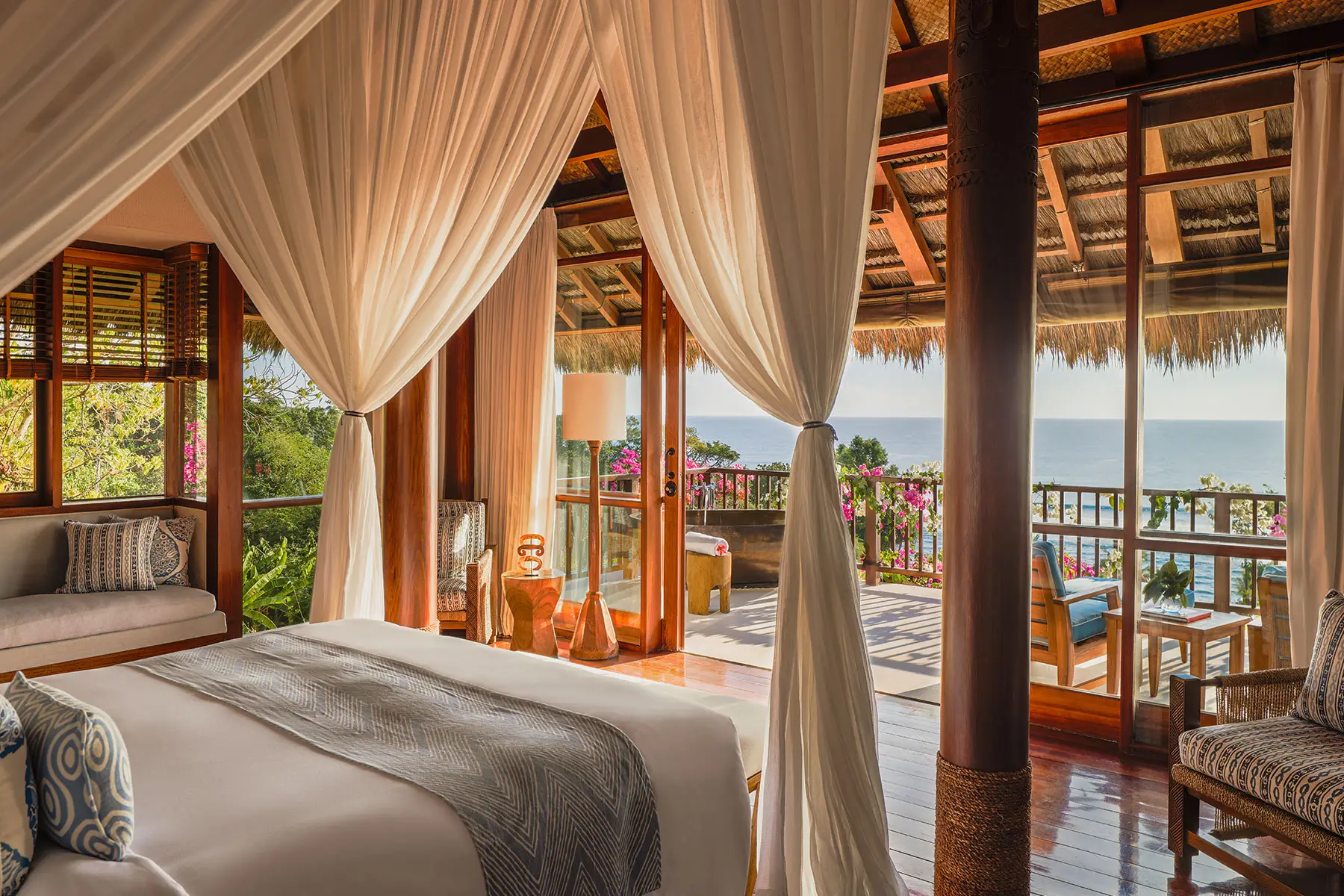
Nihi Sumba (Sumba Island):Located on Sumba Island, this property stands as the definitive case study in luxury inelasticity. Command baseline villas starting well above $1,500 to $3,000+ per night by capping capacity and offering an exclusive private surf break, the resort generates cash flow from a single night's booking equivalent to a mid-tier mainland hotel's monthly room occupancy.

Bawah Reserve (Anambas Archipelago): Situated in the remote Anambas Archipelago, this property highlights how ultra-luxury infrastructure can bypass mainland supply chain pressures. Operating as an off-grid sovereign ecosystem utilizing 100% solar power matrices, independent water desalination plants, and permaculture food sourcing, its heavy upfront capital expenditure on eco-sustainability acts as an operational shield against rising mainland utility tariffs, protecting high net profit margins of 15% to 22%.
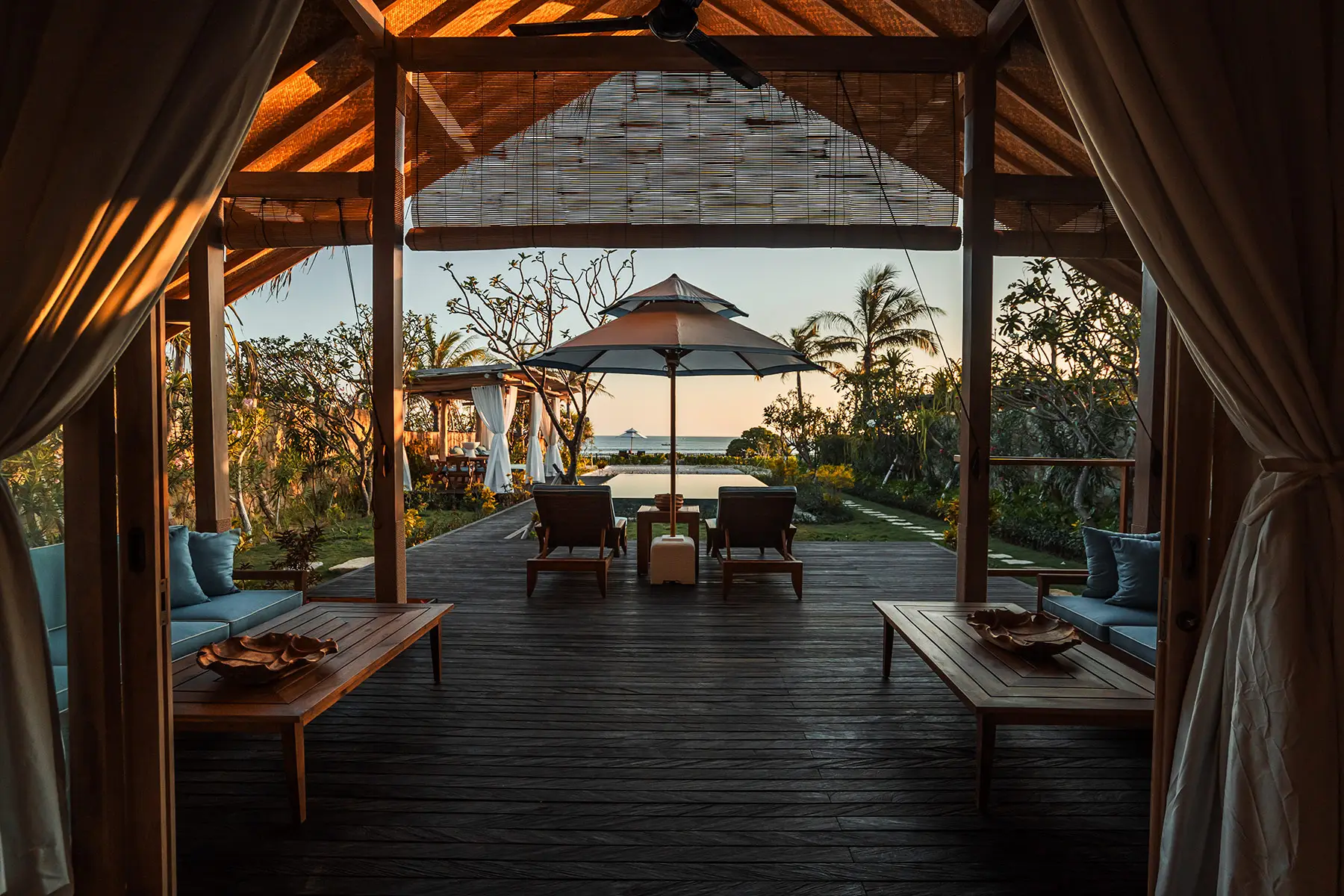
Nihi Rote (Rote Island): The recent launch of this 21-villa remote eco-luxury property on Rote Island serves as validation that institutional capital is intentionally deserting mass-market hubs. By capping room supply while offering hyper-curated, remote wellness experiences, the developers successfully replicated the high-ADR asset class model in an entirely new geographic frontier.
Primary Vs Secondary Investment Landscapes
Primary investment locations represent established, high-liquidity zones with mature infrastructure, while secondary locations are high-growth corridors characterized by lower entry costs and substantial development runways. Investors in 2026 balance the immediate, predictable cash flow of primary hubs against the rapid land appreciation and high yield potential of emerging frontiers.
In primary locations anchored within the Bali core corridor, tourist volume ensures high baseline occupancy and premium room rates. Uluwatu stands out as the current outperformer for luxury assets, where land acquisition costs remain roughly 40% lower than Canggu, yet cliffside topography drives peak occupancy of 72.3% to 74.5% and yields of 15% to 20% gross. Canggu and Berawa represent a maturing, saturated market with the highest year-round occupancy floors of 70% to 85% and gross yields between 12% and 18%, though margins face pressure from skyrocketing land costs. Ubud maintains a stable 65% to 72% occupancy profile and 10% to 15% gross yields, supported by longer average stays from wellness travelers and extended-stay digital nomads.
Secondary locations represent untamed archipelagos where government incentives, Special Economic Zones, and niche experiential travel drive massive upside. South Lombok, specifically around Kuta Mandalika, acts as an emerging hotspot backed by $248 million in committed infrastructure and an active Special Economic Zone framework, offering an 8% to 12% yield profile with major international footprints like Hyatt entering through 2027 and 2028. Outer island regions display non-star occupancy averaging 32% and star-rated occupancy reaching 52.5%, where yields depend on operator capability but land appreciation offers significant long-term capital growth.
In primary locations anchored within the Bali core corridor, tourist volume ensures high baseline occupancy and premium room rates. Uluwatu stands out as the current outperformer for luxury assets, where land acquisition costs remain roughly 40% lower than Canggu, yet cliffside topography drives peak occupancy of 72.3% to 74.5% and yields of 15% to 20% gross. Canggu and Berawa represent a maturing, saturated market with the highest year-round occupancy floors of 70% to 85% and gross yields between 12% and 18%, though margins face pressure from skyrocketing land costs. Ubud maintains a stable 65% to 72% occupancy profile and 10% to 15% gross yields, supported by longer average stays from wellness travelers and extended-stay digital nomads.
Secondary locations represent untamed archipelagos where government incentives, Special Economic Zones, and niche experiential travel drive massive upside. South Lombok, specifically around Kuta Mandalika, acts as an emerging hotspot backed by $248 million in committed infrastructure and an active Special Economic Zone framework, offering an 8% to 12% yield profile with major international footprints like Hyatt entering through 2027 and 2028. Outer island regions display non-star occupancy averaging 32% and star-rated occupancy reaching 52.5%, where yields depend on operator capability but land appreciation offers significant long-term capital growth.
Active Island and Beach Resort Investment Opportunities
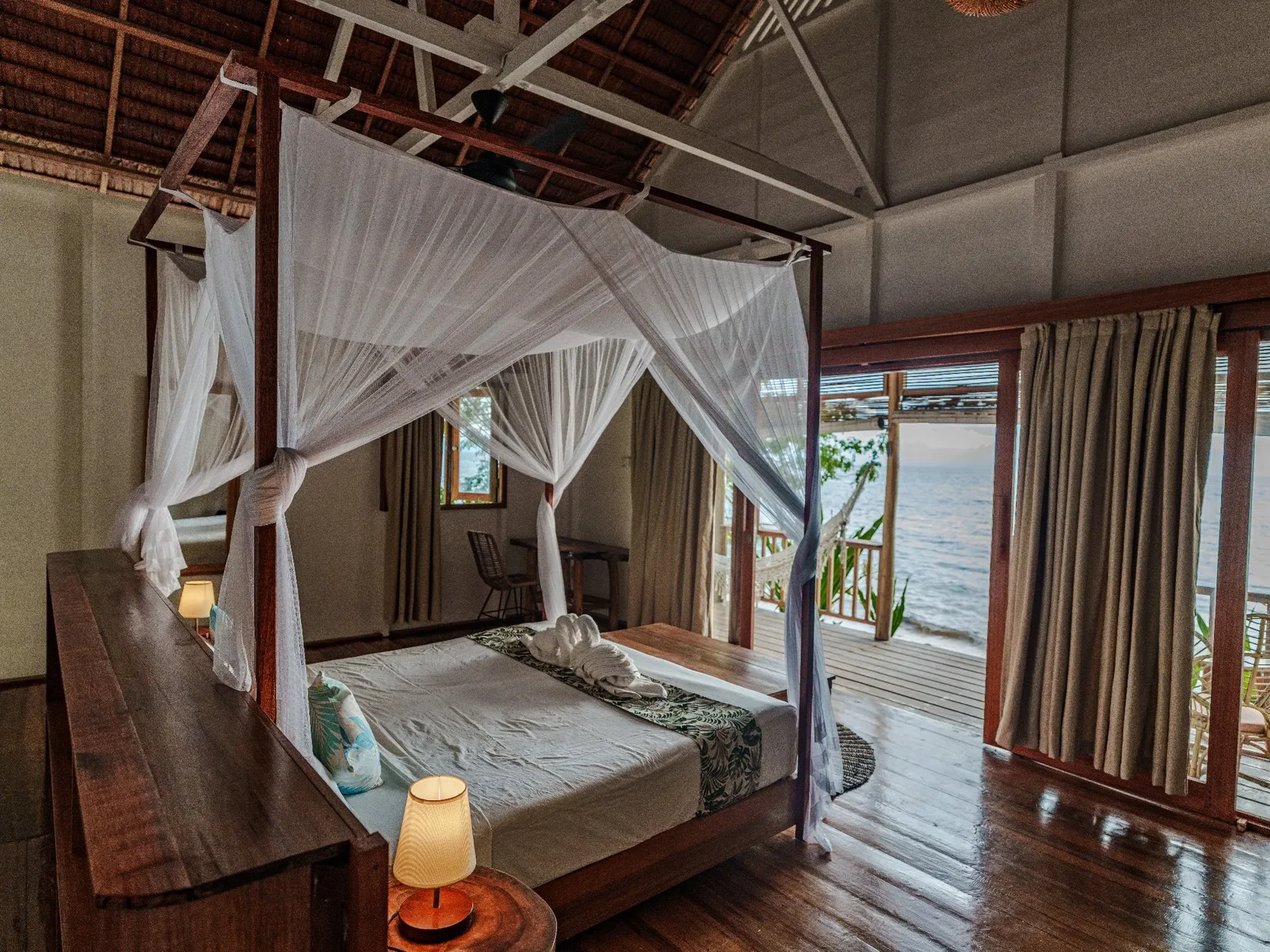
Current acquisition and turnkey development opportunities across the Indonesian archipelago span various entry points:
- Buka Buka Island (Sustainable Beachfront Villas): The Reconnect Private Island Resortoffers a limited investment tier to build sustainable beachfront villas featuring 100% solar power, water desalination, and locally sourced materials. One-bedroom units are constructed and guest-ready within roughly four months, supported by operational passive-income models.
- Sumba Island (Villa Plots and Resort Land): Land development and turnkey villa plots on Sumba are active through platforms like Best Island Projects, featuring complete permits, architectural planning, and rental management strategies. Villa plots start around $150,000, with permit processing timelines averaging three to six months.
- Active Turnkey and Existing Resorts for Sale: Regional listings aggregated via Indonesia Businesses For Sale span established and emerging hubs. Properties in Gili Air, Gili Asahan, and Lombok range from $850,000 to $5,000,000. In North Sulawesi and the Lembeh Strait, dive resorts and beachfront parcels range from $200,000 up to $5,000,000. In North Sumatra, entry-level surf camps and boutique setups start near $75,000, with historical cash flows around $30,000.
- Surf and Remote Island Properties: Curated land, charter fractions, and boutique surf resorts across the Mentawai Islands, Nembrala on Rote Island, and East Nusa Tenggara are available via International Surf Properties, with portfolio pricing spanning $27,000 to $4,500,000.
2030 Market Projections and Horizon
Looking toward 2030, the Indonesian hospitality real estate market is projected to reach USD 4.14 billion to USD 4.46 billion, compounding at a steady 10.58% annual growth rate from its 2026 valuation of USD 2.70 billion. This trajectory is propelled almost exclusively by the ultra-luxury private island and boutique resort sectors.
Three core pillars define this trajectory toward 2030. First, mid-scale and budget developments will continue to flatten due to margin compression from rising local operating overheads, leaving 100% of major upcoming premium supply anchored in high-end, eco-conscious wellness and surf assets. Second, regions directly connected to active USD 95 million public mass transit initiatives and upgraded regional marine ports will experience accelerated land value appreciation, commanding up to a 25% premium over isolated plots. Third, while mature Bali hubs transition into high-density asset management phases, secondary corridors like South Lombok, Sumba, the Anambas Archipelago, and East Nusa Tenggara will serve as the primary engines for raw land development and high-yield turnkey villa projects.
Three core pillars define this trajectory toward 2030. First, mid-scale and budget developments will continue to flatten due to margin compression from rising local operating overheads, leaving 100% of major upcoming premium supply anchored in high-end, eco-conscious wellness and surf assets. Second, regions directly connected to active USD 95 million public mass transit initiatives and upgraded regional marine ports will experience accelerated land value appreciation, commanding up to a 25% premium over isolated plots. Third, while mature Bali hubs transition into high-density asset management phases, secondary corridors like South Lombok, Sumba, the Anambas Archipelago, and East Nusa Tenggara will serve as the primary engines for raw land development and high-yield turnkey villa projects.