
📌 3 Key Takeaways
- Balanced Distribution Architecture: Protecting direct distribution channels as the most profitable path mitigates heavy OTA commission fees while capturing distinct customer behavioral profiles.
- Diversified Segment Capping: Restricting reliance on any single geographical or customer segment preserves property brand identity and insulates cash flow against market shocks.
- The Service Profit Chain: Building guest trust during early touchpoints—starting at breakfast—directly drives secondary spending across on-property dining and lifestyle outlets.
The evolution of modern hospitality is increasingly defined by a shift away from static luxury toward dynamic, narrative-driven guest journeys. In highly competitive, fast-paced regional hubs like Pattaya, establishing long-term market leadership requires moving beyond top-line vanity metrics. Real operational resilience relies on striking a precise balance between strict expense discipline, structured distribution channels, and high-impact experiential value.
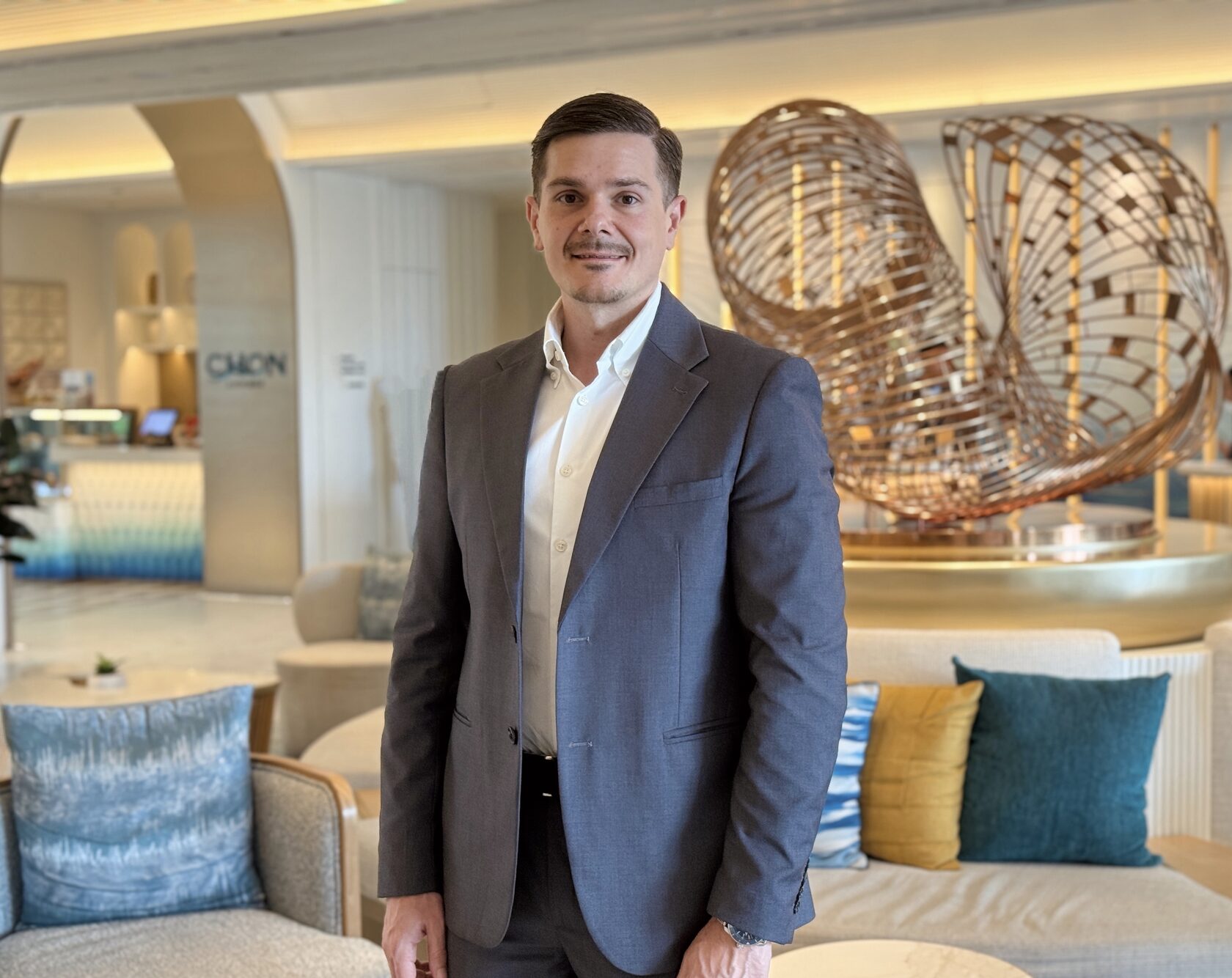
Stepping into this changing landscape is Alexander Lopez, General Manager of Meliá Pattaya Hotel. Specializing in property turnarounds and strategic market repositioning, Lopez treats hotel management as both a disciplined performance architecture and a deeply human business.
In this exclusive interview, Lopez outlines his operational playbook for the newly opened, 234-key lifestyle resort. He details the mechanisms of the service profit chain, the realities of maintaining pricing power in high-occupancy markets, the emerging operational frontier of AI-driven search engine visibility, and why the future of incremental revenue lies in multifaceted, destination-driven programming.
Stepping into this changing landscape is Alexander Lopez, General Manager of Meliá Pattaya Hotel. Specializing in property turnarounds and strategic market repositioning, Lopez treats hotel management as both a disciplined performance architecture and a deeply human business.
In this exclusive interview, Lopez outlines his operational playbook for the newly opened, 234-key lifestyle resort. He details the mechanisms of the service profit chain, the realities of maintaining pricing power in high-occupancy markets, the emerging operational frontier of AI-driven search engine visibility, and why the future of incremental revenue lies in multifaceted, destination-driven programming.
Market Dynamics: Protecting Asset Health and Volume Balance
Q: In highly competitive, high-occupancy markets like Pattaya, hotel operators often face immense pressure to maximize volume. From an asset management standpoint, why do you advocate for a rate-driven strategy over raw occupancy?
Alexander Lopez: Prioritizing average daily rate premiums yields a significantly more profitable business model, subjects the physical asset to less operational wear and tear, and ultimately extends the lifespan of the property for ownership. Today's luxury and lifestyle consumers do not blindly purchase a rate; they actively seek out clear, unmistakable value.
Q: Pushing for a premium Average Daily Rate (ADR) inherently changes what guests expect during their stay. How do you evaluate whether a higher rate tier is actually justified by the hotel's bottom-line performance?
Alexander Lopez: It all comes down to the balance between pricing and the cost of execution. A higher rate cannot be analyzed in a vacuum; it changes the baseline of the entire operation. If you want to charge very high ADRs, for example, there'll be a different level of service standard that the guests would expect. So it might increase your cost. Maybe you'll have extra manning costs. Maybe you'll have additional amenities costs to reach those high ADR targets. So finally, after all that, is your GOP in a better position or not?
If the resulting Gross Operating Profit (GOP) is not improved, then increasing the ADR to that level is fundamentally counterproductive. Rates must always be tied directly to strict expense discipline to drive true profitability.
Q: Pattaya’s demand fluctuations create sharp contrast between weekday and weekend stays. How do you protect the brand environment and manage risk across these shifting segments?
Alexander Lopez: The key to long-term commercial health is maintaining a highly disciplined, balanced mix of segments across retail channels, Online Travel Agencies (OTAs), corporate groups, and tour operators. I don't believe in allowing any single segment or demographic to command more than 15% of the hotel's total inventory. The moment a property breaches that threshold, the operation is forced to distort its core experiences and tailor everything to satisfy one specific group, which dilutes the overall brand environment. During low seasons, we strategically pivot toward volume-oriented group business, but our primary focus remains establishing a healthy, sustainable equilibrium that ensures a win-win scenario for all commercial partners.
Alexander Lopez: Prioritizing average daily rate premiums yields a significantly more profitable business model, subjects the physical asset to less operational wear and tear, and ultimately extends the lifespan of the property for ownership. Today's luxury and lifestyle consumers do not blindly purchase a rate; they actively seek out clear, unmistakable value.
Q: Pushing for a premium Average Daily Rate (ADR) inherently changes what guests expect during their stay. How do you evaluate whether a higher rate tier is actually justified by the hotel's bottom-line performance?
Alexander Lopez: It all comes down to the balance between pricing and the cost of execution. A higher rate cannot be analyzed in a vacuum; it changes the baseline of the entire operation. If you want to charge very high ADRs, for example, there'll be a different level of service standard that the guests would expect. So it might increase your cost. Maybe you'll have extra manning costs. Maybe you'll have additional amenities costs to reach those high ADR targets. So finally, after all that, is your GOP in a better position or not?
If the resulting Gross Operating Profit (GOP) is not improved, then increasing the ADR to that level is fundamentally counterproductive. Rates must always be tied directly to strict expense discipline to drive true profitability.
Q: Pattaya’s demand fluctuations create sharp contrast between weekday and weekend stays. How do you protect the brand environment and manage risk across these shifting segments?
Alexander Lopez: The key to long-term commercial health is maintaining a highly disciplined, balanced mix of segments across retail channels, Online Travel Agencies (OTAs), corporate groups, and tour operators. I don't believe in allowing any single segment or demographic to command more than 15% of the hotel's total inventory. The moment a property breaches that threshold, the operation is forced to distort its core experiences and tailor everything to satisfy one specific group, which dilutes the overall brand environment. During low seasons, we strategically pivot toward volume-oriented group business, but our primary focus remains establishing a healthy, sustainable equilibrium that ensures a win-win scenario for all commercial partners.
Ecosystem Yield: Maximizing Total Revenue Per Guest
Q: Traditional hospitality strategy often treats Food & Beverage (F&B) and meeting spaces as secondary revenue streams. How has your commercial approach shifted this mindset to maximize total property performance?
Alexander Lopez: Every square meter of a hotel asset must be viewed as an active, revenue-generating engine. While room inventory remains the primary commercial driver, a property's true differentiation lies completely in the lifestyle ecosystem built around it. A wise hospitality leader once told me that if your room occupancy is consistently sitting beyond 75%, you are likely pricing your inventory too low. You must yield the asset intelligently to maximize secondary footfall into your food and beverage venues, wellness facilities, and meeting spaces.
Q: Capturing ancillary spend requires converting in-house guests who might otherwise dine outside the hotel. What is your strategy for building the guest confidence needed to drive these secondary revenue streams?
Alexander Lopez: To successfully capture this ancillary spend, you must establish guest confidence from their very first interaction. For example, breakfast is the single most critical retention tool in an entire food and beverage operation. If the execution at breakfast fails to meet expectations, the guest will never develop the confidence required to spend their extra currency at your specialized lunch or dinner venues. It is about building a service profit chain where consistency at the first touchpoint directly influences their willingness to spend later in the journey.
Alexander Lopez: Every square meter of a hotel asset must be viewed as an active, revenue-generating engine. While room inventory remains the primary commercial driver, a property's true differentiation lies completely in the lifestyle ecosystem built around it. A wise hospitality leader once told me that if your room occupancy is consistently sitting beyond 75%, you are likely pricing your inventory too low. You must yield the asset intelligently to maximize secondary footfall into your food and beverage venues, wellness facilities, and meeting spaces.
Q: Capturing ancillary spend requires converting in-house guests who might otherwise dine outside the hotel. What is your strategy for building the guest confidence needed to drive these secondary revenue streams?
Alexander Lopez: To successfully capture this ancillary spend, you must establish guest confidence from their very first interaction. For example, breakfast is the single most critical retention tool in an entire food and beverage operation. If the execution at breakfast fails to meet expectations, the guest will never develop the confidence required to spend their extra currency at your specialized lunch or dinner venues. It is about building a service profit chain where consistency at the first touchpoint directly influences their willingness to spend later in the journey.
The Next Frontier: Distribution Architecture and AI Search
Q: With the constant friction between third-party OTAs and direct channels, how do you manage this relationship to protect profit margins without sacrificing market reach?
Alexander Lopez: The foundational objective of our commercial strategy is to ensure that our direct booking channels remain the single most financially attractive path for a consumer. Direct distribution is inherently the most profitable channel for the asset, allowing us to mitigate heavy commission fees while leveraging loyalty platforms to deliver instant, tangible benefits to the guest. However, it is important to recognize that the OTA consumer and the direct booking customer represent separate behavioral profiles; our role is to keep every channel healthy and diverse while fine-tuning our direct capture as the property matures.
Q: As travelers increasingly shift from traditional search engines to AI-driven discovery platforms, how is digital marketing evolving to maintain property visibility?
Alexander Lopez: The most critical operational shift occurring over the next five years is the rapid rise of AI-driven search platforms. Consumers are actively moving away from traditional search methodologies and are instead utilizing advanced AI agents to plan itineraries and select accommodations.
Historically, digital marketing focused entirely on standard Search Engine Optimization (SEO) to maintain visibility on the front page of legacy search engines or booking platforms. In the current landscape, your content must be custom-tailored to be cleanly indexed by AI discovery tools. Because an AI agent provides a highly concise, curated recommendation rather than a vast list of properties, failing to secure a top position within these models directly harms your final revenue.
Q: With automated systems and AI platforms taking over back-of-house guest profiles, where do you draw the line between digital efficiency and maintaining the human touch?
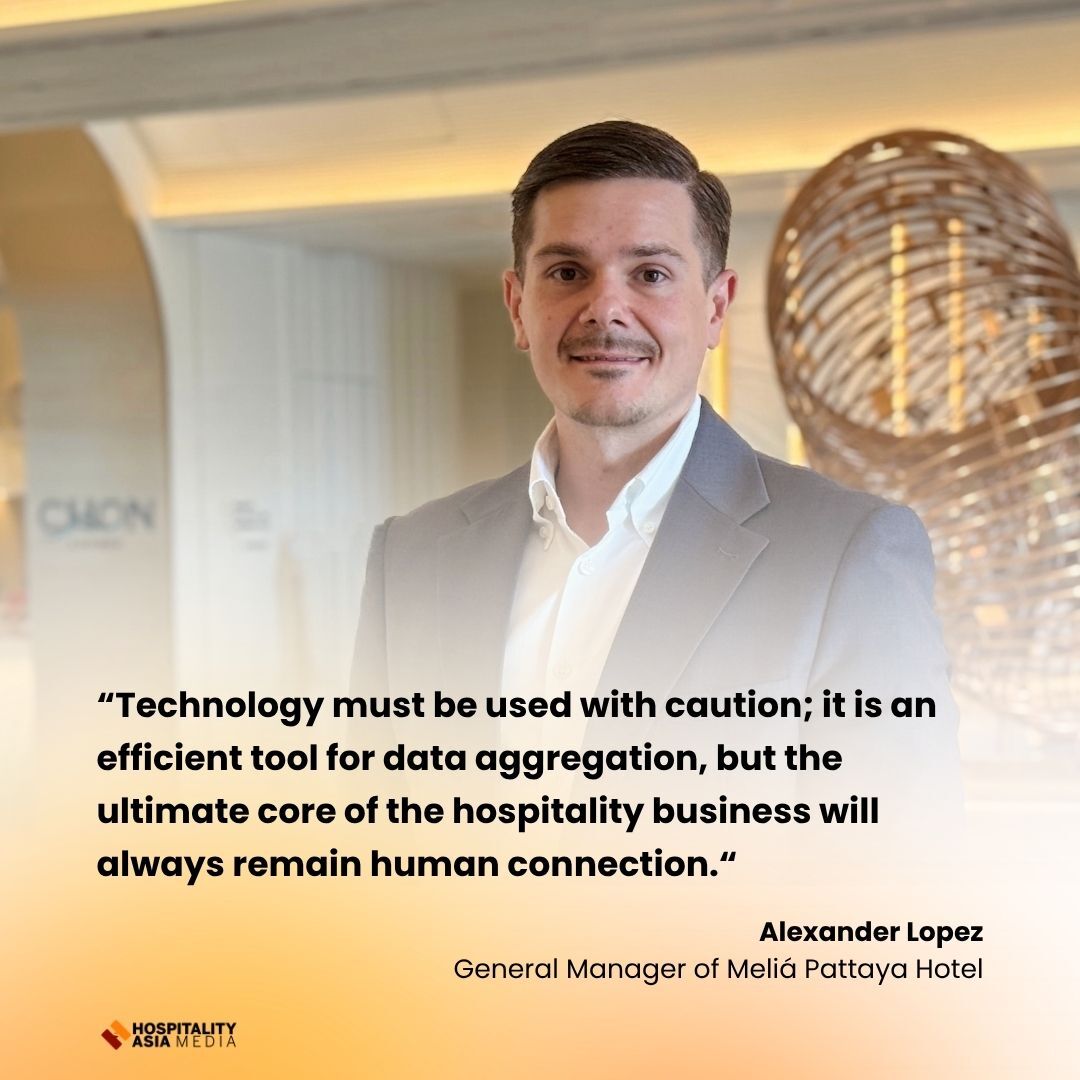
Alexander Lopez: We view technology as a vital complement to operations, utilizing centralized systems to anticipate guest preferences based on historical stays at our sister properties, but it must never replace the human touch. Technology must be used with caution; it is an efficient tool for data aggregation, but the ultimate core of the hospitality business will always remain human connection.
Alexander Lopez: The foundational objective of our commercial strategy is to ensure that our direct booking channels remain the single most financially attractive path for a consumer. Direct distribution is inherently the most profitable channel for the asset, allowing us to mitigate heavy commission fees while leveraging loyalty platforms to deliver instant, tangible benefits to the guest. However, it is important to recognize that the OTA consumer and the direct booking customer represent separate behavioral profiles; our role is to keep every channel healthy and diverse while fine-tuning our direct capture as the property matures.
Q: As travelers increasingly shift from traditional search engines to AI-driven discovery platforms, how is digital marketing evolving to maintain property visibility?
Alexander Lopez: The most critical operational shift occurring over the next five years is the rapid rise of AI-driven search platforms. Consumers are actively moving away from traditional search methodologies and are instead utilizing advanced AI agents to plan itineraries and select accommodations.
Historically, digital marketing focused entirely on standard Search Engine Optimization (SEO) to maintain visibility on the front page of legacy search engines or booking platforms. In the current landscape, your content must be custom-tailored to be cleanly indexed by AI discovery tools. Because an AI agent provides a highly concise, curated recommendation rather than a vast list of properties, failing to secure a top position within these models directly harms your final revenue.
Q: With automated systems and AI platforms taking over back-of-house guest profiles, where do you draw the line between digital efficiency and maintaining the human touch?
Alexander Lopez: We view technology as a vital complement to operations, utilizing centralized systems to anticipate guest preferences based on historical stays at our sister properties, but it must never replace the human touch. Technology must be used with caution; it is an efficient tool for data aggregation, but the ultimate core of the hospitality business will always remain human connection.
Shifting Consumer Spending and Sustainability
Q: Looking ahead over the medium term, what major consumer trends do you believe will permanently alter how hotels generate revenue and maintain a competitive advantage?
Alexander Lopez: The post-pandemic consumer’s intense focus on experience-oriented travel is a permanent structural shift. Moving forward, winning market share will require operators to deliver deep, authentic storytelling alongside the physical experience. Furthermore, sustainability has permanently evolved from an operational 'good-to-have' element into a baseline, mandatory requirement for securing major corporate contracts and individual bookings. Modern travelers want to understand the positive impact of their stay, whether that involves hosting low-emission meetings or participating in advanced food recycling initiatives on-property.
We are also observing an accelerating demand for integrated wellness and sports facilities within the resort matrix. By internalizing these lifestyle services, a hotel secures a powerful competitive advantage in meeting modern guest expectations.
Q: As Meliá Pattaya Hotel completes its first year of operation, what is your strategic roadmap for scaling the hotel from a newly opened asset into a mature lifestyle destination?
Alexander Lopez: Meliá Pattaya Hotel is currently in its stabilization phase, having been open for just over a year. While we are already tracking at the top of the market in guest satisfaction, my immediate priority as a leader is to ensure the absolute basics of our service execution are perfectly institutionalized before we scale out our long-term lifestyle vision. We are taking a deliberate, step-by-step approach, focusing heavily on building a lifestyle destination that seamlessly merges warm Spanish-Mediterranean hospitality with authentic local Thai experiences.
Alexander Lopez: The post-pandemic consumer’s intense focus on experience-oriented travel is a permanent structural shift. Moving forward, winning market share will require operators to deliver deep, authentic storytelling alongside the physical experience. Furthermore, sustainability has permanently evolved from an operational 'good-to-have' element into a baseline, mandatory requirement for securing major corporate contracts and individual bookings. Modern travelers want to understand the positive impact of their stay, whether that involves hosting low-emission meetings or participating in advanced food recycling initiatives on-property.
We are also observing an accelerating demand for integrated wellness and sports facilities within the resort matrix. By internalizing these lifestyle services, a hotel secures a powerful competitive advantage in meeting modern guest expectations.
Q: As Meliá Pattaya Hotel completes its first year of operation, what is your strategic roadmap for scaling the hotel from a newly opened asset into a mature lifestyle destination?
Alexander Lopez: Meliá Pattaya Hotel is currently in its stabilization phase, having been open for just over a year. While we are already tracking at the top of the market in guest satisfaction, my immediate priority as a leader is to ensure the absolute basics of our service execution are perfectly institutionalized before we scale out our long-term lifestyle vision. We are taking a deliberate, step-by-step approach, focusing heavily on building a lifestyle destination that seamlessly merges warm Spanish-Mediterranean hospitality with authentic local Thai experiences.
About Alexander Lopez
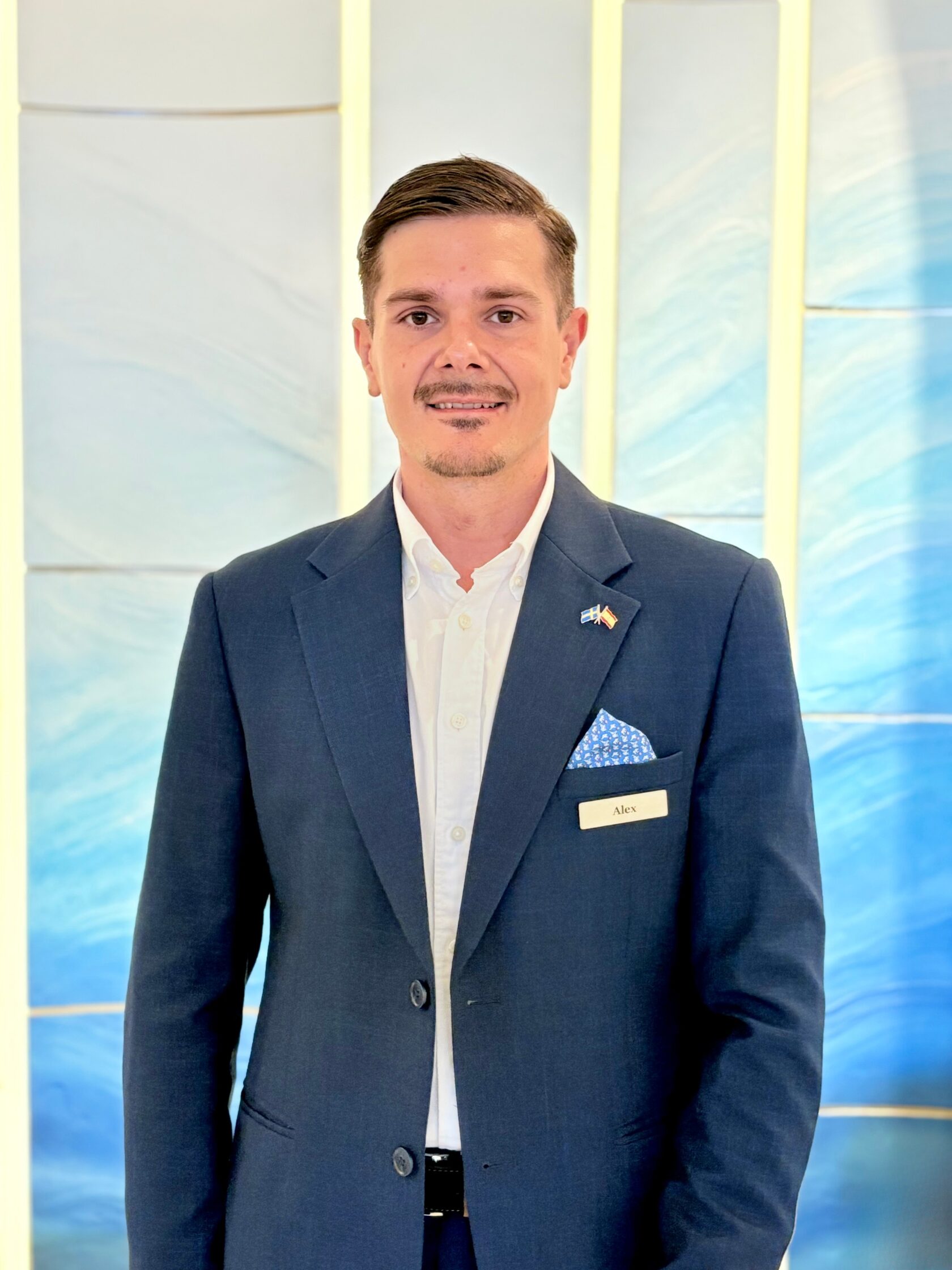
Alexander Lopez is the General Manager of Meliá Pattaya Hotel, directing all operational, commercial, and positioning strategies for the lifestyle resort. Lopez possesses more than 17 years of luxury and lifestyle hospitality experience. His professional background includes extensive tenures leading property transformations and turnaround projects across Southeast Asia and international luxury markets, including general manager and senior resort executive roles at W Koh Samui, W Maldives, Vana Belle (A Luxury Collection Resort), and The Westin Siray Bay Phuket.